



Can You Get a Yeast Infection From Antibiotics? Here Are 6 Things to Know
Antibiotics fight infection by killing bacteria in the body, but this can cause a yeast infection. Learn about yeast infections from taking antibiotics.
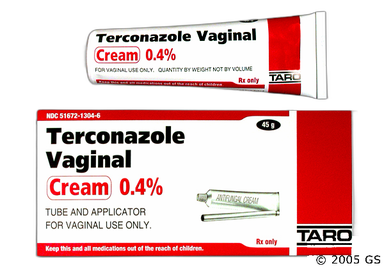
Terconazole is a prescription antifungal medication used to treat vaginal yeast infections in adults. You can find it as a vaginal cream (terconazole 0.4% or 0.8%) or a suppository. This medication is inserted vaginally nightly. Treatment usually lasts 3 to 7 days, depending on the strength of the medication. Common side effects include headaches, and vaginal burning and itching. Terconazole is generally not recommended in first trimester of pregnancy, but your obstetrician-gynecologist (OB-GYN) might prescribe it in the second or third trimester if the benefits outweigh the risks.

Terconazole is an azole antifungal medication. It works by blocking a protein needed to make the fungal cell membrane, which is the structure that surrounds and protects the cell. In doing so, terconazole weakens the cell membrane, preventing the fungus from growing and eventually killing it to treat the infection.
| Common Brands | Terazol 7 |
|---|---|
| Drug Class | Antifungal |
| Controlled Substance Classification | Not a controlled medication |
| Generic Status | Lower-cost generic available |
| Availability | Prescription only |

The following side effects may get better over time as your body gets used to the medication. Let your healthcare provider know immediately if you continue to experience these symptoms or if they worsen over time.
Contact your healthcare provider immediately if you experience any of the following.
Along with its needed effects, a medicine may cause some unwanted effects. Although not all of these side effects may occur, if they do occur they may need medical attention.
Check with your doctor immediately if any of the following side effects occur:
More common
Burning feeling in the vagina
Incidence not known
Blistering, peeling, or loosening of the skin
chills
difficulty with swallowing
dizziness
fast heartbeat
general feeling of discomfort or illness
headache
hives or welts
hoarseness
irritation
joint or muscle pain
joint pain, stiffness or swelling
loss of appetite
muscle aches and pains
puffiness or swelling of the eyelids or around the eyes, face, lips, or tongue
rash
red skin lesions, often with a purple center
red, irritated eyes
redness of the skin
shivering
skin rash
sores, ulcers, or white spots in the mouth or on the lips
sweating
swelling of the eyelids, face, lips, hands, or feet
tightness in the chest
trouble sleeping
troubled breathing
unusual tiredness or weakness
vomiting
Some side effects may occur that usually do not need medical attention. These side effects may go away during treatment as your body adjusts to the medicine. Also, your health care professional may be able to tell you about ways to prevent or reduce some of these side effects. Check with your health care professional if any of the following side effects continue or are bothersome or if you have any questions about them:
Incidence not known
Difficulty with moving
lack or loss of strength
muscle aching or cramping
muscle pain or stiffness
swollen joints
Other side effects not listed may also occur in some patients. If you notice any other effects, check with your healthcare professional.
Call your doctor for medical advice about side effects. You may report side effects to the FDA at 1-800-FDA-1088.



How to use terconazole cream

Terconazole can cause some serious health issues. This risk may be even higher for certain groups. If this worries you, talk to your doctor or pharmacist about other options.
Though rare, some people who have used terconazole have experienced serious allergic reactions. These can include anaphylaxis, which might cause symptoms like a rash, hives, difficulty breathing, or swelling of the face. Another rare reaction is toxic epidermal necrolysis (TEN), a severe skin condition that can cause fever, a painful rash, and peeling or blistering of the skin. If you notice any of these symptoms while using terconazole, get medical attention right away. Your healthcare team will likely stop the medication and recommend a different treatment option.
Terconazole should only be used vaginally. Don't take this medication by mouth, and never use it in your eyes, nose, or ears. If you think that you or your child might have accidentally swallowed this medication, call your Poison Control Center at 1-800-222-1222 right away.
If your vaginal yeast infection symptoms (itching, irritation, or thick discharge) haven't gotten any better 3 days after using terconazole, let your healthcare team know. Also speak with your healthcare team if your infection isn't completely cleared up after 7 days. In both of these situations, you might need a different medication to treat your infection.

 Dose pack
| Dosage | Quantity | Price as low as | Price per unit |
|---|---|---|---|
| 3 suppositories of 80mg | 1 dose pack | $38.28 | $38.28 |

Although certain medicines should not be used together at all, in other cases two different medicines may be used together even if an interaction might occur. In these cases, your doctor may want to change the dose, or other precautions may be necessary. Tell your healthcare professional if you are taking any other prescription or nonprescription (over-the-counter [OTC]) medicine.






Prescription savings
Stop paying too much for your prescriptions. Compare prices, get pharmacy coupons, and save up to 80%. Find expert answers to your health questions so you can make the best decisions for yourself and your family.
Health conditions
Medications & treatment
Access & affordability
Medication discounts


You can expect your vaginal yeast infection symptoms to start improving within a few days of using Terconazole. But it can take about 3 days (for terconazole suppository and 0.8% cream) to 7 days (for terconazole 0.4% cream) to fully treat the infection. If your symptoms aren't getting better or if you still have symptoms after finishing treatment, reach out to your healthcare team. They’ll help you figure out the next steps, like trying a different treatment.
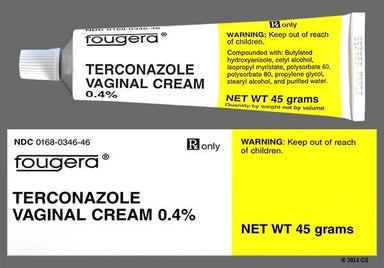
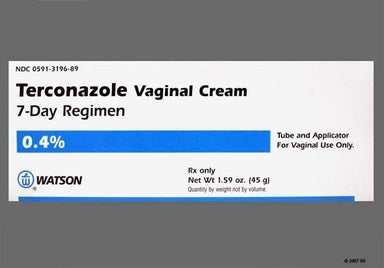
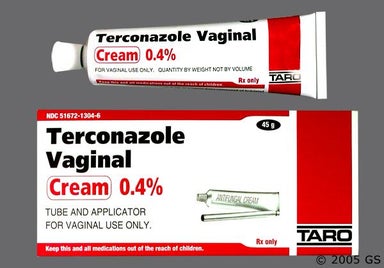
Your healthcare team will usually prescribe 5 grams of Terconazole cream per dose each night, for 3 to 7 nights. Your prescription should include an applicator that’s pre-marked to help you measure the right amount. To use it, attach the open end of the applicator to the tip of the cream tube. Gently squeeze the tube to fill the applicator with the cream. The plunger will stop moving once you’ve reached the right amount. Talk with your care team if you have more questions about your dose of Terconazole cream.
The Terconazole suppository melts quickly at body temperature after being inserted. To keep it from melting in your hands, only open the suppository foil when you're ready to use it. Try wearing disposable gloves during application to prevent the medication from getting on your hands. You might also want to lay a towel under you while you sleep or wear disposable pads to protect your sheets from any medication leaks.
It's a good idea to use the bathroom before using Terconazole. While it's unlikely, urinating right after inserting the cream or suppository could cause some of it to leak out, which means you might not get the full dose. To make sure the medication stays in place, it's best to lie down for a while after applying Terconazole.
Terconazole cream works mainly in the vaginal area, so very little of it actually gets into your bloodstream. That means it doesn’t stay in your system in a noticeable way once you stop using it. Ask your healthcare team if you have specific concerns about how long Terconazole cream stays in your system.
It’s unlikely that Terconazole will make a yeast infection worse if you use it as directed. This medication stops the growth of the yeast causing the infection. People typically feel their symptoms getting better a few days after starting treatment. But if your symptoms get worse, it could mean you have a different type of infection that Terconazole doesn’t treat, or you might be having irritation or an allergic reaction. If this happens, stop using the medication and contact your healthcare team. They can help determine what’s going on and recommend appropriate next steps.
Don't use Terconazole for a vaginal yeast infection if you're pregnant unless directed by your healthcare team. There's not much information about Terconazole and miscarriage, but animal studies suggest that this medication might affect the development of unborn babies. According to CDC guidelines, the 7-day treatment with Terconazole 0.4% cream can be an option during pregnancy. But your OB-GYN specialist might only prescribe it during the second or third trimester of pregnancy if the benefit outweighs the risk of harm.
