



3 Potassium Citrate Side Effects to Know About
Potassium citrate helps treat and prevent certain types of kidney stones. Learn how potassium citrate works and what the potential risks of the medication are.
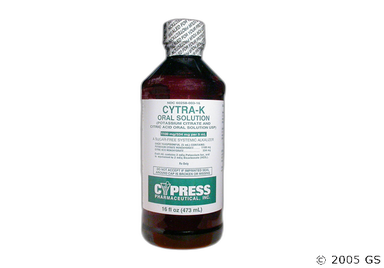
Cytra-K is used to prevent kidney stones and gout. It’s also used to treat certain kidney conditions in which your blood is too acidic. Cytra-K is available as a drink and might be a good option if you are on a low-salt (sodium) diet.

Cytra-K is a urinary alkalinizing agent made up of a combination of potassium citrate and citric acid. Both components work to make your blood and urine less acidic. By lowering the amount of acid in your body, Cytra-K is used to treat conditions that develop due to higher acid levels, such as kidney stones, gout, or metabolic acidosis caused by a kidney problem.
| Common Brands | Cytra-K |
|---|---|
| Drug Class | Alkalinizing agent |
| Controlled Substance Classification | Not a controlled medication |
| Generic Status | Lower-cost generic available |
| Availability | Prescription only |

The following side effects may get better over time as your body gets used to the medication. Let your healthcare provider know immediately if you continue to experience these symptoms or if they worsen over time.
Contact your healthcare provider immediately if you experience any of the following.
Along with its needed effects, a medicine may cause some unwanted effects. Although not all of these side effects may occur, if they do occur they may need medical attention.
Stop taking this medicine and get emergency help immediately if any of the following effects occur:
Rare
Abdominal or stomach pain or cramping (severe)
black, tarry stools
vomiting (severe), sometimes with blood
Check with your doctor as soon as possible if any of the following side effects occur:
Confusion
convulsions (seizures)
dizziness
irregular or fast heartbeat
irritability
mood or mental changes
muscle pain or twitching
nervousness or restlessness
numbness or tingling in hands, feet, or lips
shortness of breath, difficult breathing, or slow breathing
swelling of feet or lower legs
unexplained anxiety
unpleasant taste
unusual tiredness or weakness
weakness or heaviness of legs
Some side effects may occur that usually do not need medical attention. These side effects may go away during treatment as your body adjusts to the medicine. Also, your health care professional may be able to tell you about ways to prevent or reduce some of these side effects. Check with your health care professional if any of the following side effects continue or are bothersome or if you have any questions about them:
Other side effects not listed may also occur in some patients. If you notice any other effects, check with your healthcare professional.
Call your doctor for medical advice about side effects. You may report side effects to the FDA at 1-800-FDA-1088.




Cytra-K can cause some serious health issues. This risk may be even higher for certain groups. If this worries you, talk to your doctor or pharmacist about other options.
Cytra-K can cause high levels of potassium in your blood, which can lead to life-threatening heart conditions. The risk is higher if you have kidney problems or are taking medications that raise your potassium levels, such as furosemide (Lasix), spironolactone (Aldactone), or ibuprofen (Advil).
Tell your provider if you notice any changes in your heartbeat (fast or slow), trouble breathing, or numbness and tingling in your arms and legs. Your provider might have you perform regular blood tests to make sure your potassium levels are healthy.


Although certain medicines should not be used together at all, in other cases two different medicines may be used together even if an interaction might occur. In these cases, your doctor may want to change the dose, or other precautions may be necessary. Tell your healthcare professional if you are taking any other prescription or nonprescription (over-the-counter [OTC]) medicine.


Contraindications are specific health conditions or situations in which a person should not take a medication due to safety concerns. If you have any of the following conditions or if any of the following apply to you, let your healthcare provider know because Cytra-K will not be safe for you to take.


Prescription savings
Stop paying too much for your prescriptions. Compare prices, get pharmacy coupons, and save up to 80%. Find expert answers to your health questions so you can make the best decisions for yourself and your family.
Health conditions
Medications & treatment
Access & affordability
Medication discounts


Cytra-K contains high levels of potassium, which can cause serious stomach problems if taken by mouth. To lower the risk of these problems, you need to dilute Cytra-K in water before you drink it.
It’s recommended that you take Cytra-K after meals and at bedtime. The medication should be taken after meals to avoid diarrhea.
Higher doses of Cytra-K can cause high levels of potassium and low levels of acid in your blood, especially in people with kidney problems. If your potassium levels are too high, you might have less energy, weakness, mental confusion, or tingling in your arms and legs after taking the medication. Because of this risk, Cytra-K is not recommended for people with severe kidney problems. Be sure to let your provider know if you experience any of the symptoms above. Your provider might have you do routine blood tests to check that your potassium levels are in the normal range.
Both contain potassium citrate and citric acid, but are available in different forms. Cytra-K is available as a liquid solution that is safe for both adults and children after being diluted in water. On the other hand, Cytra-K Crystals is only safe for adults and is available as a powder packet that can be diluted in either water or juice. Cytra-K Crystals is not recommended for children.
Both are used to make your urine less acidic. Urocit-K only contains potassium citrate, but Cytra-K contains both potassium citrate and citric acid. Urocit-K is only available as a tablet, while Cytra-K is available as a liquid. You might prefer to use Cytra-K if you have trouble swallowing pills. Discuss with your healthcare provider to make sure the right medication is prescribed for you.
