VIDEO CENTER
Rheumatoid Arthritis
The first stage of treatment works to aggressively halt inflammation to prevent further damage and long-term complications

Treating rheumatoid arthritis may help you have fewer symptoms and feel a lot better. Still, that’s not the only goal of treatment. There are four stages of rheumatoid arthritis, and starting treatment early can help slow the progression. That way, you may be able to avoid or minimize the more serious joint damage that comes from advanced rheumatoid arthritis.
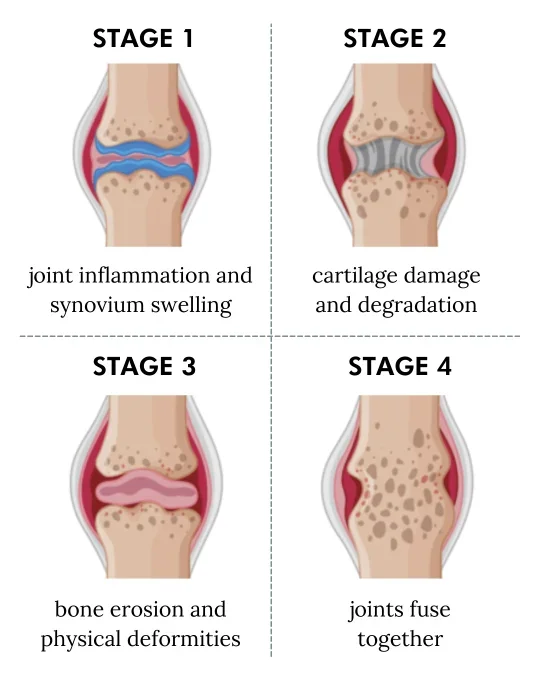
The four stages of rheumatoid arthritis are known as synovitis, pannus, fibrous ankylosis, and bony ankylosis.
During stage I, you may start having mild symptoms, including joint pain and joint stiffness. Most commonly, this affects the hands and fingers, as well as the ankles and knees. The immune system has begun attacking the joint tissue, causing the synovial membrane to swell and become inflamed.
In stage II of rheumatoid arthritis, the continued inflammation has led to a thinning of the cartilage. Normally, cartilage helps provide some cushion for the bones and makes joint motion more fluid. Without all that cushion, joint pain and stiffness may worsen. This also sets the stage for joint damage. Without the protection of cartilage, the bones may begin to erode at the joint.
Ankylosis is a term for when bones start to fuse together at a joint, causing unusual lack of mobility. In stage III, the damaged joint area starts to fuse with a connective fibrous tissue. This will severely limit your range of motion, which may make simple tasks even more difficult. At this point, your joints may start to appear bent and crooked.
As the name suggests, stage IV is when the bones fuse together with actual bone tissue instead of just a connective fibrous tissue. At this stage, pain actually goes away, but so does the ability to move. The joint is essentially gone, so you can’t bend or flex the area. Once someone has stage IV rheumatoid arthritis, they may have trouble doing the tasks and hobbies that they normally would.
Thanks to today’s treatment, it’s less common to see people reach the most advanced stage. If you learn your diagnosis early and stick to your prescribed treatment, there’s a good chance that you can manage the condition and minimize progression. It's also important to talk to your doctor if it seems like your current treatment isn't working. That way, you can preserve your joint function, reduce pain and stiffness, and live a more normal life.
This information is for informational purposes only and is not meant to be a substitute for professional medical advice, diagnosis or treatment. GoodRx is not offering advice, recommending or endorsing any specific prescription drug, pharmacy or other information on the site. GoodRx provides no warranty for any information. Please seek medical advice before starting, changing or terminating any medical treatment.


