VIDEO CENTER
Hidradenitis Suppurativa
Hidradenitis suppurativa (HS) is an inflammatory skin condition characterized by painful cysts and bumps that can flare from various triggers.

It can be difficult to diagnose hidradenitis suppurativa (HS), a chronic skin condition characterized by inflamed hair follicles that cause painful nodules under the skin. That’s because HS can sometimes be confused with other skin conditions.
“It’s really important that you get the diagnosis right before you start to worry about next steps,” says Erum Ilyas, MD, Dermatologist in Pennsylvania.
Ilyas says that there are three main symptoms that differentiates hidradenitis suppurativa from other skin conditions:
Deep, painful nodules
Located in the folds of the skin
Happening repeatedly
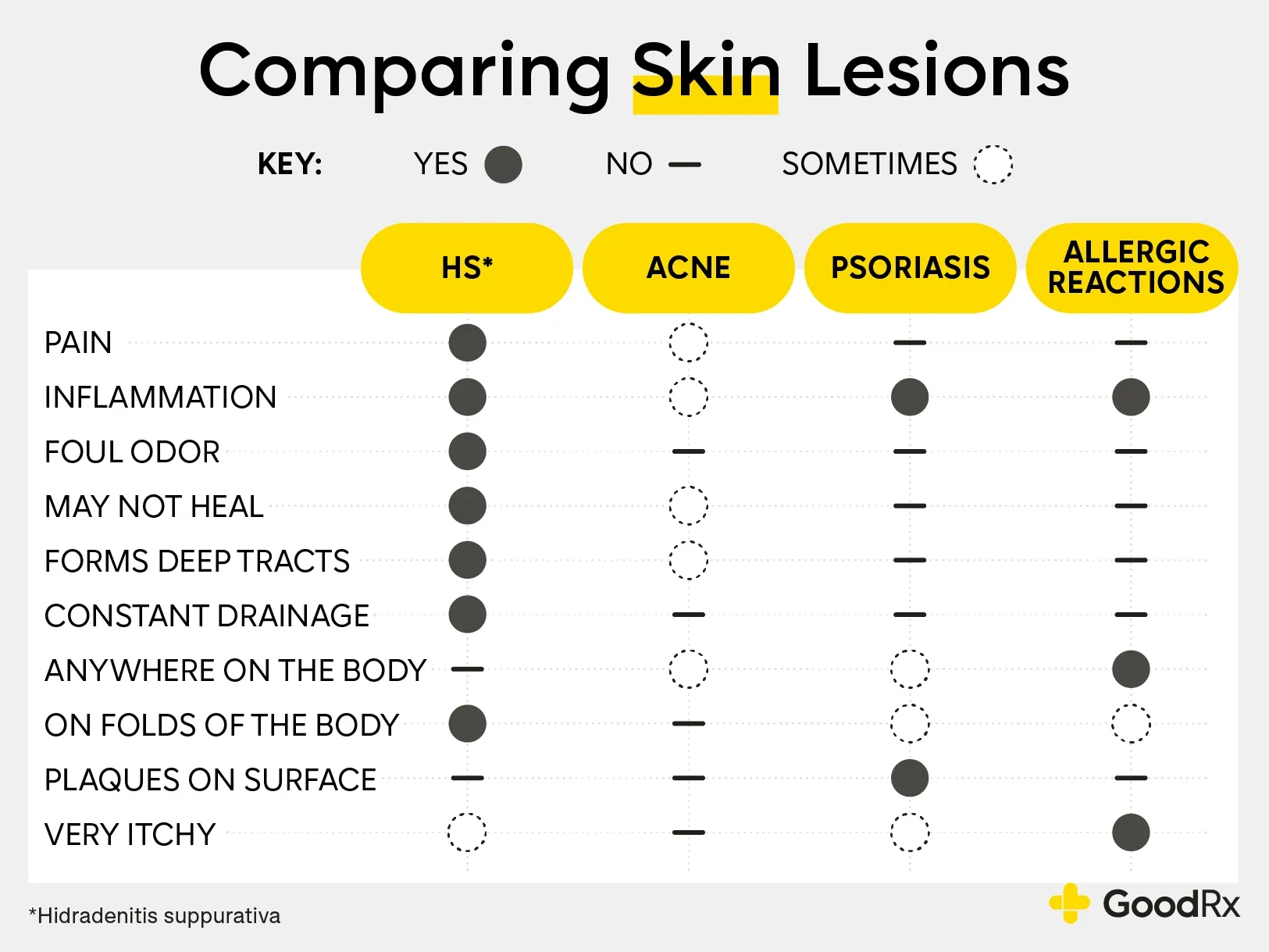
HS is also sometimes called acne inversa. That’s because, like acne, HS involves the blockage of a hair follicle “that gets inflamed, tender, and sore,” Ilyas explains. Both acne and HS may involve a pimple or a nodule that can pop and spill fluid from the surface of the skin.
However, HS is different from acne in that the fluid that spills out has a foul odor. In addition, unlike acne, HS sores may never heal, and can form deep tracts under the skin.
HS is also sometimes confused with psoriasis, an autoimmune condition that causes skin cells to build up and form red, scaly patches. However, with psoriasis, there’s no odor or fluid drainage, and the patches can develop all over the body.
HS, on the other hand, causes lots of drainage with a foul odor, and the nodules develop in places where the skin folds, like the groin and the underarms.
Yet another skin condition that may be confused with HS is allergic reactions such as hives. What’s different about hives is that they look like swollen, red welts and they usually don’t drain any fluid. Also, they can be itchy and form anywhere on the body.
Finally, HS is also sometimes confused with staph infections, which happen when there is an overgrowth of staphylococcus bacteria on the skin or in the nose.
Like HS, staph infections often occur in the folds of the skin, and they form sores that may drain from the surface. But unlike HS, staph infections only occur on the surface of the skin, and they don’t connect to form tracts the way HS nodules do.
Because HS is not very common, and because it can be so easily confused with other conditions, Ilyas recommends seeing a dermatologist who specializes in treatment of the skin.
“Seeking out the care of somebody that might have a lot more familiarity with the condition will only serve [your] skin better,” she says.
This information is for informational purposes only and is not meant to be a substitute for professional medical advice, diagnosis or treatment. GoodRx is not offering advice, recommending or endorsing any specific prescription drug, pharmacy or other information on the site. GoodRx provides no warranty for any information. Please seek medical advice before starting, changing or terminating any medical treatment.
Prescription savings
Stop paying too much for your prescriptions. Compare prices, get pharmacy coupons, and save up to 80%.Resources
About GoodRx
 Find expert answers to your health questions so you can make the best decisions for yourself and your family.
Health conditions
Medications & treatment
Access & affordability
Well-being
Medication discounts


