VIDEO CENTER
Eczema
Atopic dermatitis, or eczema, can affect people of all ages — but the symptoms can also be managed to increase your quality of life.

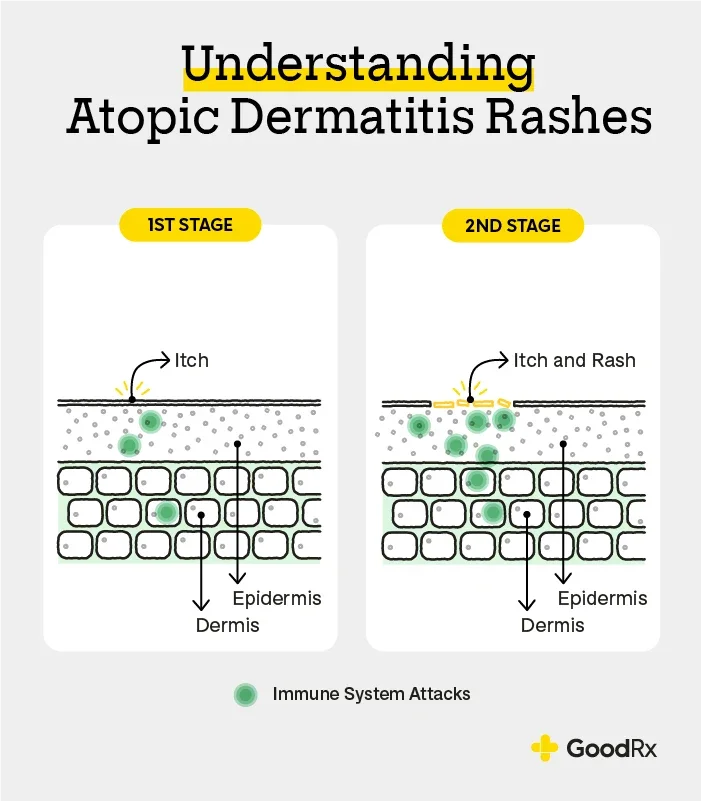
Most people associate eczema with rashes that itch, but dermatologists flip that on its head: They describe eczema as an “itch that rashes.” In other words, the itchiness of eczema itself can bring on a rash, especially if you scratch (and scratch and scratch).
Eczema — which comes from the Greek word for “to boil over” — is not contagious. Doctors don’t know exactly what causes eczema, though it does tend to run in families and is more common among people who have allergies and asthma. Eczema makes the skin feel dry, itchy, and flaky. It can appear as redness, small bumps, flaked skin, and inflamed rashes. Learn more about eczema symptoms here.
The most common areas that eczema affects are the neck, elbow creases, and the backs of the knees. You may also see it on the face, hands, forearms, and wrists in adults. Eczema can range from mild to moderate to quite severe; more serious cases can have a major impact on patients’ quality of life. For all cases of eczema, basic skin care rules can go a long way toward managing symptoms. Dermatologist Suzanne Friedler, MD, recommends that eczema patients take shorter showers, use lukewarm water instead of very hot water, use soap and other products made for sensitive skin, and moisturize their skin frequently. (Here’s how to pick the right moisturizer for eczema.)
If tweaking your skin care regimen doesn’t control your eczema symptoms, the next step in treatment is usually topical steroid creams or calcineurin inhibitors, which a dermatologist would prescribe. These reduce inflammation and itching in the skin. More severe cases of eczema may need other treatments that act directly on the immune system to relieve symptoms, including immunosuppressive drugs and biologics.
Eczema is a chronic condition, which means that symptoms can improve and then flare periodically. Most patient with atopic dermatitis, the most common kind of eczema, see their first symptoms prior to age five. About half of patients who are diagnosed with eczema during childhood see their symptoms become milder during adulthood, according to the American Academy of Dermatology.
There’s no actual test to diagnose eczema. Dermatologists can tell if you have it by looking at your skin and asking questions about when you experience symptoms.
Prescription savings
Stop paying too much for your prescriptions. Compare prices, get pharmacy coupons, and save up to 80%. Find expert answers to your health questions so you can make the best decisions for yourself and your family.
Health conditions
Medications & treatment
Access & affordability
Medication discounts


