We all have ups and downs. If you have bipolar disorder, however, you know that the mood swings you experience aren’t your typical feelings of happiness or sadness.
By definition, bipolar disorder includes extreme mood shifts that bounce from one pole to the other — between high-energy mania and low-energy depression. Learn more about the types of bipolar disorder here.
Diagnosing bipolar disorder can be tricky. Since symptoms sometimes feel good (highs), patients may be unaware that they have a mental health issue. And if people do seek help, it’s likely during a depressive state, which may result in a misdiagnosis. Learn more about the difference between bipolar disorder and depression.
Getting a correct diagnosis is critical to ensure proper treatment: Treating bipolar disorder is unique due to the extreme shifts in mood. It requires mood stabilizers and antipsychotics, as opposed to standard antidepressant drugs.
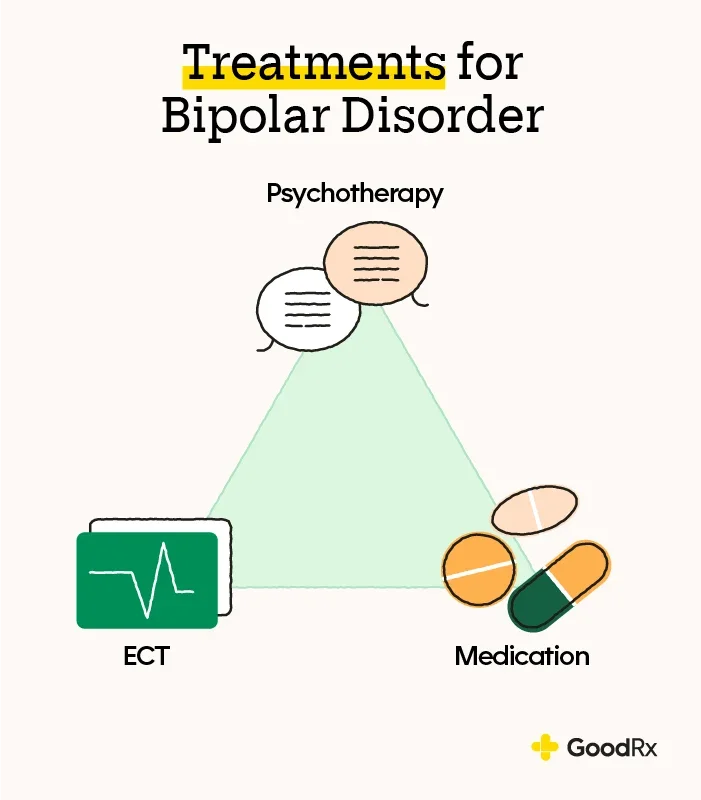
Bipolar disorder is predominantly treated with medication. “Most people with bipolar disorder will require a mood stabilizer for the long haul.,” says Gail Saltz, MD, a psychiatrist at New York-Presbyterian Hospital in New York City. “Forever? Not necessarily, but often for very long periods of time.”
A key player in treating bipolar disorder is mood stabilizers, which help balance the highs and lows of bipolar disorder so the patient’s mood is in a more neutral and stable state. Often times anticonvulsants (medications used to treat seizures) are used to balance the mood in bipolar disorder as well.
Mood stabilizers help prevent episodes of high-energy mania and low-energy depression, but sometimes they still occur. “If you do break through and have [an episode], then in addition to the mood stabilizer, you would be on a medication to treat that particular symptom,” says Dr. Saltz.
Medications to treat these episodes may include:
Antidepressants, for feelings of depression
Antipsychotics, for feelings of mania
Sometimes, ECT may be considered for severe mania or depression. During ECT, short electrical impulses are transmitted into the brain.
“We use ECT to treat bipolar disorder if the other medications are really not doing their job,” says Susan Samuels, MD, a psychiatrist at New York-Presbyterian Hospital in New York City. Learn more about electroconvulsive therapy here.
Along with taking medications, doctors advise patients to go to psychotherapy regularly to help manage their bipolar symptoms. Psychotherapy is focused on self-care, stress reduction, and helping a person recognize symptom patterns.
“I wouldn’t advise just getting medication and not seeing a therapist with some sort of regularity,” says Dr. Saltz. “There’s first of all coming to grips with having a mental issue that can be processed in a therapeutic setting.”
Also, keeping tabs on when you experience episodes can help you and your doctor decide if you may need additional medication, says Dr. Saltz.
If you have depression or bipolar disorder and are experiencing thoughts of self-harm or suicide, call 911, go to the emergency room, or call the National Suicide Prevention Lifeline: 1-800-273-8255.
GoodRx Health has strict sourcing policies and relies on primary sources such as medical organizations, governmental agencies, academic institutions, and peer-reviewed scientific journals. Learn more about how we ensure our content is accurate, thorough, and unbiased by reading our editorial guidelines.