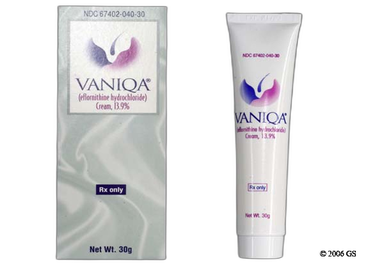
Vaniqa
Vaniqa (eflornithine) is a prescription cream that's used to reduce unwanted facial hair growth in women. Vaniqa (eflornithine) belongs to a group of medications called ornithine decarboxylase inhibitors (ODC). It blocks a protein called ODC in the skin to slow down hair growth. The cream is applied on the face and under the chin twice a day, with at least 8 hours in between. Potential side effects include acne and stinging skin.
Note: Vaniqa (eflornithine) was discontinued in 2023. An alternative medication with the same active ingredient is the brand Florexa, which is still available.


What is Vaniqa (eflornithine)?
What is Vaniqa (eflornithine) used for?
- Unwanted facial hair in women
How Vaniqa (eflornithine) works
Vaniqa (eflornithine) is a topical skin product that slows down the activity of the protein ornithine decarboxylase (ODC). ODC plays an important part in hair growth. Reducing this protein's activity leads to less cell production in the hair follicles. So when Vaniqa (eflornithine) is applied to the skin, it results in less hair growth.
Drug facts
| Common Brands | Vaniqa |
|---|---|
| Drug Class | Topical skin product |
| Controlled Substance Classification | Not a controlled medication |
| Generic Status | No lower-cost generic available |
| Availability | Discontinued |

Side effects of Vaniqa (eflornithine)
The following side effects may get better over time as your body gets used to the medication. Let your healthcare provider know immediately if you continue to experience these symptoms or if they worsen over time.
Common Side Effects
- Acne (11-21%)
- Razor bumps (5-16%)
- Stinging skin (4-8%)
- Headache (4%)
- Burning skin (4%)
- Itching (3-4%)
- Tingling skin (2-4%)
- Dry skin (2-3%)
- Rash (2-3%)
- Redness (1-3%)
- Skin irritation (1-2%)
Less Common Side Effects
- Bleeding skin
- Chapped or swollen lips
- Numbness
- Red, itchy rash
- Cold sores
- Rosacea
The following Vaniqa (eflornithine) side effects have also been reported
Along with its needed effects, a medicine may cause some unwanted effects. Although not all of these side effects may occur, if they do occur they may need medical attention.
Check with your doctor immediately if any of the following side effects occur:
Rare
Convulsions (seizures)
loss of hearing
Some side effects may occur that usually do not need medical attention. These side effects may go away during treatment as your body adjusts to the medicine. Also, your health care professional may be able to tell you about ways to prevent or reduce some of these side effects. Check with your health care professional if any of the following side effects continue or are bothersome or if you have any questions about them:
Other side effects not listed may also occur in some patients. If you notice any other effects, check with your healthcare professional.
Call your doctor for medical advice about side effects. You may report side effects to the FDA at 1-800-FDA-1088.

Pros and cons of Vaniqa (eflornithine)
Pros
- Lessens the need for facial hair removal by slowing down hair growth
- Can continue to use makeup and sunscreen
- Side effects are usually mild
Cons
- Doesn't stop hair growth completely
- Need to leave on for at least 4 hours before washing the area for the best results
- Can only be used on the face and affected areas under the chin

Pharmacist tips for Vaniqa (eflornithine)

- Continue your normal hair removal routines as needed while using Vaniqa (eflornithine). Wait at least 5 minutes after hair removal before applying Vaniqa (eflornithine).
- Rub Vaniqa (eflornithine) in well and don't wash the treated area for at least 4 hours after applying.
- You can apply makeup or sunscreen over the treated areas with Vaniqa (eflornithine) once the cream has dried. This usually takes a few minutes.
- If you experience skin irritation while using Vaniqa (eflornithine), you can talk to your prescriber about applying it just once daily instead of twice daily. If irritation continues, you might have to stop taking the medication altogether.
- Wash your hands after applying Vaniqa (eflornithine) and avoid getting it in your eyes or inside your nose or mouth. If the cream gets in your eyes, rinse them well with water and contact your prescriber.
- If you don't see any improvements in unwanted facial hair after using Vaniqa (eflornithine) for 6 months, contact your prescriber about other treatment options.

Risks and warnings for Vaniqa (eflornithine)
Vaniqa (eflornithine) can cause some serious health issues. This risk may be even higher for certain groups. If this worries you, talk to your doctor or pharmacist about other options.
For external use only
Only use Vaniqa (eflornithine) on the skin, specifically on your face and the areas under your chin. If you apply this medication to broken skin, you might feel temporary stinging or burning at the application site. If this becomes bothersome, talk to your prescriber. If any gets in your eyes, rinse them immediately with water to prevent irritation or damage, and contact your prescriber.

Vaniqa (eflornithine) dosage
Typical dosage for Vaniqa (eflornithine)
Apply a thin layer to the affected areas on the face and under the chin twice a day, at least 8 hours apart.

Interactions between Vaniqa (eflornithine) and other drugs
Although certain medicines should not be used together at all, in other cases two different medicines may be used together even if an interaction might occur. In these cases, your doctor may want to change the dose, or other precautions may be necessary. Tell your healthcare professional if you are taking any other prescription or nonprescription (over-the-counter [OTC]) medicine.



