


Retinal Vein Occlusion Treatments: 6 Essential RVO Medications You Should Know About
Retinal vein occlusion treatment can include medication. Specifically, anti-VEGF injections and steroid injections may be used to help manage symptoms.
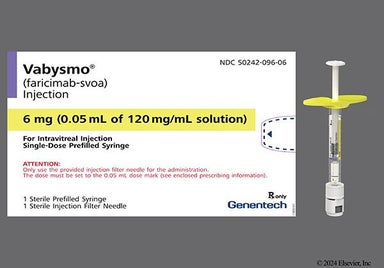
Vabysmo (faricimab or faricimab-svoa) is a medication injected into the eye to treat certain eye conditions such as wet age-related macular degeneration (AMD), diabetic macular edema (DME), and macular edema following retinal vein occlusion (RVO). Vabysmo (faricimab) can help to improve vision, but it must be given by an eye specialist monthly when you first start. Common side effects include cataract and bleeding in the whites of the eyes.

Vabysmo (faricimab) is an injectable medication that blocks two proteins called vascular endothelial growth factor A (VEGF-A) and angiopoietin-2 (Ang-2).
These proteins can cause abnormal growth of blood vessels and swelling in the eye, which can lead to possible vision loss. By blocking both of these proteins from working, Vabysmo (faricimab) helps reduce this abnormal growth and swelling.
| Common Brands | Vabysmo |
|---|---|
| Drug Class | VEGF and Ang-2 inhibitor |
| Controlled Substance Classification | Not a controlled medication |
| Generic Status | No lower-cost generic available |
| Availability | Prescription only |

The following side effects may get better over time as your body gets used to the medication. Let your healthcare provider know immediately if you continue to experience these symptoms or if they worsen over time.
Wet AMD:
DME:
Macular edema following RVO:
Wet AMD:
DME:
Macular edema following RVO:
Contact your healthcare provider immediately if you experience any of the following.
Side effects that you should report to your care team as soon as possible:
Side effects that usually do not require medical attention (report these to your care team if they continue or are bothersome):




Vabysmo (faricimab) can cause some serious health issues. This risk may be even higher for certain groups. If this worries you, talk to your doctor or pharmacist about other options.
Eye injections can raise the risk of certain eye problems, such as endophthalmitis (a bacterial or fungal infection inside the eye) and retinal detachments. Retinal detachment is when the retina (light-sensitive tissue in the back of your eye) is separated from its normal position. Your provider will take proper precautions and provide you with an antibiotic before your injection to lower the risk of contamination and infection. Let your provider know right away if you have any signs and symptoms of eye infection or injury, such as eye redness or pain, light sensitivity, or vision changes.
Vabysmo (faricimab) can temporarily raise the pressure inside the eye (intraocular pressure). This can happen within 1 hour of injection because there's more fluid in the eye. Your provider will monitor your eye pressure after your injection and provide treatment if needed.
Although very rare, there's a potential risk of blood clots with the use of Vabysmo (faricimab). These blood clots can lead to stroke or heart attacks. Get emergency medical help if you have any signs and symptoms of a blood clot. Stroke symptoms can include sudden numbness or weakness on one side of the body; sudden confusion; trouble speaking, seeing, or walking; or sudden severe headache. Heart attack symptoms can include chest pain or discomfort; feeling weak or lightheaded; shortness of breath; or pain or discomfort in the jaw, neck, back, arms or shoulders.
Although rare, inflammation of the retina (retinal vasculitis) with or without blockage of blood flow can happen with Vabysmo (faricimab). Let your eye specialist know if you have any changes in your vision immediately.


Contraindications are specific health conditions or situations in which a person should not take a medication due to safety concerns. If you have any of the following conditions or if any of the following apply to you, let your healthcare provider know because Vabysmo (faricimab) will not be safe for you to take.

Conditions related to swelling or damage to the macula or retina (parts of the eye that are important for vision):
Lucentis and all its biosimilars
Lucentis and Cimerli biosimilar only


Prescription savings
Stop paying too much for your prescriptions. Compare prices, get pharmacy coupons, and save up to 80%. Find expert answers to your health questions so you can make the best decisions for yourself and your family.
Health conditions
Medications & treatment
Access & affordability
 Our monthly healthcare membership can help you save thousands on your prescription costs.
Resources

Although everyone responds differently to Vabysmo, studies showed that the medication can start working to improve your vision after the first dose.
Depending on your condition, Vabysmo is given as monthly injections for the first 4 or 6 months. After that, your provider will decide how often you need to get Vabysmo and how long your treatment should be.
No, Vabysmo must be given by a trained eye specialist. You have to make an appointment to come into the provider's office or clinic for your injections. Everyone can have a different treatment plan, so discuss your specific dosing schedule with your provider so you can plan accordingly.
Before your injection of Vabysmo, you'll be given local anesthesia (numbing medication) and an antibiotic. These medications can help ease the pain and prevent infection from the procedure. During the injection, you might feel some pressure in your eye. You'll then be monitored for a period of time after the injection to see if this medication has affected your eye pressure. Speak to your provider to see how long the process should take so you can plan accordingly.
There haven't been studies looking at Vabysmo in pregnant females. But there might be a potential risk to your unborn baby based on how Vabysmo works. You shouldn't get Vabysmo injections during pregnancy unless your provider has directed you to. Use birth control before, during your Vabysmo treatment, and for 3 months after your last dose to prevent getting pregnant during this time.
