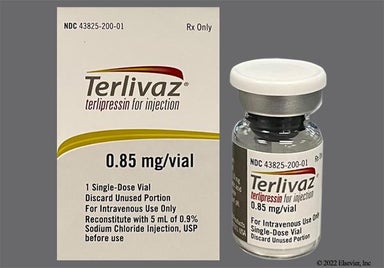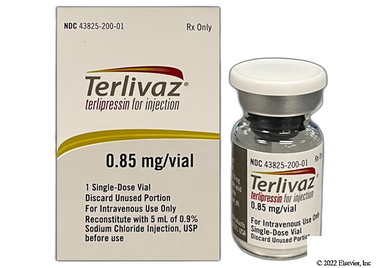
Terlivaz (terlipressin) is a medication that helps to improve kidney function in people with hepatorenal syndrome (HRS). It's the first FDA-approved medication for this condition. Terlivaz (terlipressin) is only available in the hospital, and is given as an intravenous (IV, or into the veins) injection by a trained healthcare provider. Terlivaz (terlipressin) can put you at risk for serious breathing problems, so your provider will monitor your oxygen level closely while you receive treatment.
Terlivaz (terlipressin) is a synthetic vasopressin analog. It's a man-made form of a natural hormone in your body called vasopressin. Terlivaz (terlipressin) is used to improve kidney function in people with HRS who also have acute (sudden) kidney failure. It's thought to work by raising blood flow to your kidneys and by lowering the blood pressure and blood flow in the liver.
Terlivaz (terlipressin) is typically injected into a vein by a healthcare provider. It's usually given in a hospital that has the staff and equipment needed to respond to any life-threatening side effects right away. Terlivaz (terlipressin) is given after your provider checks your oxygen level, fluid status, and liver condition. The typical starting dose is 0.85 mg injected in your veins every 6 hours on the first 3 days. After this, your provider will adjust your dose of Terlivaz (terlipressin) depending on how your kidneys are doing. The maximum length of time you can receive Terlivaz (terlipressin) treatment is 2 weeks.
Common side effects of Terlivaz (terlipressin) include belly pain (20%), nausea (16%), trouble breathing (13-16%), diarrhea (13%), buildup of fluid (9%), and slow heart rate (5%). Tell your provider right away if you experience any of these side effects after the injection.
No, you shouldn't use Terlivaz (terlipressin) if you're pregnant because it might cause harm to the unborn baby. Even though this medication hasn’t been well studied in human pregnancies, the studies that do exist suggest that it can cause the uterus (womb) to contract (tighten) as well as block blood flow to the lining of the uterus. Talk with your provider to discuss the benefits and risks of taking Terlivaz (terlipressin) if you're pregnant.
Yes, Terlivaz (terlipressin) has a black box warning for serious breathing problems. Terlivaz (terlipressin) can make it difficult for you to breathe on your own, which can be life-threatening. Your risk is higher if you have liver failure or too much fluid in your body. Your provider will monitor your oxygen level during treatment to make sure this medication is safe for you. If you have trouble breathing, slow heart rate, or bluish skin, let your provider know right away so that they can give you medical attention.
People who are expecting a liver transplant might not be able to receive Terlivaz (terlipressin) . This is because Terlivaz (terlipressin) can lower blood flow in certain parts of the body and cause difficulty breathing - these factors might affect whether or not you're able to receive the new liver. Also, if you have a history of serious heart problems, stroke, or blocked blood vessels, avoid using Terlivaz (terlipressin) since it can worsen these medical conditions. In addition, if you have breathing problems or low oxygen levels, your provider won't be able to give you this medication until your condition gets better.