Key takeaways:
Symbicort (budesonide / formoterol) is a maintenance inhaler that’s FDA approved to treat chronic lung conditions. These include asthma and chronic obstructive pulmonary disease.
The typical Symbicort dosage for adults and children ages 6 and older is 2 puffs inhaled twice a day. You should separate doses by about 12 hours. Rinse your mouth with water after each use to help prevent a fungal infection of the mouth and throat called oral thrush.
Symbicort is available as a brand-name medication. But you can also find it as a lower-cost generic medication. GoodRx can help make your prescription more affordable.
Save on related medications
Maintenance inhalers play a crucial role in preventing flare-ups of chronic lung conditions. These include asthma and chronic obstructive pulmonary disease (COPD). Symbicort (budesonide / formoterol) is a popular maintenance inhaler.
Knowing how to use Symbicort is key to getting the most out of your inhaler. You should always follow your prescriber’s instructions. But the inhaler’s manufacturer provides standard dosage information. Below, we cover typical Symbicort dosages for adults and children — plus what to do if you forget a dose.
What’s the typical Symbicort dosage for adults?
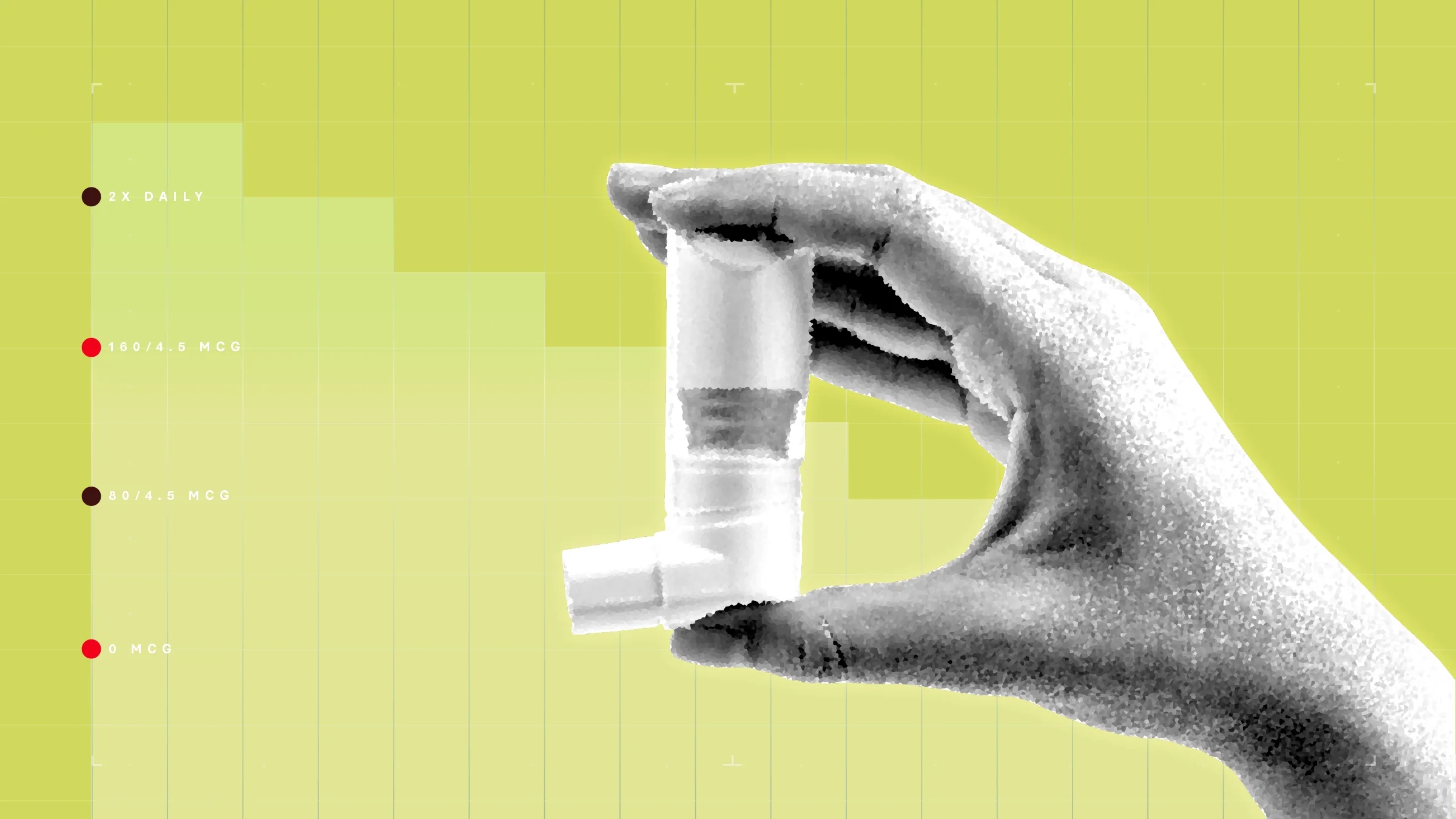
The typical adult Symbicort dosage is 2 puffs inhaled twice a day. Ideally, you should separate doses by about 12 hours. This helps provide consistent effects.
Symbicort comes in two doses:
80 mcg of budesonide / 4.5 mcg formoterol (written on the package as “Symbicort 80/4.5”)
160 mcg of budesonide / 4.5 mcg formoterol (written on the package as “Symbicort 160/4.5”)
The specific dose you’re prescribed will depend on why you’re using Symbicort and the severity of your symptoms. Adults with asthma may start with either dose. Your prescriber may raise or lower your dose depending on your symptoms.
Symbicort 160/4.5 is recommended for adults with COPD. The lower dose isn’t effective for most people with this lung condition.
How to take Symbicort
Symbicort is an L-shaped metered dose inhaler. You use it similarly to many commonly prescribed rescue inhalers, such as albuterol (Ventolin HFA).
To use Symbicort, follow these steps:
Stand or sit upright.
Hold the inhaler so the mouthpiece is on the bottom and positioned horizontally.
If this is the first time you’re using this inhaler, you’ll need to “prime” it. You should also do this if you haven’t used it in the past 7 days or if you drop it. To prime Symbicort, shake it for 5 seconds. Remove the mouthpiece cover, point it away from yourself and others, and press the top of the inhaler down. This releases a test spray. Repeat this step again so that you’ve released two test sprays.
When you’re ready to use Symbicort, shake the inhaler for about 5 seconds.
Remove the mouthpiece cover (if it’s not already off following inhaler priming).
Breathe out fully. Bring Symbicort to your mouth, and close your lips around the mouthpiece.
Start breathing in slowly through your mouth. As you breathe in, press the top of the inhaler down to release a spray of medication. Continue breathing in fully and deeply.
Remove the inhaler from your mouth. Hold your breath for 10 seconds or as long as you can.
Breathe out. Replace the mouthpiece cover.
Wait 1 minute, and repeat steps 4 to 9 to inhale your second puff.
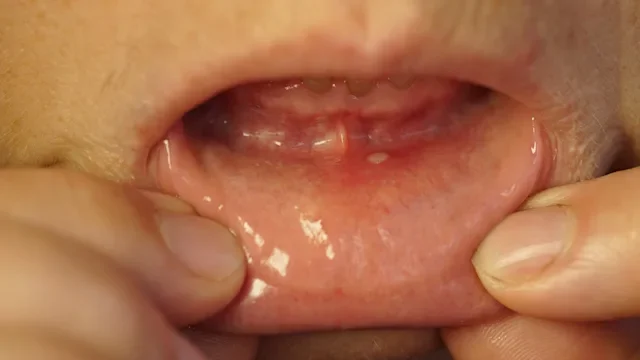
After each dose (2 puffs) of Symbicort, rinse your mouth with water and spit it out. This helps prevent a fungal infection of the mouth and throat called oral thrush.
Good to know: To help keep your Symbicort inhaler working properly, you should clean it once a week. Use a clean, dry cloth, such as a paper towel, to wipe the inhaler’s mouthpiece. Don’t put Symbicort in water or try to take it apart.
What’s the Symbicort dosage for children?
Symbicort is FDA approved to treat asthma in children ages 6 and older. The Symbicort dosage for children is 2 puffs inhaled twice a day. Separate doses by about 12 hours. Follow the instructions above for how to use Symbicort.
The lower dose (Symbicort 80/4.5) is recommended for children ages 6 to 11. Adolescents 12 and older can use the 80/4.5 or 160/4.5 dose depending on how severe their symptoms are. Be sure your child rinses their mouth with water and spits it out after each dose of Symbicort.
It can be tricky for children to time their breaths when using Symbicort. Consider asking their prescriber about using an inhaler spacer. This is a plastic tube that you place on the inhaler’s mouthpiece before they use it. It allows them to breathe in their inhaler doses at their own speed.
Can you take Symbicort as needed for asthma attacks?
Symbicort isn’t FDA approved to be used as needed for asthma attacks. But evidence suggests that using Symbicort as both a maintenance and a rescue inhaler is as effective as using two separate inhalers.
Keep in mind that your insurance may not cover Symbicort (or its generics) for as-needed use. You may want to check with your prescriber and insurance plan before using the inhaler this way.
Are there any Symbicort dosage adjustments for health conditions?
No, there are no medical conditions, such as liver or kidney disease, that would require you to make Symbicort dosage adjustments. If you’re using Symbicort to manage asthma, your prescriber may alter your dose if the severity of your symptoms changes.
What happens if you miss a dose of Symbicort?
If you miss a dose of Symbicort, skip it. Just use your next dose at its usual time. Don’t double up or use extra Symbicort to make up for missed doses. Doing this can raise your risk of certain side effects.
What happens if you take an extra dose of Symbicort?
Using an extra dose of Symbicort by mistake is unlikely to harm you. But you may experience more side effects than usual. These include headache and an elevated heart rate.
Clinical studies haven’t found Symbicort overdoses to cause serious harm. But it’s still a good idea to contact a healthcare professional if you or someone you know has inhaled an excessive amount of Symbicort. You can also contact Poison Control at 1-800-222-1222 for guidance.
How to save on Symbicort
There are many ways to save on Symbicort, which is available as a brand-name and generic medication.
Save with GoodRx. GoodRx can help you save over 65% off the average retail price of the generic version. Generic Symbicort’s price at certain pharmacies is as low as $97.09 with a free GoodRx discount. You can also use GoodRx to access Breyna, another Symbicort generic, at an exclusive cash price as low as $92.
Save with a copay savings card. If you have commercial insurance, you may be eligible to pay as little as $35 per month for brand-name Symbicort or as little as $20 per month for Breyna using a savings card from the manufacturer.
Save with patient assistance programs. If you’re uninsured or underinsured, you may be eligible for Breyna’s patient assistance program, which offers the medication for free.
Frequently asked questions
Symbicort contains a combination of budesonide and formoterol and is available in two doses:
Symbicort 80/4.5 (80 mcg budesonide / 4.5 mcg formoterol)
Symbicort 160/4.5 (160 mcg budesonide / 4.5 mcg formoterol)
The dose you use is based on your age, the condition you’re treating, and the severity of your symptoms.
Symbicort can affect the heart for some people. It can temporarily raise your heart rate or blood pressure. This is especially true if you’re using the higher 160/4.5 dose. Research isn’t clear on whether Symbicort has long-term heart effects on the heart. Make sure your prescriber is aware of any heart-related conditions you have before starting Symbicort. They may want you to check your blood pressure and heart rate at home.
Symbicort contains a long-acting beta-agonist (LABA). So you shouldn’t combine it with any other LABAs, such as salmeterol (Servent Diskus). You should also be cautious when using this inhaler with beta blockers, some diuretics (water pills), and certain antidepressants. But these aren’t the only medications that Symbicort interacts with. Be sure to share a medication list with your prescriber and pharmacist so they can check for potential interactions.
Symbicort contains a combination of budesonide and formoterol and is available in two doses:
Symbicort 80/4.5 (80 mcg budesonide / 4.5 mcg formoterol)
Symbicort 160/4.5 (160 mcg budesonide / 4.5 mcg formoterol)
The dose you use is based on your age, the condition you’re treating, and the severity of your symptoms.
Symbicort can affect the heart for some people. It can temporarily raise your heart rate or blood pressure. This is especially true if you’re using the higher 160/4.5 dose. Research isn’t clear on whether Symbicort has long-term heart effects on the heart. Make sure your prescriber is aware of any heart-related conditions you have before starting Symbicort. They may want you to check your blood pressure and heart rate at home.
Symbicort contains a long-acting beta-agonist (LABA). So you shouldn’t combine it with any other LABAs, such as salmeterol (Servent Diskus). You should also be cautious when using this inhaler with beta blockers, some diuretics (water pills), and certain antidepressants. But these aren’t the only medications that Symbicort interacts with. Be sure to share a medication list with your prescriber and pharmacist so they can check for potential interactions.
The bottom line
The typical Symbicort (budesonide / formoterol) dosage is two puffs inhaled twice a day. It’s ideal to separate doses by about 12 hours. This dosage is the same for adults and children, and it’s the same for each of Symbicort’s FDA-approved uses.
Symbicort comes in two doses: 80 mcg/4.5 mcg and 160 mcg/4.5 mcg. The specific dose you use will depend on your age, your symptoms, and the reason you’re using it. Be sure to rinse your mouth out after each dose of Symbicort. This helps prevent a fungal infection of the mouth and throat (oral thrush).

Why trust our experts?



References
MedlinePlus. (2023). Budesonide and formoterol oral inhalation.
National Heart, Lung, and Blood Institute. (2021). How to use a metered-dose inhaler. National Institutes of Health.
Sportpharm. (2026). Symbicort- budesonide and formoterol fumarate dihydrate aerosol [package insert].
Symbicort. (2018). Quick guide to using your symbicort inhaler.