mafenide
Sulfamylon (mafenide) is an antibiotic cream that's used on the skin to prevent bacterial infections after serious burns. The typical dosage for Sulfamylon (mafenide) cream is to apply it once or twice a day. Common side effects of Sulfamylon (mafenide) include pain and a burning sensation during application. Mafenide used to be available as a powder for topical solutions, but both brand and generic versions of the solution are no longer approved by the FDA.


What is Sulfamylon (mafenide)?
What is Sulfamylon (mafenide) used for?
- Prevention of infection after second- and third-degree burns (add-on treatment)
How Sulfamylon (mafenide) works
Sulfamylon (mafenide) is a bacteriostatic antibiotic, meaning it slows bacteria activity and growth instead of killing them (bactericidal). This helps your immune system clear the bacteria from your body.
Drug facts
| Common Brands | Sulfamylon |
|---|---|
| Drug Class | Sulfonamide antibiotic |
| Controlled Substance Classification | Not a controlled medication |
| Generic Status | Lower-cost generic available |
| Availability | Prescription only |

Side effects of Sulfamylon (mafenide)
The following side effects may get better over time as your body gets used to the medication. Let your healthcare provider know immediately if you continue to experience these symptoms or if they worsen over time.
Common Side Effects
- Pain
- Burning sensation
Sulfamylon (mafenide) serious side effects
Contact your healthcare provider immediately if you experience any of the following.
- Low red blood cell count: feeling tired, paleness
- Abnormal clotting or bleeding: blood in the urine or stool, chest pain, trouble breathing, pain or swelling in the leg, bruising
- Severe allergic reaction: hives, swelling in the face, lips, tongue, or throat, trouble breathing
- High acid levels in the blood: fast breathing, dizziness, nausea, feeling tired

Get your GoodRx coupon

Pros and cons of Sulfamylon (mafenide)
Pros
- Prevents bacterial infection in burns
- Typically applied only once or twice daily
- Can be used on children and adults
Cons
- Must be used with other medications and therapies for treating burns
- Must re-apply if any of it rubs or washes off
- Doesn't prevent fungal growth or infections

Pharmacist tips for Sulfamylon (mafenide)

- Wash your hands well before applying this medication or caring for your burn wounds. You want them to be as clean as possible so you don't introduce bacteria that can cause infection.
- Apply Sulfamylon (mafenide) while wearing sterile medical gloves. Apply the cream at about 1/16 inch thickness. If it rubs or washes off, re-apply the cream to keep the burn wound covered at all times.
- Dressings usually aren't required on top of Sulfamylon (mafenide) cream, but if you do use one, make sure the dressing is only a thin layer.
- It's important to bathe or gently shower every day. This helps wash off dead skin cells and helps with healing.
- Use Sulfamylon (mafenide) only on burned skin surfaces. This medication shouldn't be taken by mouth.
- It isn't known if Sulfamylon (mafenide) gets into breast milk and causes harm to breastfed babies. Tell your provider if you're breastfeeding before using this medication.

Risks and warnings for Sulfamylon (mafenide)
Sulfamylon (mafenide) can cause some serious health issues. This risk may be even higher for certain groups. If this worries you, talk to your doctor or pharmacist about other options.
Low red blood cell counts and abnormal clotting
- Risk factors: G6PD deficiency
If you have a condition called glucose-6-phosphate dehydrogenase (G6PD) deficiency, be sure to talk to your provider before using Sulfamylon (mafenide). Though extremely rare, there have been reports of Sulfamylon (mafenide) causing life-threatening changes in red blood cell counts (anemia), abnormal clotting, and bleeding, in people with this condition.
Severe allergic reaction
- Risk factors: Sulfite allergy | Sulfa allergy | Asthma
Sulfamylon (mafenide) contains a sulfite ingredient. Sulfites are commonly used as preservatives in medications, foods, and drinks, but some people are allergic to them. Additionally, Sulfamylon (mafenide) contains sulfa. Get medical help right away if you think you're having an allergic reaction (e.g., hives, swelling, difficulty breathing). Let your provider and pharmacist know of all your allergies before using Sulfamylon (mafenide). If you have asthma, it's best to have your rescue inhaler handy when first starting on this medication since sulfite allergies are more common in people with asthma.
Higher acid levels in the blood
- Risk factors: Kidney problems | Lung or breathing problems | Burns affecting large parts of the body
Sulfamylon (mafenide) can cause high acid levels in the blood (acidosis) as a side effect, especially if you have kidney problems or need to use a lot of the medication on large burns. Your provider might have you do blood work so they can make sure this doesn't become a serious problem. Let your provider know right away if your breathing gets faster, since this can be a sign of too much acid in your blood.
Fungal growth
Since Sulfamylon (mafenide) prevents growth of bacteria, fungi have a better chance of growing in areas where you've applied this medication. This rarely is a serious problem, but let your provider know if your wound symptoms (e.g., pain, redness, swelling) get worse.

Sulfamylon (mafenide) dosage
 Carton
| Dosage | Quantity | Price as low as | Price per unit |
|---|---|---|---|
| 5 packets of 5% | 1 carton | $429.50 | $429.50 |

How much does Sulfamylon (mafenide) cost?

What are alternatives to Sulfamylon (mafenide)?

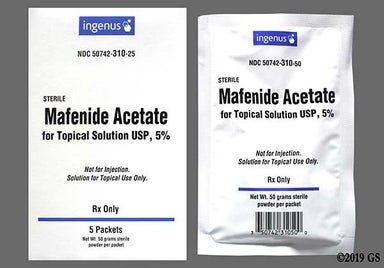
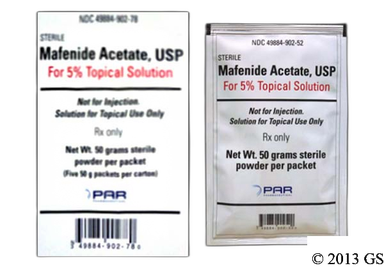
Sulfamylon (mafenide) images