



What to Know About Potassium Iodide (SSKI) for Radiation Poisoning
Potassium iodide (SSKI) is a salt of stable iodine that blocks the thyroid from absorbing radioactive iodine. Here’s how it works for radiation poisoning.
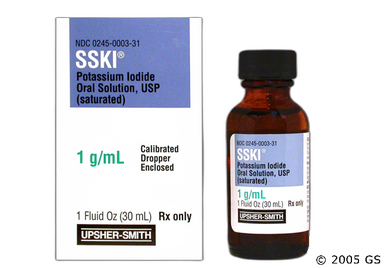
SSKI (potassium iodide) is a prescription medication used as an expectorant to help clear mucus from your airways. It's approved for adults with chronic lung conditions (e.g., asthma, bronchitis, emphysema) where thick mucus is a problem. It’s a liquid solution that you mix with water, fruit juice, or milk, and take 3 to 4 times daily. The most common side effects include stomach upset, diarrhea, nausea, and vomiting.

SSKI (potassium iodide) is an antithyroid medication. It works by helping the lungs make more fluid, which thins the mucus in your airways. This makes it easier to cough up the mucus and clear your congestion.
| Common Brands | SSKI |
|---|---|
| Drug Class | Expectorant |
| Controlled Substance Classification | Not a controlled medication |
| Generic Status | No lower-cost generic available |
| Availability | Prescription only |

The following side effects may get better over time as your body gets used to the medication. Let your healthcare provider know immediately if you continue to experience these symptoms or if they worsen over time.
Contact your healthcare provider immediately if you experience any of the following.
Along with its needed effects, a medicine may cause some unwanted effects. Although not all of these side effects may occur, if they do occur they may need medical attention.
Check with your doctor as soon as possible if any of the following side effects occur:
Less common
joint pain
swelling of arms, face, legs, lips, tongue, and/or throat
swelling of lymph glands
Some side effects may occur that usually do not need medical attention. These side effects may go away during treatment as your body adjusts to the medicine. Also, your health care professional may be able to tell you about ways to prevent or reduce some of these side effects. Check with your health care professional if any of the following side effects continue or are bothersome or if you have any questions about them:
Other side effects not listed may also occur in some patients. If you notice any other effects, check with your healthcare professional.
Call your doctor for medical advice about side effects. You may report side effects to the FDA at 1-800-FDA-1088.




SSKI (potassium iodide) can cause some serious health issues. This risk may be even higher for certain groups. If this worries you, talk to your doctor or pharmacist about other options.
If you're pregnant or become pregnant while taking SSKI (potassium iodide), tell your prescriber right away. This medication can cause thyroid problems in your unborn baby. Your prescriber will discuss with you the benefits and the risks of taking SSKI (potassium iodide) during pregnancy.
Some people who take SSKI (potassium iodide) for a long time can develop low thyroid hormone, also known as hypothyroidism. Only take this medication as prescribed by your healthcare professional. SSKI (potassium iodide) is typically taken for a short time and stopped once your symptoms improve.
SSKI (potassium iodide) can interact with many medications. For example, taking this medication with lithium or other antithyroid medications can raise the risk of thyroid problems. Also, certain diuretics and blood pressure medications can lead to high potassium levels and serious heart problems. Let your prescriber know all of the medications and supplements you are taking to make sure they are safe.


Although certain medicines should not be used together at all, in other cases two different medicines may be used together even if an interaction might occur. In these cases, your doctor may want to change the dose, or other precautions may be necessary. When you are taking this medicine, it is especially important that your healthcare professional know if you are taking any of the medicines listed below. The following interactions have been selected on the basis of their potential significance and are not necessarily all-inclusive.
Using this medicine with any of the following medicines may cause an increased risk of certain side effects, but using both drugs may be the best treatment for you. If both medicines are prescribed together, your doctor may change the dose or how often you use one or both of the medicines.


Contraindications are specific health conditions or situations in which a person should not take a medication due to safety concerns. If you have any of the following conditions or if any of the following apply to you, let your healthcare provider know because SSKI (potassium iodide) will not be safe for you to take.


Prescription savings
Stop paying too much for your prescriptions. Compare prices, get pharmacy coupons, and save up to 80%. Find expert answers to your health questions so you can make the best decisions for yourself and your family.
Health conditions
Medications & treatment
Access & affordability
 Our monthly healthcare membership can help you save thousands on your prescription costs.
Resources

To make your dose of Sski, measure 0.3 mL (300 mg) or 0.6 mL (600 mg), depending on your prescription. Mix this measured amount into a glass of water, fruit juice, or milk, and drink the entire mixture. Take this medication 3 to 4 times daily, or as directed by your prescriber.
Sski can irritate your stomach, so diluting it with a beverage can help reduce this effect. If you still have an upset stomach while taking this medication, try taking it with food or milk to ease discomfort.
Sski is only available with a prescription. Talk to your pulmonologist or healthcare professional (HCP) for a prescription that you can fill at your local pharmacy.
Yes, Sski can cause some stomach upset like nausea, vomiting, or stomach pain. If taking it with food or milk doesn’t improve these symptoms, talk to your prescriber about other recommendations they can suggest.
No, Lugol's iodine isn't the same as Sski. Lugol's iodine is typically used for managing certain thyroid conditions, whereas Sski is used to treat cough symptoms in people with chronic lung conditions. Lugol's is a solution made of elemental iodine mixed with potassium iodide, while Sski doesn't contain elemental iodine. If you're unsure which product is right for you, speak with your prescriber.
Sski can cause harm to an unborn baby, potentially causing thyroid problems, if taken in pregnancy. If you become pregnant while taking this medication, let your prescriber know.
