


Prevident Products for Tooth Decay: How Are They Different?
Prevident toothpaste contains more sodium fluoride to prevent tooth decay. Compare the different Prevident products, like 5000 Booster Plus and Enamel Protect.
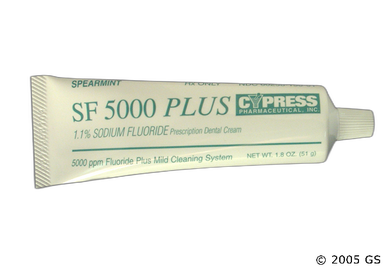
Sodium fluoride dental is a medication in many oral care products that's used to prevent cavities in children and adults. It's available as a toothpaste, mouthwash, foam, or gel. Depending on the strength, the product can be bought over the counter or with a prescription for you to use at home. It can also be used by your provider at the dental office.

Certain bacteria in your mouth produce acid that can break down the surfaces of your teeth. Sodium fluoride dental is a fluoride medication that prevents cavities by making the teeth more resistant to acid. It also helps the teeth absorb fluoride ion, which adds protection to the tooth enamel to make it stronger.
| Common Brands | Prevident 5000 Plus, DentaGel, Denta 5000 Plus, SF 5000 Plus, Clinpro 5000 |
|---|---|
| Drug Class | Fluoride |
| Controlled Substance Classification | Not a controlled medication |
| Generic Status | Lower-cost generic available |
| Availability | Prescription or over-the-counter |

The following side effects may get better over time as your body gets used to the medication. Let your healthcare provider know immediately if you continue to experience these symptoms or if they worsen over time.
See Risks and Warnings.
Along with its needed effects, a medicine may cause some unwanted effects. Although not all of these side effects may occur, if they do occur they may need medical attention.
Check with your doctor as soon as possible if any of the following side effects occur:
Sores in the mouth and on the lips (rare)
Sodium fluoride in drinking water or taken as a supplement does not usually cause any side effects. However, taking an overdose of fluoride may cause serious problems.
Stop taking this medicine and get emergency help immediately if any of the following effects occur:
Black, tarry stools
bloody vomit
drowsiness
faintness
increased watering of the mouth
nausea or vomiting
shallow breathing
stomach cramps or pain
unusual excitement
watery eyes
weakness
Check with your doctor as soon as possible if any of the following side effects occur:
Pain and aching of bones
stiffness
white, brown, or black discoloration of the teeth—occurs only during periods of tooth development in children
Other side effects not listed may also occur in some patients. If you notice any other effects, check with your healthcare professional.
Call your doctor for medical advice about side effects. You may report side effects to the FDA at 1-800-FDA-1088.




Sodium fluoride dental can cause some serious health issues. This risk may be even higher for certain groups. If this worries you, talk to your doctor or pharmacist about other options.
Children under 6 years old generally can't brush their teeth without swallowing. Swallowing sodium fluoride dental daily over time can cause dental fluorosis, which is when the tooth enamel changes color or appearance. If your provider recommends this medication for your child who's under the age of 6, your child will need special supervision to prevent them from swallowing the medication. All children under age 12 should be supervised when using sodium fluoride dental products.

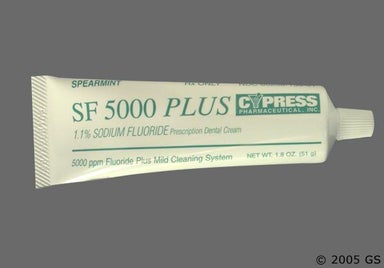
 Tube of paste
| Dosage | Quantity | Price as low as | Price per unit |
|---|---|---|---|
| 51g of 1.1% | 1 tube | $12.83 | $12.83 |

Although certain medicines should not be used together at all, in other cases two different medicines may be used together even if an interaction might occur. In these cases, your doctor may want to change the dose, or other precautions may be necessary. Tell your healthcare professional if you are taking any other prescription or nonprescription (over-the-counter [OTC]) medicine.


Prescription savings
Stop paying too much for your prescriptions. Compare prices, get pharmacy coupons, and save up to 80%. Find expert answers to your health questions so you can make the best decisions for yourself and your family.
Health conditions
Medications & treatment
Access & affordability
Medication discounts


You can typically use Sodium Fluoride once or twice a day, depending on which product you're using. If you're instructed to use it once a day, use it at bedtime. This gives your teeth more time to absorb the medication, and there's less risk of it being removed by food or drink since you'll be asleep. For Sodium Fluoride mouthwash or rinse, it's best to use it after brushing your teeth with toothpaste. If you're using it twice a day, it's recommended in the morning and before going to bed. Don't eat or drink for 30 minutes after use.
If you or your child accidentally swallows a large amount of Sodium Fluoride, it might result in a sudden burning feeling in the mouth and a sore tongue. Within 30 minutes of swallowing, you or your child might experience nausea, vomiting, diarrhea, drooling, and stomach cramps. These symptoms can last up to 24 hours. If you've discovered your child has swallowed Sodium Fluoride, call a poison control center at 1-800-222-1222 so they can advise you on what to do. In some cases, you'll need to get to a hospital for treatment.
No, not all Sodium Fluoride products work the same way. Different products contain different amounts of sodium fluoride, and some have additional ingredients. For example, Prevident 5000 Sensitive and Prevident 5000 Enamel Protect contain two active ingredients, sodium fluoride and potassium nitrate. Potassium nitrate is a desensitizing agent that's added to help people with sensitive teeth. Other Sodium Fluoride products contain only sodium fluoride as the active ingredient.
All of the Prevident products contain 1.1% of sodium fluoride, but they're made with a few differences. Prevident 5000 Sensitive and Prevident 5000 Enamel Protect contain an extra ingredient to help with sensitive teeth. Prevident 5000 Booster Plus allows you to absorb fluoride better and faster compared to other fluoride toothpastes. Prevident 5000 Dry Mouth doesn't contain ingredients that are known to cause dryness, so it might be a better option for people who have dry mouth.
Different Sodium Fluoride products are approved for different age groups. Toothpastes with a lower amount of sodium fluoride (e.g., 0.24%) can be purchased over the counter and used in adults and children over 2 years of age. The American Dental Association (ADA) recommends that children younger than 3 years old use toothpaste no larger than the size of a grain of rice. Toothpastes with a higher amount of sodium fluoride (e.g., 0.5%, 1.1%) are only available with a prescription. These prescription-only toothpastes are approved for adults, as well as children 6 or 12 years and older (depending on the strength). Mouthwashes are approved for people 6 years and older, but the directions on how to use them will depend on how much sodium fluoride is inside the product. Certain Sodium Fluoride products, such as gels used for mouth trays, are only available at your dental office. Speak with your provider regarding the health of your teeth to see which product is the best for you.
