


Everything You Need to Know About Penicillin Allergies
Penicillin allergies are common and often go away on their own. Learn how healthcare providers test for penicillin allergies and what alternative antibiotics you can take.
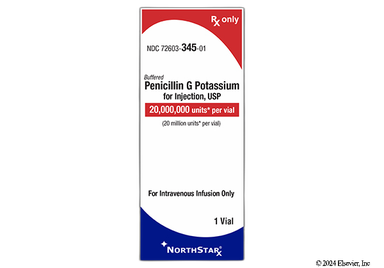
Penicillin G (Pfizerpen) is an antibiotic used to treat a wide variety of bacterial infections. It's typically given as an injection or infusion in the hospital or provider's office. Since it doesn't last long in the body, it usually needs to be given multiple times a day.

Penicillin G (Pfizerpen) an antibiotic that kills bacteria by preventing them from making their own protective covering.
| Common Brands | Pfizerpen |
|---|---|
| Drug Class | Penicillin antibiotic |
| Controlled Substance Classification | Not a controlled medication |
| Generic Status | No lower-cost generic available |
| Availability | Prescription only |

The following side effects may get better over time as your body gets used to the medication. Let your healthcare provider know immediately if you continue to experience these symptoms or if they worsen over time.
Contact your healthcare provider immediately if you experience any of the following.
Along with its needed effects, a medicine may cause some unwanted effects. Although not all of these side effects may occur, if they do occur they may need medical attention.
Stop taking this medicine and get emergency help immediately if any of the following effects occur:
Less common
Fast or irregular breathing
joint pain
lightheadedness or fainting (sudden)
puffiness or swelling around the face
red, scaly skin
shortness of breath
Check with your doctor immediately if any of the following side effects occur:
Rare
Abdominal or stomach cramps and pain (severe)
abdominal tenderness
convulsions (seizures)
decreased amount of urine
diarrhea (watery and severe), which may also be bloody
mental depression
pain at place of injection
sore throat and fever
unusual bleeding or bruising
yellow eyes or skin
Rare
For penicillin G procaine only
Agitation or combativeness
confusion
fear of impending death
feeling, hearing, or seeing things that are not real
Some side effects may occur that usually do not need medical attention. These side effects may go away during treatment as your body adjusts to the medicine. Also, your health care professional may be able to tell you about ways to prevent or reduce some of these side effects. Check with your health care professional if any of the following side effects continue or are bothersome or if you have any questions about them:
Other side effects not listed may also occur in some patients. If you notice any other effects, check with your healthcare professional.
Call your doctor for medical advice about side effects. You may report side effects to the FDA at 1-800-FDA-1088.



Penicillin G (Pfizerpen) can cause some serious health issues. This risk may be even higher for certain groups. If this worries you, talk to your doctor or pharmacist about other options.
Penicillin G (Pfizerpen) can cause allergic reactions that can be deadly. If you've had an allergy to any penicillin or cephalosporin antibiotic in the past, tell your provider before taking penicillin G (Pfizerpen). Get medical help right away if you experience trouble breathing, chest tightness, or swelling of your lips, tongue, or face.
Sometimes antibiotics including penicillin G (Pfizerpen) can lead to a new infection caused by too much C. difficile bacteria growing in your gut. This infection can cause serious diarrhea that can be life-threatening, and it's important you get treated with different antibiotics. If you experience fever, stomach cramps, or diarrhea, even after you stop taking penicillin G (Pfizerpen), let your provider know right away.
Penicillin G (Pfizerpen) can kill good bacteria in your body and promote the growth of other bacteria or fungi. This can lead to new infections. You're at a higher risk if you have an IV catheter (a tube inserted in your vein so you can get IV medications). Tell your provider if you have a fever, muscle pain, chills, or feel unwell while taking penicillin G (Pfizerpen) so you can be checked and treated for any new infections that happen.

Penicillin G (Pfizerpen) is usually given as an intravenous (IV) or intramuscular (IM) injection in a hospital setting or at home by a healthcare provider. Your provider will make sure you get this medication at the correct dose and time.
The dose depends on the condition being treated. In children, the dose will also depend on their weight.

Although certain medicines should not be used together at all, in other cases two different medicines may be used together even if an interaction might occur. In these cases, your doctor may want to change the dose, or other precautions may be necessary. When you are taking any of these medicines, it is especially important that your healthcare professional know if you are taking any of the medicines listed below. The following interactions have been selected on the basis of their potential significance and are not necessarily all-inclusive.
Using medicines in this class with any of the following medicines is usually not recommended, but may be required in some cases. If both medicines are prescribed together, your doctor may change the dose or how often you use one or both of the medicines.


Prescription savings
Stop paying too much for your prescriptions. Compare prices, get pharmacy coupons, and save up to 80%. Find expert answers to your health questions so you can make the best decisions for yourself and your family.
Health conditions
Medications & treatment
Access & affordability
Medication discounts

Penicillin G Potassium is not given by mouth. This form of penicillin breaks down too easily in the stomach, so it doesn't absorb in your body very well. Another form of penicillin, penicillin V potassium, absorbs better and is available as a tablet and oral solution. However, it might not work as well for more serious infections.
Penicillin G Potassium doesn't last long in the body. Most people who take this medication need many IV infusions or IM injections each day, or even an all-day infusion. The names look very similar, but this medication is different from the long-acting penicillin shots. Bicillin C-R (penicillin G benzathine / penicillin G procaine) a few days and Bicillin L-A (penicillin G benzathine) lasts over a week.
There isn't enough information to know if Penicillin G Potassium is safe to use during pregnancy. In animal studies, Penicillin G Potassium didn't cause harm to unborn babies. There also doesn't appear to be any harm to unborn human babies. Speak to your provider about the risks and benefits of Penicillin G Potassium for you and your unborn baby if you're pregnant.
Your provider will determine how long you'll need to take Penicillin G Potassium based on your type of infection and how serious it is. In general, Penicillin G Potassium is typically used for at least 48 to 72 hours after your symptoms are gone. If you are being treated for streptococcal infection, you'll need to take the medication for at least 10 days. Make sure to follow your provider's instructions on how long you need to take this medication, and don't stop early because this puts you at risk for your infection coming back and becoming harder to treat.
