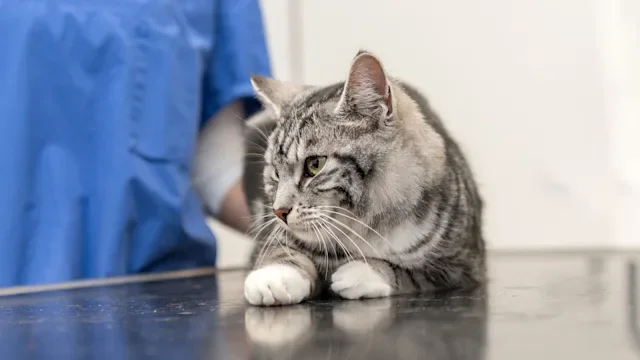
You probably didn’t have your blood pressure or your jean size in mind when you adopted Snickers from the animal shelter, but it turns out your furry companion can do more than make your annual holiday greeting card a little cuter. While a new cat may not cure your medical conditions, researchers have found a few notable health perks for people with pets.
References
American Heart Association. (2024). Can your pet help you be healthier?
Beetz, A., et al. Psychosocial and psychophysiological effects of human-animal interactions: the possible role of oxytocin. Frontiers in Psychology.
Christian, H., et al. (2013). Understanding the relationship between dog ownership and children’s physical activity and sedentary behaviour. Pediatric Obesity.
Colombo, G., et al. (2006). Pet therapy and institutionalized elderly: a study on 144 cognitively unimpaired subjects. Archives of Gerontology and Geriatrics.
Giaquinto, S., et al. (2009). Is there a scientific basis for pet therapy? Disability and Rehabilitation.
Jofré, L. (2005). Animal-assisted therapy in health care facilities. Revista Chilena de Infectología.
The American Institute of Stress. (n.d.). The healing power of pets.
Toohey, A.M., et al. (2013). Dog-walking and sense of community in neighborhoods: implications for promoting regular physical activity in adults 50 years and older. Health & Place.
Wood, L., et al. (2015). The pet factor: companion animals as a conduit for getting to know people, friendship formation, and social support. PLoS One.

Why trust our experts?



Search and compare options