


How to Stop Postnasal Drip: 7 Treatments to Consider
Postnasal drip can cause coughing, congestion, and more. Here’s how to stop postnasal drip with prescription and OTC medications, plus home remedies to try.
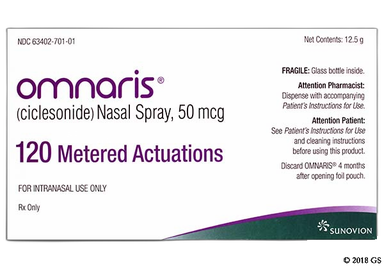
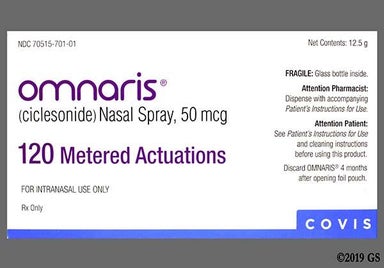
Omnaris (ciclesonide) nasal spray is a prescription intranasal corticosteroid. It's used to treat nasal allergy symptoms (e.g., runny nose, stuffy nose, itchy nose, sneezing) from seasonal and year-round allergies in adults and children. The typical dose is 2 sprays in each nostril once per day. Side effects aren't common, but can include headache and nosebleeds.

Nasal allergy symptoms (e.g., runny nose, stuffy nose, itchy nose, sneezing) from:
Omnaris (ciclesonide) is an intranasal corticosteroid. When it's sprayed into the nose, the medication lowers inflammation in your nose. This helps relieve seasonal allergy symptoms like stuffy or runny nose, itchy nose, and sneezing.
| Common Brands | Omnaris |
|---|---|
| Drug Class | Corticosteroid |
| Controlled Substance Classification | Not a controlled medication |
| Generic Status | No lower-cost generic available |
| Availability | Prescription only |

The following side effects may get better over time as your body gets used to the medication. Let your healthcare provider know immediately if you continue to experience these symptoms or if they worsen over time.
Contact your healthcare provider immediately if you experience any of the following.
Along with its needed effects, a medicine may cause some unwanted effects. Although not all of these side effects may occur, if they do occur they may need medical attention.
Check with your doctor immediately if any of the following side effects occur:
Less common
Bloody nose
headache
muscle aches
nasal discomfort
stuffy or runny nose
unusual tiredness or weakness
Rare
blindness
blistering, burning, crusting, dryness, or flaking of the skin
bloody mucus or unexplained nosebleeds
blurred vision
change in vision
darkening of the skin
decreased vision
difficulty with breathing or troubled breathing
difficulty with swallowing
dizziness
fainting
itching, scaling, severe redness, soreness, or swelling of the skin
loss of appetite
loss of consciousness
loss of vision
menstrual changes
mental depression
reddening of the skin, especially around the ears
skin rash
swelling of the eyes, eyelids, face, or inside of the nose
tearing
tightness in the chest
vomiting
weight gain around the face, neck, and trunk
white patches inside the nose or throat
Some side effects may occur that usually do not need medical attention. These side effects may go away during treatment as your body adjusts to the medicine. Also, your health care professional may be able to tell you about ways to prevent or reduce some of these side effects. Check with your health care professional if any of the following side effects continue or are bothersome or if you have any questions about them:
Less common
Ear pain
Other side effects not listed may also occur in some patients. If you notice any other effects, check with your healthcare professional.
Call your doctor for medical advice about side effects. You may report side effects to the FDA at 1-800-FDA-1088.



How to use Omnaris (ciclesonide) nasal spray:

Omnaris (ciclesonide) can cause some serious health issues. This risk may be even higher for certain groups. If this worries you, talk to your doctor or pharmacist about other options.
Using Omnaris (ciclesonide) can lead to nosebleeds. And using nasal corticosteroids in general can raise your risk for damage to the nasal septum (bony cartilage between your nostrils), though this side effect hasn't been reported by people who used Omnaris (ciclesonide). But if you do experience injury in the nose, using Omnaris (ciclesonide) might make it more difficult for the body to heal.
To lower the risk of injury, don't spray Omnaris (ciclesonide) toward the nasal septum. Don't use this medication if you recently had nasal surgery or injury in the nose. Contact your healthcare team right away if you experience painful discomfort in your nose or have regular nosebleeds.
Corticosteroids, like Omnaris (ciclesonide), can weaken your immune system and raise your risk for getting an infection. These infections can include fungal infections in the nose or throat area, which are more likely to happen when you use corticosteroid nasal sprays for several months. Other possible infections include viral infections like chickenpox. Once you develop an infection, you might have a harder time recovering from your illness.
Although there haven't been any reports of serious infections linked directly with Omnaris (ciclesonide), be on the lookout for any signs of infection while you're using this medication. Stop using Omnaris (ciclesonide) and contact your primary care provider if you have a fever, pain, aches, or chills, pain while swallowing, redness in the mouth, or white patches in your nose or throat. You might need to stop using Omnaris (ciclesonide) and take prescribed medication to treat the infection.
Using higher than the recommended dose of Omnaris (ciclesonide) or suddenly stopping this medication after using it over a long period of time can affect your body’s hormones, leading to too much cortisol or not enough cortisol (adrenal insufficiency).
Symptoms of too much cortisol might include changes in mood, muscle weakness, and round face. And having low cortisol level can lead to symptoms like irritability, nausea, and vomiting. If you experience any of these symptoms, your healthcare team might ask you to stop Omnaris (ciclesonide) slowly over time.
Corticosteroids like Omnaris (ciclesonide) might cause slower growth in children. To lower this risk, children should use the lowest dose of Omnaris (ciclesonide) for the shortest amount of time needed to treat their symptoms. Discuss with your child's pediatrician or primary care provider if you're concerned about how Omnaris (ciclesonide) might affect your child's growth. Speak with them about whether this medication is right for your child.
Allergic reactions to Omnaris (ciclesonide) are possible. These reactions can include life-threatening facial swelling, shock, and anaphylaxis (closing of the throat). Get medical attention right away if you notice hives, rash, red skin, swelling of the lips or tongue, or difficulty breathing after you use Omnaris (ciclesonide).
Using nasal corticosteroids might raise the pressure in your eyes and cause vision problems, including glaucoma or cataracts. These side effects haven't been reported by people using Omnaris (ciclesonide), but your healthcare team might want to monitor your vision during treatment. Talk to your optometrist (eye specialist) before you use Omnaris (ciclesonide) if you have glaucoma or cataracts. Contact your optometrist if you notice any concerning changes to your vision while you're using the medication.

 Nasal spray
| Dosage | Quantity | Price as low as | Price per unit |
|---|---|---|---|
| 12.5g of 50mcg | 1 nasal spray | $298.04 | $298.04 |

Although certain medicines should not be used together at all, in other cases two different medicines may be used together even if an interaction might occur. In these cases, your doctor may want to change the dose, or other precautions may be necessary. When you are taking this medicine, it is especially important that your healthcare professional know if you are taking any of the medicines listed below. The following interactions have been selected on the basis of their potential significance and are not necessarily all-inclusive.
Using this medicine with any of the following medicines is not recommended. Your doctor may decide not to treat you with this medication or change some of the other medicines you take.
Using this medicine with any of the following medicines is usually not recommended, but may be required in some cases. If both medicines are prescribed together, your doctor may change the dose or how often you use one or both of the medicines.
Using this medicine with any of the following medicines may cause an increased risk of certain side effects, but using both drugs may be the best treatment for you. If both medicines are prescribed together, your doctor may change the dose or how often you use one or both of the medicines.


Nasal allergy symptoms (e.g., runny nose, stuffy nose, itchy nose, sneezing) from:



Prescription savings
Stop paying too much for your prescriptions. Compare prices, get pharmacy coupons, and save up to 80%.Resources
About GoodRx
 Find expert answers to your health questions so you can make the best decisions for yourself and your family.
Health conditions
Medications & treatment
Access & affordability
Well-being
Medication discounts

Omnaris isn't an antihistamine. But rather, it's a corticosteroid (or steroid). Both antihistamine and corticosteroid nasal sprays are used to treat nasal allergy symptoms, but they work in different ways. Nasal steroids, like Omnaris, are first-choice options for treating allergy. In comparison, nasal antihistamines might not work as well and are more likely to cause bothersome side effects.
Typically, your healthcare team will ask you to place 2 sprays of Omnaris in each nostril once per day. You might start to feel better within 1 to 2 days after beginning treatment. But you need to use this medication daily in order to experience maximum benefits. Usually, you'll see your nasal allergy symptoms continue to improve over 1 to 2 weeks if you have seasonal allergy, and over 5 weeks if you have year-round allergy.
Your prescriber will likely have you continue using Omnaris as long as it's helping your allergy symptoms and you're not having any serious side effects. If you're starting treatment for the first time, you might need to use this nasal spray for a few weeks to experience the maximum benefit. Talk to your prescriber if you're not sure how long you should continue using Omnaris.
Both Omnaris and Zetonna contain the steroid ciclesonide as the active ingredient and are sprayed into the nose to treat nasal allergy symptoms. The difference is the formulation and amount of ciclesonide each dose provides. Omnaris is a nasal spray that provides 50 mcg of ciclesonide per spray. But Zetonna is a pressurized canister that provides 37 mcg of ciclesonide.
Omnaris and fluticasone (Flonase) are both nasal steroids used once per day to treat allergy symptoms. One major difference is fluticasone (Flonase) is available over-the-counter (OTC), whereas Omnaris is only available by prescription. Guidelines don't recommend one steroid nasal spray over the other; data suggests they work similarly well in treating allergy symptoms.
More research is needed to understand whether Omnaris is safe to use during pregnancy. But there are other steroid nasal sprays that are safe during pregnancy, such as budesonide (Rhinocort Allergy). If you're pregnant or thinking of becoming pregnant, talk with your healthcare team about treatment options for allergy.
No, Omnaris is available by prescription only. Ask your primary care provider or pharmacist for recommendations on available over-the-counter nasal sprays.
No, there isn't a generic for Omnaris that's available yet.
