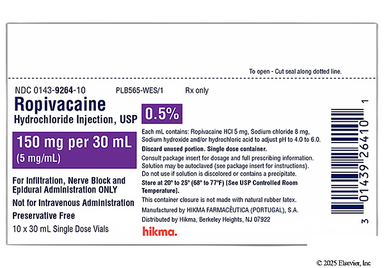
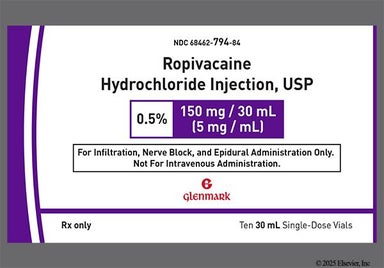
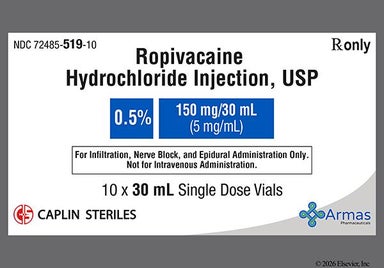
Ropivacaine (Naropin) is a medication used as a numbing agent for specific areas of the body before a surgery or procedure. It's also used for short-term treatment of pain. Ropivacaine (Naropin) can only be injected by a trained healthcare provider in a hospital or clinic. Due to possible serious side effects, the injections must be given slowly and carefully, and you'll be monitored closely by your provider during your treatment.
Ropivacaine (Naropin) is an injectable local anesthetic. It's used to numb a specific part of the body to prevent pain before a surgery or procedure. It can also be used to relieve short-term pain. It works to numb the area by blocking your nerves from sending pain signals to your brain. Ropivacaine (Naropin) is injected by a trained healthcare provider who will determine the dose based on your health, procedure, area of the injection, and many other factors.
Ropivacaine (Naropin) can be injected into your middle or lower back near your spine. It's injected into the space between the bones of your spine at your middle or lower back (epidural area) before a surgery or procedure. Ropivacaine (Naropin) can also be injected into different nerves or local areas of the body for pain relief.
In general, ropivacaine (Naropin) injection can make you lose the sense of feeling and movement in the area where your provider is trying to block the pain. Common side effects can include nausea, vomiting, low blood pressure, and slow heart rate. Other side effects can include fever, pain, a "pins and needles" feeling (paresthesia), and headache.
Although rare, some people can have an allergic reaction to ropivacaine (Naropin). If you've had an allergic reaction to other similar medications that were used for pain during a surgery or procedure, such as lidocaine (Xylocaine) or bupivacaine (Marcaine), there's a chance you might be allergic to ropivacaine (Naropin). Signs of an allergic reaction can include hives, itching, skin redness, nausea, vomiting, fast heart rate, dizziness, feeling faint, excessive sweating, difficulty breathing, or swelling in the mouth, throat, or tongue. If you're given too much of ropivacaine (Naropin), you might experience problems with your nervous system, such as restlessness, drowsiness, lightheadedness, numbness and tingling of the mouth and lips, ringing in the ears, blurred vision, or anxiety. Let your provider know right away if you experience any signs and symptoms of an allergic reaction or nervous system problems with ropivacaine (Naropin).
The effects of ropivacaine (Naropin) will depend on the dose, the area of injection, and how it's being injected into your body. Ropivacaine (Naropin) can be injected into the nerves or specific areas of the body to relieve pain for as short as 30 minutes and as long as 10 hours. Your provider can give you multiple injections to make the effects last longer. In certain situations, ropivacaine (Naropin) can be used as a continuous epidural infusion for ongoing pain relief for up to 72 hours. Speak to your provider to see how long you should expect to receive this medication to help relieve pain in your body.