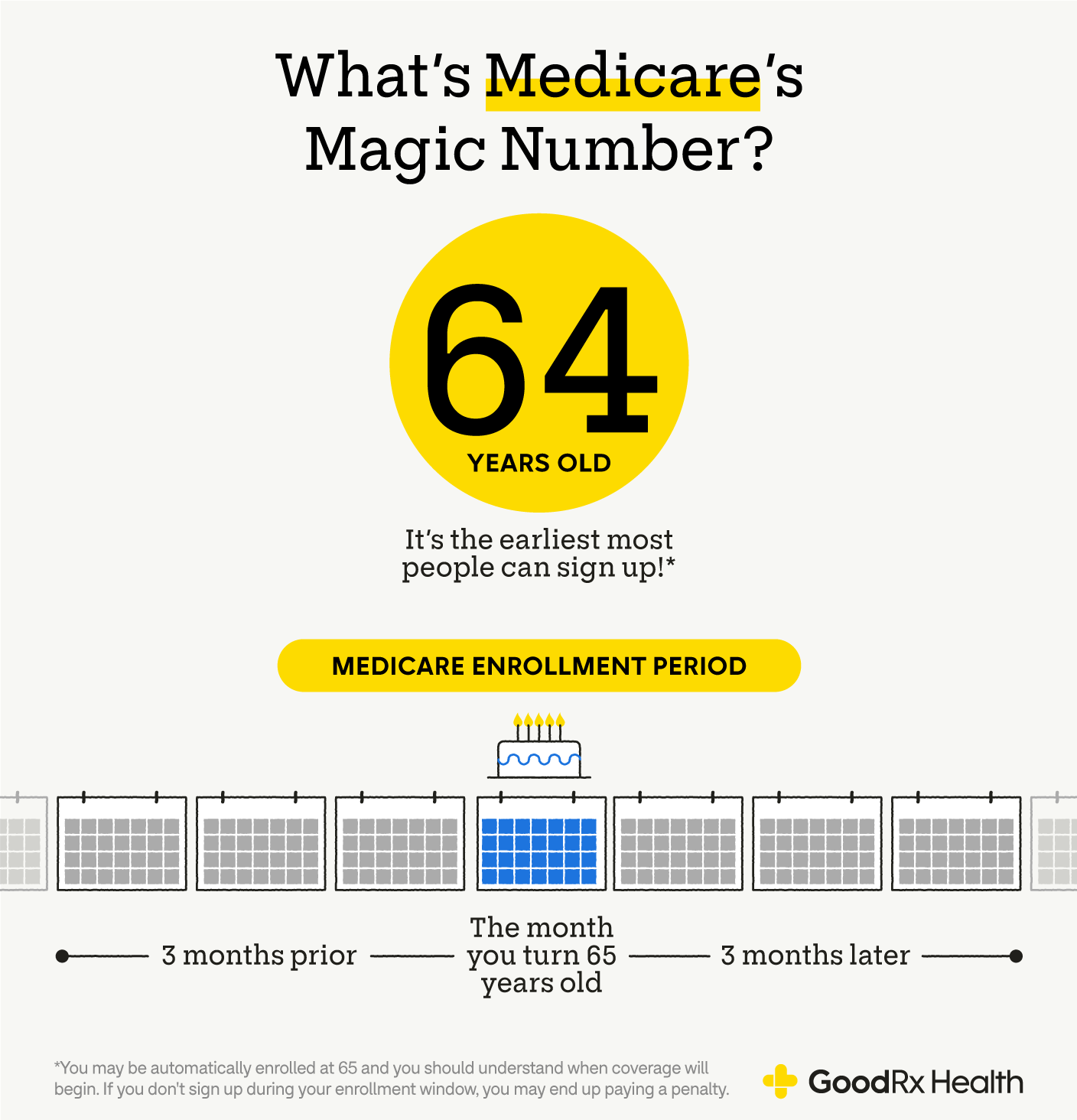
Medicare has different enrollment periods, depending on eligibility. Around the time you turn 65, you have a 7-month initial enrollment period to sign up for Medicare Part A with or without Part B. This starts 3 months before you turn 65, includes your birth month, and ends 3 months after you turn 65. But if you already receive Social Security or railroad retirement benefits when you turn 65, you probably don’t need to sign up. You’ll likely be automatically enrolled in Parts A and B.
The annual Medicare open enrollment period in the fall is when eligible enrollees can make the most changes to their coverage. This opportunity runs every year from October 15 to December 7. Changes made during this time take effect January 1 of the following year.
Medicare Advantage enrollees have another chance to make changes during Medicare Advantage open enrollment, which lasts for the first three months of the year.
People who need help enrolling in Medicare can call 1-800-633-4227 (1-800-MEDICARE). You can also visit Medicare Interactive or the State Health Insurance Assistance Program (SHIP) for guidance.
Medicare Parts A and B don’t have yearly out-of-pocket caps. Medicare Advantage plans have annual spending limits, but they can be high — up to $9,250 for in-network services and $13,900 for both in-network and out-of-network services in 2026.
You can choose supplemental insurance (Medigap) only if you have original Medicare. It’s easiest to choose Medigap when you first sign up for Medicare because medical underwriting may be required if you want to buy a plan later, which can cause you to be denied or pay more for coverage.
There are several important changes to original Medicare, Medicare Advantage, and Part D in 2026:
Part D out-of-pocket limit: Your annual spending cap on prescriptions increases from $2,000 in 2025 to $2,100 in 2026 before your plan pays 100% for covered prescriptions for the rest of the year.
Prior authorization pilot: Beginning in January 2026, a 6-year pilot program of coverage reviews for certain Medicare Part B items and services started for original Medicare enrollees who live in Arizona, New Jersey, Ohio, Oklahoma, Texas, and Washington.
Relief for Plan Finder directory errors: If you used the Medicare Plan Finder and chose a Medicare Advantage plan based on directory errors, then found that your preferred healthcare professionals and facilities are not in your network, you can be eligible for a special election period to choose a different Medicare Advantage plan.
Medicare drug price negotiation: After years of preparation, the Medicare Drug Price Negotiation program lowered prices for 10 brand-name drugs covered by Part D, effective January 1, 2026.
Medicare is a federal program that covers eligible people in the U.S. ages 65 and older as well as younger people with disabilities. Medicaid is a joint federal-state program that provides insurance for people with low incomes in all states, Washington, D.C., and five U.S. territories.
Medicare does not cover cannabis. But some Medicare enrollees gained access to hemp-derived products for medical purposes through a pilot program that began in April 2026. Hemp is a type of cannabis plant. The eligible products primarily contain CBD and little to no THC. To qualify for the Substance Access Beneficiary Engagement Incentive pilot program, Medicare enrollees must be 18 or older, be healthy enough to participate, and have a prescription from a physician or another qualified healthcare professional. Participants cannot be pregnant or breastfeeding.