
Key takeaways:
Shingles and Tdap vaccines are now available with no out-of-pocket costs for people with Medicare Part D prescription drug plans.
Before 2023, people with Medicare Part D who received these vaccines may have had to meet a deductible and pay a copay when receiving each dose.
The two-dose shingles vaccine is especially important for people aged 50 and older. A Tdap booster is recommended every 10 years.
Before 2023, original Medicare and Medicare Advantage enrollees without Part D prescription drug plans had to pay the full cost of shingles and Tdap vaccines. Those with Part D often had cost-sharing, which meant they had to meet a deductible and pay copays per dose.
As of January 1, 2023, Medicare Part D plans cover shingles and Tdap (tetanus-diphtheria-pertussis) vaccinations without out-of-pocket costs. Here’s what that means for Part D enrollees.
What is Medicare Part D?
Medicare has four parts: A, B, C, and D. Original Medicare includes Part A for hospital insurance and Part B for medical insurance. Medicare Part C is better known as Medicare Advantage (MA), which are private plans that replace Parts A and B.
Search and compare options
Medicare Part D covers prescription medications. If you have original Medicare, you can choose to add a Part D plan. Most MA plans include prescription drug coverage — but if yours doesn’t, you can buy separate Part D coverage.
What new vaccines are fully covered by Medicare Part D?
As of January 1, 2023, Medicare Part D covers two new vaccines without cost-sharing:
You may also qualify for other vaccines without cost-sharing if they are recommended by the Advisory Committee on Immunization Practices.
If you have Part D, you will pay nothing for these vaccines. And your coverage includes the injection and administration costs.
What are the shingles and Tdap vaccines?
Shingles is an infection caused by the same virus as chickenpox. It can cause painful rashes that appear on one side of the body or face. Severe cases can result in complications such as enduring nerve pain, eye problems, and pneumonia.

Read more like this
Explore these related articles, suggested for readers like you.


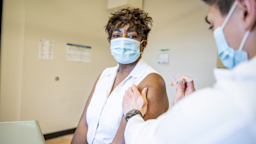

If you live in the U.S., you have about a 1 in 3 chance of developing shingles in your lifetime. An estimated 1 million people get shingles in the U.S. each year.
Shingrix is the only vaccine approved in the U.S. to prevent shingles. It is a two-dose vaccination. The shingles vaccine is recommended for people 50 and older. Most people take the doses 2 to 6 months apart.
Tetanus, diphtheria, and pertussis can all cause serious illness. Tetanus is commonly known as lockjaw. Pertussis is commonly known as whooping cough.
A Tdap booster is recommended every 10 years for adults.
Where can I receive a shingles or Tdap vaccine?
You can receive both the shingles and Tdap vaccines at most pharmacies. You can also get these shots at a doctor’s office and injection clinics.
If you get either vaccine from your doctor, make sure they bill under Medicare Part D for full coverage.
What other vaccines does Medicare Part D cover?
Medicare Part D plans cover all commercially available vaccines that are recommended to prevent illness — except those covered by Part B (see next section). Vaccines covered by Part D are available with no cost-sharing and include:
Influenza (flu) (if you have prescription coverage with an MA plan; if you have original Medicare, it’s covered under Part B)
Vaccines for travel (if they appear on your plan’s formulary)
What other areas of Medicare cover vaccines?
Medicare Part B covers:
Hepatitis B vaccines for people at medium or high risk for the infection
Influenza (flu)
Pneumococcal vaccines (pneumonia)
Other vaccines to prevent injury or disease, such as rabies or tetanus in the case of an accidental puncture wound
The bottom line
People with Medicare Part D plans can now receive shingles and Tdap vaccines with no out-of-pocket costs. This change was effective January 1, 2023 and also applies to other recommended vaccines for adults that are covered by your Part D plan. Some vaccines are covered by Medicare Part B or your Medicare Advantage main coverage.

Why trust our experts?



References
Centers for Disease Control and Prevention. (2013). ACIP Vaccine Recommendations and Guidelines.
Centers for Disease Control and Prevention. (2019). Shingles (herpes zoster), complications.
Centers for Disease Control and Prevention. (2019). Shingles (herpes zoster), signs & symptoms.
Centers for Disease Control and Prevention. (2022). Diphtheria.
Centers for Disease Control and Prevention. (2022). Pertussis (whooping cough).
Centers for Disease Control and Prevention. (2022). Shingles (herpes zoster).
Centers for Disease Control and Prevention. (2022). Tetanus.
Centers for Disease Control and Prevention. (2022). Vaccines and preventable diseases, diphtheria, tetanus, and pertussis vaccine recommendations.
Centers for Disease Control and Prevention. (2022). Vaccines and preventable diseases, shingles.
Centers for Disease Control and Prevention. (2023). Need travel vaccines? Plan ahead.
CMS.gov. (2022). Biden-Harris administration kicks off Medicare open enrollment with lower premiums, improved benefits for 2023.
Medicare.gov. (n.d.). Coronavirus disease 2019 (COVID-19) vaccine.
Medicare.gov. (n.d.). Drug coverage (part D).
Medicare.gov. (n.d.). Flu shots.
Medicare.gov. (n.d.). Hepatitis B shots.
Medicare.gov. (n.d.). Pneumococcal shots.
Medicare.gov. (n.d.). Shingles shots.
Medicare.gov. (n.d.). Tdap shots.