Key takeaways:
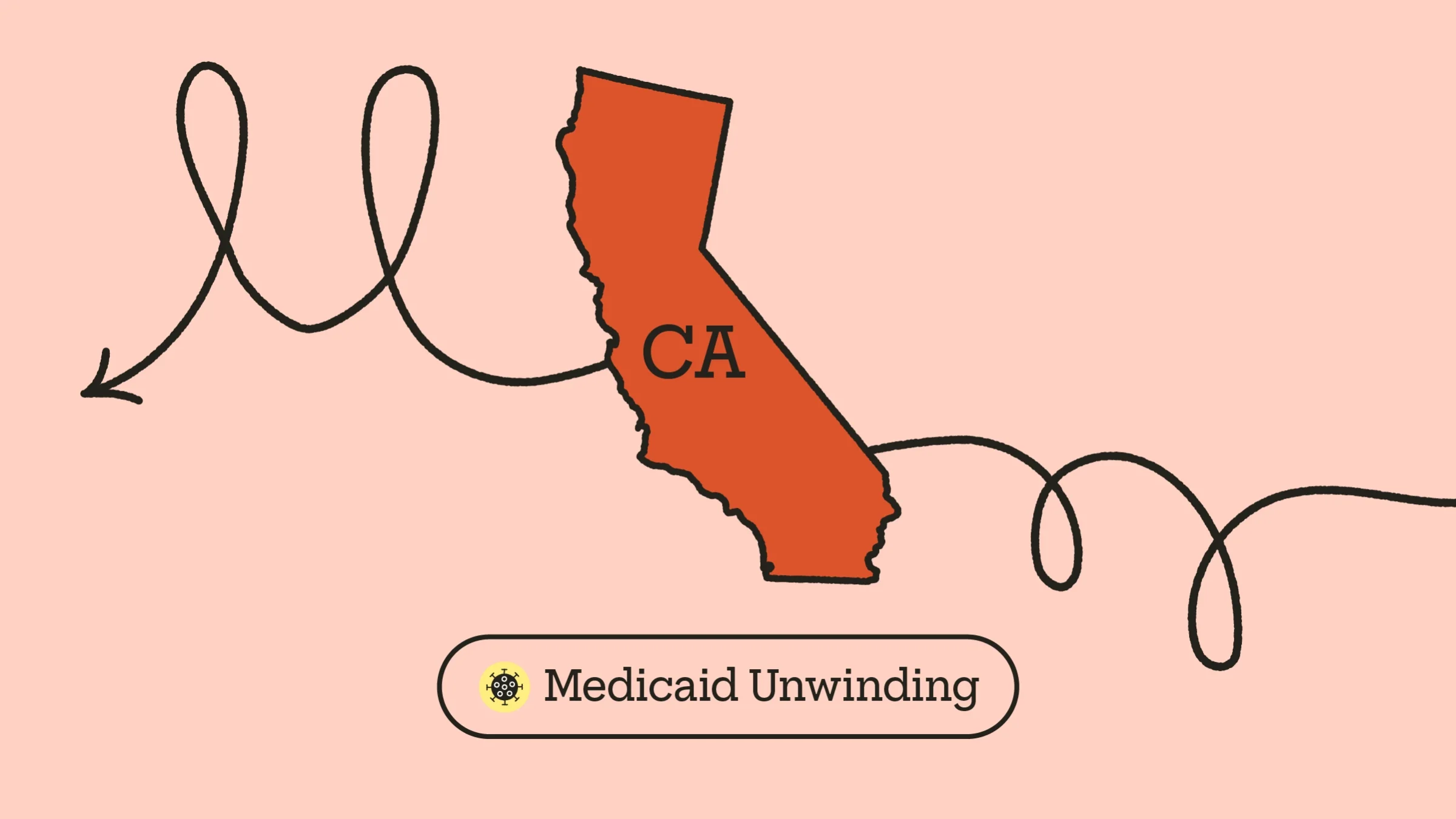
Medicaid renewals in California are changing because of the end of the COVID-19 public health emergency (PHE) on May 11, 2023. This is being called the unwinding of Medicaid, and some people will lose coverage during this process.
During the PHE, Medicaid renewals were automatic, and enrollees had continuous coverage. As part of the unwinding process, automatic renewals for Medicaid and the Children’s Health Insurance Program stopped nationwide on March 31, 2023.
The California Department of Health Care Services (DHCS) has started reviews to see who is eligible to continue receiving Medi-Cal, the state’s Medicaid program. Make sure the DHCS has your current contact information. If they can’t reach you, or if you’re no longer eligible for Medicaid, your coverage could end as soon as July 1, 2023.
If you lose Medicaid coverage during the unwinding, you may qualify for a low-cost, alternative health insurance option, such as an Affordable Care Act marketplace plan.
The U.S. Department of Health and Human Services declared a public health emergency (PHE) for COVID-19 in January 2020. The PHE was renewed a dozen times through February 2023.
People who were eligible for Medicaid during the PHE were able to keep their coverage throughout the pandemic without having their eligibility reviewed. This is because all states, including California, were required to provide continuous coverage during the PHE.
But the PHE ended on May 11, 2023. And that marked the end of most COVID provisions, like automatic Medicaid renewals, which stopped nationwide in March. These changes could cause 5 million to 14 million Medicaid enrollees across the country to lose coverage.
The California Department of Health Care Services has resumed eligibility reviews for Medi-Cal, the state's Medicaid program, which includes the Children's Health Insurance Program. This is called the redetermination process.
Anyone who no longer qualifies could lose coverage as early as July 1, 2023.
Here’s what you need to know about Medicaid changes in California and what to do if you lose your insurance coverage.
Why is Medicaid changing nationwide?
After the PHE ends, COVID-19 will remain a public health priority — just not an emergency. As part of this process, Medicaid renewals will no longer be automatic. This is being referred to as the unwinding of Medicaid.
The unwinding will affect Medicaid in every state, Washington, D.C., and five U.S. territories.
What’s happening with Medicaid renewal in California?
As of March 2023, there were more than 15 million Medi-Cal enrollees. DHCS has an unwinding plan outlining how the state will carry out reviews for current enrollees. The process began in April 2023 and will last for one year. DHCS estimates that 2 million to 3 million people in the state could lose Medicaid or CHIP coverage during the redetermination process.

Read more like this
Explore these related articles, suggested for readers like you.
The state created KeepMediCalCoverage.org to provide enrollees with renewal information and updates. You may also receive alerts via mail, email, text, and phone. The state’s Medicaid renewal outreach campaign includes information in 19 languages through radio ads, billboards, and social media.
It’s important for you to confirm or update your contact information with DHCS so they can get in touch with you about your renewal status. You can update your information by:
Logging into your Medi-Cal self-service account. Depending on your county, you will log into your BenefitsCal account or MyBenefitsCalWin account.
Visiting or contacting your local county office.
You can call the Medi-Cal Managed Care and Mental Health Office of the Ombudsman at 888-452-8609 if you need urgent help with enrollment or loss of coverage.
What to expect during the renewal process
The state already has enough eligibility information from other programs to renew some cases automatically. If you are one of those cases, you will receive a letter saying that your coverage has been renewed. The state estimates about 25% of enrollees will be auto-renewed.
If more information is needed, you will receive a yellow envelope with a renewal form.
You can return your renewal form in the following ways:
Online through your BenefitsCal account or MyBenefitsCalWin account
By mail
By phone by calling your local Medi-Cal office
In person at your local Medi-Cal office
There is a 90-day timeline for renewals. If you cannot be automatically renewed, you will have about a month to return your renewal form. DHCS will take about a month to review your case. You will receive a Notice of Action in the mail if your submission is not received or it’s incomplete. You should receive a letter with your redetermination decision before your last day of coverage.
Tribal health and Medicaid unwinding
State liaisons are reaching out to people who are enrolled in Medicaid and are also members of or affiliated with Native American tribes. The National Indian Health Board estimates that as many as 236,000 American Indians and Alaska Natives (AIs/ANs) could lose coverage during the unwinding process.
That estimate includes more than 36,000 California AI/AN residents. You can reach the DHCS Indian Health Program at 916-449-5770.
What should I do if I lose my Medicaid coverage in California?
In order to receive Medicaid in California, you must meet all of the following criteria:
You must be a California resident.
You must be a U.S. citizen, permanent resident, or legal resident.
You must need assistance with access to healthcare or insurance coverage.
Your annual household income before taxes are withheld must be below the limit for your household size.
In California, you may also qualify for reasons other than income, including if you are:
Pregnant
A child or teenager
Responsible for the care of a disadvantaged child who is 20 years old or younger
Blind
65 years old or older (and meet certain criteria)
A person with a disability, or you have a person in your household who has a qualifying disability
A former foster child
In need of nursing home care
Age 19 and older with family planning needs
Diagnosed with breast or cervical cancer
A person with refugee status (for a limited time)
If you no longer qualify for Medicaid or DHCS can’t reach you, you will no longer be able to use your benefits, which could leave you temporarily uninsured.
If you lose your coverage but believe you still qualify, you can reapply for Medicaid in California. You may be uninsured for a while until you’re approved for coverage again. If you think losing coverage was an error, you can contact your local Medi-Cal office to review your case. If your local Medi-Cal office can’t help, you can ask for a Medi-Cal Fair Hearing. You must make the request within 90 days of receiving your Notice of Action.
If you choose not to reapply for Medicaid coverage, or if you’re no longer eligible, you may qualify for other low-cost or free healthcare options. You can also use GoodRx coupons to save on your prescription medications.
In addition, you may be able to enroll in an alternative health insurance plan such as:
Affordable Care Act (ACA) marketplace plan: You may be able to find a plan on Covered California, the state’s ACA marketplace. You could get a health plan for $10 or less per month if you qualify for a premium subsidy. If you lose Medicaid, you can purchase a plan on the Covered California marketplace during the unwinding special enrollment period from March 31, 2023 to July 31, 2024.
Employer plan: Your company may offer employer-sponsored health insurance.
Medicare: If you have a qualifying disability or condition — such as end-stage renal disease or ALS (amyotrophic lateral sclerosis), commonly referred to as Lou Gehrig’s disease — you can enroll in Medicare at any age.
Partner’s plan: If you have a spouse or domestic partner who has insurance, you may be able to join their plan during an open enrollment or special enrollment period.
Special plans: Short-term insurance can be a great choice if you anticipate that a better option, like job-based health insurance, will be available soon. You may also consider alternative and limited-benefit plans, such as fixed indemnity, accident, cost-sharing, and catastrophic insurance plans.
Student health plan: If you’re enrolled in a college or university, you may be eligible for a campus health plan.
U.S. Department of Veterans Affairs (VA) benefits: If you are an active-duty service member or a veteran, you may qualify for TRICARE coverage or VA benefits and services.
California Medicaid resources
Here are some resources where you can learn more about Medicaid in California and upcoming changes related to the end of the public health emergency:
California Medicaid office: The California Department of Health Care Services oversees Medi-Cal, the state's Medicaid program.
California Medicaid self-service portal: You can visit the BenefitsCal portal or MyBenefitsCalWin portal to access your account online 24/7 and confirm or update your contact information. Make sure you know which portal serves your county.
California Medicaid unwinding: Read more about California’s Medicaid unwinding plan.
California Medicaid office phone assistance: You can call the Medi-Cal Managed Care and Mental Health Office of the Ombudsman at 888-452-8609 if you need urgent help with enrollment or loss of coverage.
The bottom line
Automatic Medicaid renewals stopped on March 31, 2023 in advance of the COVID-19 public health emergency's conclusion on May 11, 2023.
The California Department of Health Care Services (DHCS) oversees Medi-Cal, the state’s Medicaid program, which has more than 15 million enrollees. The state will be reviewing Medi-Cal eligibility for all enrollees over the next year. Be sure to confirm and update your contact information so that you can be reached when it’s your turn for a renewal review.
DHCS may reach out by mail, email, phone, or text with information about your renewal. If you’re not auto-renewed, you will receive a yellow envelope with a renewal form. It’s important to respond by the deadline so that you don’t lose coverage even if you’re still eligible.
If you lose Medicaid, you may be eligible for other health insurance options. These could include an Affordable Care Act plan on the Covered California marketplace, an employer-sponsored plan, or Medicare.

Why trust our experts?

References
Centers for Medicare & Medicaid Services. (2023). Unwinding and returning to regular operations after COVID-19.
Covered California. (n.d.). How Medi-Cal works.
Covered California. (n.d.). Medi-Cal and CHIP.
Department of Health Care Services. (n.d.). I got a renewal form. Cal.gov.
Department of Health Care Services. (n.d.). I was renewed. Cal.gov.
Department of Health Care Services. (n.d.). I'm no longer covered. Cal.gov.
Department of Health Care Services. (n.d.). Medi-Cal continuous coverage requirement. Cal.gov.
Department of Health Care Services. (2021). Medi-Cal fair hearing. Cal.gov.
Department of Health Care Services. (2023). DHCS launches statewide media campaign to help Californians keep their Medi-Cal coverage. Cal.gov.
Department of Health Care Services. (2023). Medi-Cal COVID-19 public health emergency and continuous coverage operational unwinding plan. Cal.gov.
National Indian Health Board. (2023). Medicaid unwinding webinar: Unwinding updates and best practices for tribal enrollment assisters.
Tolbert, J., et al. (2023). 10 things to know about the unwinding of the Medicaid continuous enrollment provision. Kaiser Family Foundation.
Tribal Health Reform Resource Center. (2023). Medicaid unwinding. National Indian Health Board.
U.S. Administration for Strategic Response and Preparedness. (2020). Determination that a public health emergency exists.
U.S. Administration for Strategic Response and Preparedness. (2023). Renewal of determination that a public health emergency exists.
U.S. Department of Veterans Affairs. (2022). VA & TRICARE information.