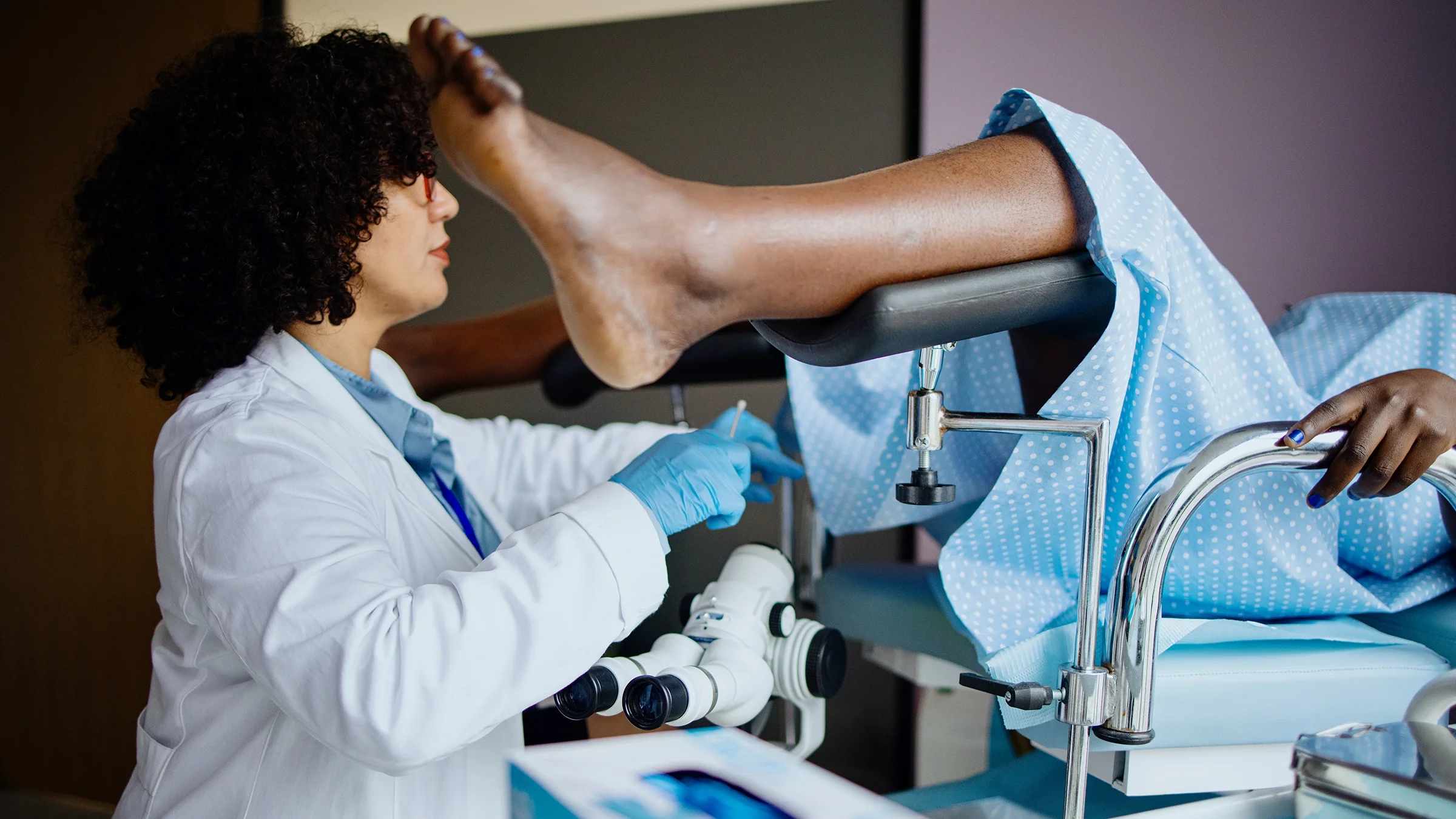
Key takeaways:
A dilation and curettage, also known as a D&C, is a minor surgery sometimes needed after a miscarriage. A D&C is also used to diagnose endometrial cancer and for a surgical abortion.
Most health insurance plans will cover a medically necessary D&C.
Without insurance or qualifying for discounted care, you could pay about $1,350 for this procedure at Planned Parenthood. But you could be charged $10,000 or more at other healthcare centers.
Healthcare providers sometimes perform dilation and curettage (D&C) after a miscarriage to ensure that all of the tissue has been removed from the endometrium. This procedure can also be used to investigate or diagnose endometrial cancers and to perform a surgical abortion.
It’s a very common procedure covered by many health insurance plans. If you have insurance, you should still expect some out-of-pocket expenses. However, without coverage, the financial burden can be significant.
What is a D&C?
A D&C is a minor surgical procedure that scrapes away the lining of the uterus. The uterus is the organ in the pelvis where a fetus grows and develops during pregnancy. After anesthesia, a D&C procedure generally takes 10 minutes or less to complete.
Search and compare options
When suction is used to remove material in the uterus, the D&C procedure is sometimes called dilation and evacuation (D&E). This is more commonly used for pregnancies beyond 14 weeks.
How much does a D&C cost?
Many factors impact the total price of a D&C, including:
Whether you have insurance
Your location
The type of facility where the procedure is performed
Anesthesia cost
Procedure cost
Supplies cost
The procedure alone can cost several thousand dollars. You may have additional charges for related care or all D&C costs bundled into one charge. And, depending on your situation, there may be additional expenses, like transportation, child care, and lost wages.
Planned Parenthood may provide the most affordable procedure in your area. According to one regional Planned Parenthood website, you could pay around $1,350 for an induced abortion by D&E without insurance or discounts. Hospital outpatient facilities and ambulatory surgical centers that don't focus on delivering low-cost care often charge much more.
Here are projected costs from FAIR Health, a nonprofit that helps consumers estimate healthcare expenses, for D&C procedures and related care in the Dallas area.
D&C Costs
Procedure and related care | Cost without insurance or discounts |
Dilation and scraping of uterus (procedure only) | $1,024 |
Dilation and scraping of the uterus with anesthesia | $2,878 |
Dilation and scraping of uterus with anesthesia at an ambulatory surgical center | $17,189 |
Dilation and scraping of uterus with anesthesia and tissue examination at an ambulatory surgical center | $17,457 |
Dilation and scraping of uterus with anesthesia at an outpatient hospital facility | $19,561 |
Dilation and scraping of uterus with anesthesia and tissue examination at an outpatient hospital facility | $19,829 |
Source: FAIR Health
MDSave, a price-shopping tool for people without insurance and those who have high-deductible health plans, lists national and regional price ranges for healthcare services. Without insurance, the national average for a D&C is about $11,000, according to MDSave.
Average cost in different U.S. regions
Here are some regional averages for a D&C purchased through MDSave (redeemable at participating providers) at the time of publication. These figures include anesthesia, pathology, and facility and physician fees:

Read more like this
Explore these related articles, suggested for readers like you.




Does health insurance cover the cost of a D&C?
Many health insurance plans cover some or all of the cost of a D&C — generally, when it’s medically necessary. As an aside: Your health plan may cover mifepristone (Mifeprex) and misoprostol (Cytotec), which are used together for a medical abortion, also known as a medication abortion.
A 2025 KFF report offered analysis on the median out-of-pocket costs of abortion care for people with job-based insurance plans. The report showed that, in 2023:
The median out-of-pocket costs were less than $100 for a D&C, but more than $200 for a D&E, for people with employer-sponsored insurance.
Twenty-five percent of female enrollees paid more than $100 for a D&C and almost $1,000 for a D&E.
There were substantially higher costs for D&C procedures performed in ambulatory surgery centers and outpatient hospital settings versus clinics and physician offices.
If you have insurance, you may be responsible for the entire cost of the procedure if you have not yet met your annual deductible. And, even if you have met your deductible, you may be responsible for copays or coinsurance.
Contact your health plan to find out what is covered. You should also ask the healthcare professionals and facilities involved in your D&C to help you estimate the financial responsibility you’ll face.
If you don’t have insurance or intend to self-pay, do you have pricing options?
Yes, you can ask for a good faith estimate (GFE) of the costs for your D&C if you don’t have insurance or plan to self-pay. A GFE is a list of expected charges, not a bill. Most healthcare centers must give you a GFE upon request if you are uninsured or plan to pay without insurance. You can dispute the final bill if it’s at least $400 more than the GFE.
Does Medicaid cover the cost of D&C?
Medicaid is jointly funded by the federal government with states and territories. Medicaid programs cover medically necessary D&C procedures performed for different reasons, such as:
When a pregnancy causes a life-threatening condition
When a person miscarries and some or all of the fetal tissue remains inside the uterus, since this can cause heavy bleeding
To help diagnose or treat a medical condition, such as issues with the ovaries during menopause
To treat severe menstrual bleeding caused by Depo-Provera or other birth control
When needed as part of a surgery that removes the uterus through a cut in the abdomen
Depending on your state or territory, your D&C may not be covered by Medicaid if it’s associated with an abortion.
Will insurance cover additional care needed after a D&C?
There isn’t a high risk of complications with a D&C, so you won’t likely need additional care after the procedure. If you do have complications, your insurance will likely cover any medically necessary follow-up care. But you may have to pay additional out-of-pocket costs.
What happens during a D&C?
A D&C is a relatively short and straightforward procedure, usually performed in an outpatient setting. Beforehand, an anesthesiologist will administer medication so you don’t feel pain. A D&C can be done with many types of anesthesia, like an epidural or general anesthesia.
The dilation aspect of a D&C involves opening the cervix, which separates the vagina from the uterus. There are several ways to do this; the right option for you will depend on your specific situation.
Once your cervix is open, your healthcare provider will pass a spoon-shaped instrument called a curette (hence curettage) into your uterus. They’ll use the curette to scrape away any tissue that needs to be removed. They also may use a small camera to look at the inside of your uterus to make sure all the tissue is gone. If there’s a lot of tissue to remove, they may use a suction device to help.
The removed tissue may get sent to a lab for testing. After the procedure is complete, you’ll rest in a recovery room until the anesthesia has worn off.
Frequently asked questions
Yes, when a D&C is done on a pregnant person, it ends the pregnancy. This is because the procedure empties out the contents of the uterus. Today, a D&C is more commonly used to remove remaining fetal tissue after a miscarriage.
Typically done alongside a D&C, a hysteroscopy is when a small camera is used to see inside the uterine cavity. Your physician may do this to look for and possibly remove soft-tissue (polyps) or muscle growths (fibroids).
Yes, when a D&C is done on a pregnant person, it ends the pregnancy. This is because the procedure empties out the contents of the uterus. Today, a D&C is more commonly used to remove remaining fetal tissue after a miscarriage.
Typically done alongside a D&C, a hysteroscopy is when a small camera is used to see inside the uterine cavity. Your physician may do this to look for and possibly remove soft-tissue (polyps) or muscle growths (fibroids).
The bottom line
Dilation and curettage, known as a D&C, is a procedure that removes tissue from the uterus. A D&C is sometimes necessary after a miscarriage. D&Cs also can be used to diagnose endometrial cancer and for surgical abortions.
Many insurance plans cover medically necessary D&Cs. But you still may be required to pay $1,000 or more out of pocket, depending on your coverage and whether you have met your deductible. Without insurance or discounted care, you may be able to pay about $1,400 at a Planned Parenthood clinic. However, you could be looking at a price tag of more than $10,000 without insurance if you have the procedure in an ambulatory surgery center or hospital outpatient facility.
If you don’t have insurance or intend to self-pay for the procedure, you can request a good faith estimate of your expected charges.

Why trust our experts?



References
AAGL. (2019). Diagnostic hysteroscopy dilation and curettage.
Braaten, K. P., et al. (2025). Patient education: Dilation and curettage (D&C) (beyond the basics). UpToDate.
Cooper, D. B., et al. (2023). Dilation and curettage. StatPearls.
Frederiksen, B., et al. (2024). Variability in payment rates for abortion services under Medicaid. KFF.
Frederiksen, B., et al. (2025). Out-of-pocket costs for abortion care among individuals enrolled in employer sponsored insurance plans. KFF.
Jimenez, K. (2025). AOC has heated exchange on Medicaid coverage for miscarriage. USA Today.
Johns Hopkins Medicine. (n.d.). Dilation and curettage (D and C).
MDSave. (n.d.). Dilation and curettage.
MDSave. (n.d.). Dilation and curettage [Atlanta].
MDSave. (n.d.). Dilation and curettage [Chicago].
MDSave. (n.d.). Dilation and curettage [Dallas].
MDSave. (n.d.). Dilation and curettage [Denver].
MDSave. (n.d.). Dilation and curettage [Orlando].
MDSave. (n.d.). Dilation and curettage [Phoenix].
Planned Parenthood Great Northwest, Hawaiʻi, Alaska, Indiana, Kentucky. (n.d.). Health care services price list.
Surana, K., et al. (2025). A ‘striking’ trend: After Texas banned abortion, more women nearly bled to death during miscarriage. ProPublica.
University of Arkansas for Medical Sciences. (n.d.). Dilation and curettage (D&C).
University of Rochester Medical Center. (n.d.). Dilation and curettage.
Zucker, J. (2025). The cost of a D&C procedure (miscarriage). Health.