Igalmi
Used for Bipolar Disorder, Schizophrenia
Used for Bipolar Disorder, Schizophrenia
Igalmi (dexmedetomidine) is a newer medication approved to treat agitation in adults with schizophrenia or bipolar disorder. It's given as a film that's dissolved under the tongue or behind the lower lip. Igalmi (dexmedetomidine) is only used short-term in a healthcare setting. This medication is given under the supervision of a healthcare provider.


What is Igalmi (dexmedetomidine)?
What is Igalmi (dexmedetomidine) used for?
- Agitation due to schizophrenia or bipolar I or II disorder
Drug facts
| Common Brands | Igalmi |
|---|---|
| Drug Class | Alpha agonist |
| Controlled Substance Classification | Not a controlled medication |
| Generic Status | No lower-cost generic available |
| Availability | Prescription only |

Pharmacist tips for Igalmi (dexmedetomidine)

- The Igalmi (dexmedetomidine) films are dissolved either under the left or right side of the tongue or behind the lower lip. Don't chew or swallow the film because you might not get your full dose.
- Don't eat or drink for at least 15 minutes after placing Igalmi (dexmedetomidine) under the tongue. If you place Igalmi (dexmedetomidine) behind the lower lip, don't eat or drink for at least 1 hour after taking the medication. Eating too soon might affect how well this medication works.
- After receiving Igalmi (dexmedetomidine), stay lying or sitting down because it can cause low blood pressure and slow heart rate. This side effect can last even 2 hours after your dose. Let your provider know right away if you feel faint, lightheaded, extremely tired, or have trouble breathing.
- If you need to get up after taking Igalmi (dexmedetomidine), do so slowly or ask a caregiver for help. You'll feel dizzy or unsteady on your feet if you suddenly getting up from a sitting or lying down position.
- After the first dose, your provider might give you a second or third dose of Igalmi (dexmedetomidine) if agitation doesn't go away. You shouldn't receive more than 3 doses.
- Igalmi (dexmedetomidine) can cause a rare, but serious, life-threatening irregular heart rhythm problem called QT prolongation. Let your provider know if you have any history of irregular heartbeat or heart problems. Seek medical attention if you notice changes in vision, lightheadedness, feeling like your chest is pounding, or weakness.
- Drowsiness is a common side effect of Igalmi (dexmedetomidine). Don't drive or perform any activities that require you to be alert for at least 8 hours after taking this medication. If you need to go anywhere, make sure a caregiver is with you so they can help make sure you're safe.

Igalmi (dexmedetomidine) dosage
Typical dosage for Igalmi (dexmedetomidine)

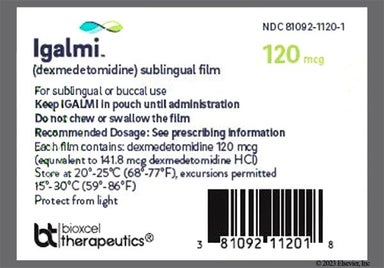
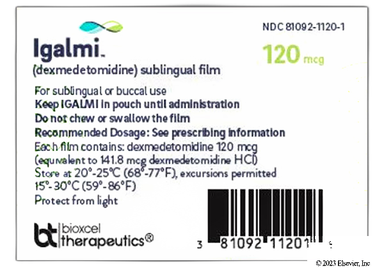
Igalmi (dexmedetomidine) images