Key takeaways:
From January through March 2022, some U.S. counties received enough of the antiviral medication Paxlovid to treat all of their reported COVID-19 cases. Other areas – referred to as “Paxlovid deserts” – did not receive any Paxlovid courses.
We estimate that 42% of U.S. counties (accounting for over 26 million people) were Paxlovid deserts as of March. These counties were mainly rural and more likely to lack the infrastructure to distribute Paxlovid because they were also hospital deserts and pharmacy deserts.
However, Paxlovid has gone to areas with a greater share of racial minorities. And there’s been little difference in distribution between deserts and non-deserts, due to other factors like education, poverty rate, and health insurance coverage.
Paxlovid is a groundbreaking oral antiviral medication used to treat COVID-19 symptoms. It has garnered national attention as the U.S. government attempts to get it into the hands of those who need it most. But has Paxlovid’s rollout been equitable? And were some communities overlooked in its distribution?
New research from GoodRx finds both good and bad news. While the rollout was ultimately deemed equitable for some minority populations, there were also regions that saw nearly no deliveries of Paxlovid. Below, we break down how the rollout played out and recommend how to get the drug to more people in the future.
What is Paxlovid?
The FDA approved Paxlovid under an emergency use authorization in December 2021. The drug is an antiviral tablet that people positive with COVID-19 can take within the first 5 days of showing symptoms.
Paxlovid reduced the risk of death and hospitalization by 89% in its clinical trial. What’s more: The medication is free, making it affordable for everyone.
But while Paxlovid is a promising treatment, it must be taken quickly after a COVID diagnosis to be effective. Due to this tight timeline, it needs to be widely available and easily accessible, so that its benefits can be maximized.
How we tracked Paxlovid’s rollout
When Paxlovid first became available in late December and early January, its distribution was left to state governments. After states received a dedicated number of courses from the federal government, it was up to local agencies such as county health departments to distribute the medication to sites like hospitals, pharmacies, and other care clinics.
The GoodRx Research team looked at Department of Health and Human Services data detailing the number of publicly available Paxlovid courses distributed across U.S. counties from January through March 2022. This data helped us evaluate the success, patterns, and equitability of the distribution.
To compare the distribution of Paxlovid supply to the demand for treatment, we calculated the share of confirmed COVID-19 cases in each county that had new courses of Paxlovid distributed in that same month. Below, we detail our findings and spotlight some communities that may have been overlooked.
Over 40% of counties didn’t receive any Paxlovid
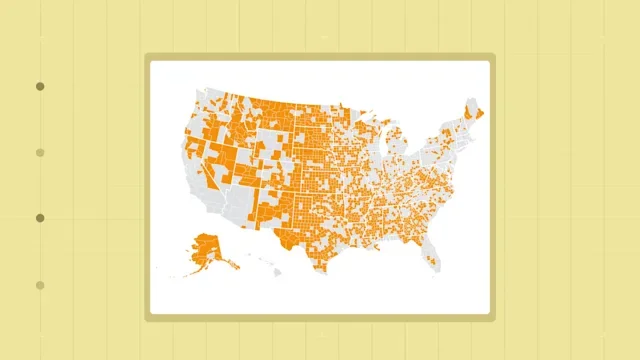
The below map shows the share of COVID-19 cases in each county and their supply of Paxlovid. Counties shaded in purple had a Paxlovid course available for every diagnosed case of COVID-19. However, much of the country is shaded in yellow — meaning there was not enough Paxlovid in these areas to officially treat all COVID-19 cases.

Read more like this
Explore these related articles, suggested for readers like you.



All told, over 26 million people were in “Paxlovid deserts,” or areas that did not receive any Paxlovid supply. These people lived in 1,323 counties (42% of counties) across the U.S.
Areas that didn’t receive Paxlovid courses were less populous, more rural areas. These areas were also more likely to be healthcare deserts, which lack sufficient access to primary care providers, hospitals, hospital beds, pharmacies, and trauma centers.
While disheartening, this conclusion makes sense. If the facilities themselves do not exist, it is impossible for pharmacies, clinics, and primary care providers to not only receive courses of Paxlovid but also to prescribe and administer them.
For example, GoodRx identified Clare County, Michigan, as a provider, healthcare center, trauma center, hospital bed, and hospital desert. We also identified it as being a Paxlovid desert. There were no Paxlovid courses available for the 56 reported COVID-19 positive cases there in March 2022.
Brooks County, Texas, had an adequate supply of Paxlovid, even though we identified it as a healthcare desert. In March, there were 20 courses of Paxlovid available for the 18 COVID-19 cases reported in the county that month.
But it begs the question: Did the infrastructure exist in Brooks County (and similar counties) to get these Paxlovid courses from the state agencies to the people that needed them?
The rollout has slowly ramped up, but challenges remain
Fortunately, toward the end of our research time period, the Biden-Harris administration announced changes to the Paxlovid rollout to get the drug to more people.
In January 2022, when Paxlovid was newly available, most counties lacked enough Paxlovid to treat all their diagnosed COVID-19 cases. In fact, the Omicron surge was in full effect then, and COVID-19 cases were at their highest level of the pandemic. According to the CDC, January 10, 2022, was the highest case count day the U.S. has seen thus far, with 1,260,908 cases reported on that day alone.
Because Paxlovid was recently approved and its distribution and production was just beginning, there were not enough courses available to keep up with the astronomical case rate.
This trend remained throughout much of February. But in March, the number of counties with enough courses to treat COVID-19 positive cases increased dramatically. As the initial Omicron surge waned, and Paxlovid distribution increased, more people who tested positive for COVID-19 were able to access the antiviral medication.
In fact, counties shaded dark on the map above had more than enough Paxlovid to treat all of their reported cases. For example, in Muskingum County, Ohio, in March 2022, there were 300 Paxlovid courses available to treat the 154 COVID-19 cases reported that month.
That said, the counties that are Paxlovid deserts may begin to struggle if additional COVID-19 surges occur in these counties. For example, when distribution of Paxlovid courses began in January, COVID-19 caseloads were 15% lower in Paxlovid deserts compared to non-Paxlovid deserts. However, GoodRx Research estimates that in March, Paxlovid deserts had 25% higher COVID-19 caseloads compared to non-Paxovid deserts.
Paxlovid has been distributed without regard to sociodemographic differences
Our analyses revealed that Paxlovid distribution appears to have been more equitable for some racial minority groups, specifically Black, Hispanic, and Asian American/Pacific Islander populations in urban communities. Relative to Paxlovid deserts, counties that received Paxlovid courses during this time period had higher population shares of the following groups:
Hispanic (10% in non-deserts versus 9% in deserts)
Black (10% in non-deserts versus 7% in deserts)
Asian (2% in non-deserts versus 0.7% in deserts)
Native Hawaiian/Pacific Islander (0.1% in non-deserts versus 0.08% in deserts)
This may be partly due to the federal government’s efforts to directly send Paxlovid courses to Health Resources and Services Administration centers. These centers cater to underserved communities that have been disproportionately impacted by COVID-19.
On top of that, Paxlovid deserts and non-deserts did not differ very much in terms of vaccination rates, income, education, health insurance coverage, and the prevalence of comorbidities such as diabetes.
Summing it all up
Overall, the Biden administration successfully distributed Paxlovid courses equitably to racial minority populations and urban population centers. The administration also distributed the medication to rural areas where there was sufficient healthcare infrastructure to support this distribution. But the work is far from over.
The administration has taken more steps to make the medication more accessible. In fact, on March 7, 2022, the White House announced its Test to Treat program for COVID-19 antiviral treatments. This program sends Paxlovid courses straight to pharmacy clinics. It allows people who test positive for COVID-19 to receive a prescription for a Paxlovid course and get the prescription filled at a single location — all at no cost.
This new plan has shown promising results: In a single week in March, it redirected 50,000 out of 175,000 courses from state governments to Test to Treat programs. Under the program, state agencies don’t need to decide where the courses need to go. And the program ensures more doses are quickly and readily available at easy-to-access locations.
Biden’s Test to Treat program will also hopefully expand the infrastructure of distribution. This could prevent increasing disparity of Paxlovid availability between deserts and non-deserts.
But there are other ways to increase availability of antiviral COVID-19 treatments in addition to this program. Tools such as telemedicine, mobile clinics, and delivery services could also help eliminate barriers to these treatments. These resources could be especially useful for people who live in Paxlovid deserts or who don’t have easy access to transportation.
Educational campaigns and ads for antiviral treatments in areas with enough Paxlovid could also help ensure that people are aware that it is an option and that the supplies available are used.
Visit GoodRx’s COVID-19 antiviral tracker to determine if Paxlovid is available in your area.
Co-contributors: Amanda Nguyen, PhD, Sara Kim, MS, Tori Marsh, MPH, Jeroen van Meijgaard, PhD
Methodology
Distribution of publicly available Paxlovid supply was sourced from the Department of Health & Human Services (data retrieved January 12, February 9, and March 9, 2022). Data on Paxlovid courses reflect publicly available supply and may not be inclusive of all Paxlovid courses in a given county. Paxlovid distribution to 6,959 providers was read after removing U.S. territories. Forward fill method was used for missing data on providers with total Paxlovid courses delivered in the earlier month(s) but without any information in the following month(s). Paxlovid courses on the provider-level were mapped to counties by geolocation and county name.
The map below shows the distribution of cumulative Paxlovid courses distributed per 1,000 population across U.S. counties in January, February, and March 2022.
Paxlovid supply data was mapped to county-level sociodemographic data. Data on population, education, poverty rate, uninsurance rate, and race were sourced from the 2019 American Community Survey 5-year data. Data on hospital deserts and pharmacy deserts were sourced from a 2021 GoodRx analysis of healthcare deserts. Data on diabetes prevalence rates were sourced from Behavioral Risk Factor Surveillance System, accessed through County Health Rankings. Data on COVID-19 cases and vaccination rates were sourced from The New York Times and CDC, respectively.
Share of COVID-19 cases with Paxlovid courses available was calculated as the ratio of new Paxlovid courses distributed in the given month (excluding inventory from previous months) to the total number of reported COVID-19 cases in the same month. For January 2022, inventory from previous months was assumed to be zero, as Paxlovid received emergency use authorization from the FDA on December 22, 2021. Any county with a ratio greater than one or with zero COVID-19 cases was imputed to have Paxlovid available for 100% of cases. Counties with negative cases were considered a data anomaly and were excluded from this analysis. Counties may have additional inventory of Paxlovid remaining from previous months not accounted for here.
Paxlovid desert counties were identified as counties with zero locations reporting any distributed Paxlovid courses from January to March 2022. Sociodemographic data were grouped by Paxlovid desert status and displayed as the simple average across counties for Paxlovid desert counties and counties that received Paxlovid courses.
References
Centers for Disease Control and Prevention. (2022). COVID-19 vaccinations in the United States, county.
Centers for Disease Control and Prevention. (2022). Trends in number of COVID-19 cases and deaths in the US reported to CDC, by state/territory.
County Health Rankings. (2022). Diabetes prevalence.
HealthData.gov. (2022). COVID-19 public therapeutic locator.
Health Resources & Services Administration. (2022). HRSA Health Center COVID-19 Therapeutics Program.
Hensley, S. (2021). First doses of Paxlovid, Pfizer's new COVID pill, are released to states. NPR.
HHS Office of the Assistant Secretary for Preparedness and Response. (2021). Paxlovid.
HHS Office of the Assistant Secretary for Preparedness and Response. (2022). State/territory/federal entity - coordinated distribution of COVID-19 therapeutics.
Pfizer. (2021). Pfizer receives U.S. FDA emergency use authorization for novel COVID-19 oral antiviral treatment.
Pfizer. (2022). Pfizer to provide U.S. government with an additional 10 million treatment courses of its oral therapy to help combat COVID-19.
Sullivan, M. (2022). New ‘Test to Treat initiative’ makes COVID treatments more accessible to those who need them most. HHS Office of the Assistant Secretary for Preparedness and Response.
The New York Times. (2022) Coronavirus in the U.S.: Latest map and case count.
The White House. (2022). Remarks of President Joe Biden – State of the Union address as prepared for delivery.
U.S. Census Bureau. (2022). American Community Survey 5-year data (2009-2020).

Why trust our experts?