Key takeaways:
GoodRx Research finds that nearly 1 million Hispanic residents live in a pulmonology desert: a county in which more than half of the residents live at least an hour away from lung care.
The vast majority (more than 700,000 Hispanic residents) are located in just five states: Texas, New Mexico, Arizona, Colorado, and Kansas.
Pulmonology desert counties with a highest share of Hispanic residents also have a higher share of uninsured residents compared to counties with a lower share of Hispanic residents.
Recent research from GoodRx reveals that nearly 5.5 million Americans live in a pulmonology desert: a county that is an hour or more away from the nearest pulmonologist. To make matters worse, the increased cost of transportation due to economic factors like inflation have made it even harder to access pulmonary care, especially for lower-income communities.
These challenges can be more pronounced when considering race and ethnicity. GoodRx Research was specifically interested in how many Hispanic residents live in pulmonology deserts given the other healthcare issues disproportionately affect Hispanic patients — including lung diseases.
For example, Hispanic residents have the highest uninsured rates compared to other racial or ethnic groups. As a result, they are less likely to receive preventive care. Hispanic residents also face a higher risk of COVID-19 infection, hospitalization, and death than non-Hispanic white Americans. And COVID-19 was the leading cause of death in the Hispanic community in 2020.
To better understand how Hispanic residents are affected by inadequate access to pulmonary care, GoodRx Research looked at the share of the Hispanic community that lived in pulmonology deserts, how this affected their lung disease rates in those areas, and what challenges these communities may face in getting care.
Here’s what we found.
Nearly 1 million Hispanic residents live in pulmonology deserts
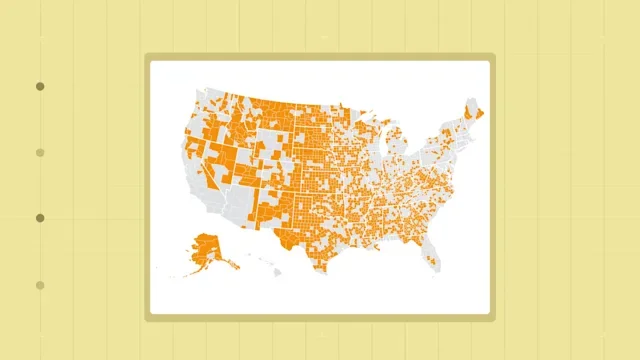
In a recent study, GoodRx Research identified 488 counties that were pulmonology deserts. Nearly 5.5 million Americans lived in these areas. Using recent census data, we found that more than 960,000 Hispanic residents lived in 98% (477) of the pulmonology desert counties.
We also found that more than 700,000 of these residents were located in just five states: Texas, New Mexico, Arizona, Colorado and Kansas. In total, there were 157 (33%) desert counties with Hispanic residents in these five states alone, with Texas (56) and Kansas (48) having the largest share, followed by Colorado (30), New Mexico (17), and Arizona (6).
Most Latinos who lived in pulmonology deserts were located in Central and Southern U.S. states, where the average drive time to the nearest pulmonologist can vary.
For instance, the roundtrip drive time to the nearest pulmonologist in Maverick County, Texas (95% Hispanic population) would be more than 4 hours. Meanwhile, the roundtrip drive time for residents in Esmeralda County, Nevada (26% Hispanic population) would be more than 14 hours.

Read more like this
Explore these related articles, suggested for readers like you.



In other parts of the country, the travel time can be even more extreme. For example, a one-way trip to the nearest pulmonologist for residents in Aleutians West Census Area County, Alaska (14% Hispanic population) would take 2 days and 17 hours.
Below we walk through the chronic obstructive pulmonary disease (COPD), asthma, and COVID-19 rates in desert counties to show just how important access to pulmonology care is, especially for Hispanic residents.
Pulmonology deserts in predominantly Hispanic communities face unique challenges
We wanted to better understand how common lung disease was in Hispanic populations who didn’t have a pulmonologist nearby. So we looked at the rates of COPD, asthma, and COVID-19 in pulmonology desert counties that had a Hispanic population of at least 50%. Using this threshold, we identified 36 pulmonology deserts in predominantly Hispanic counties in Texas, New Mexico, Colorado, and Kansas.
In the maps below, we highlight dark blue counties where these diseases were prevalent and where more than half of the residents of each county would have to drive at least an hour to access pulmonary care.
In the first map displaying COPD, Texas desert counties had the highest rates of the disease. These counties were primarily found in the regions of Big Bend Country, Hill Country, South Texas Plains, and Gulf Coast. The percent of residents uninsured in these counties was usually above 20% — well above the 9.9% national rate.
In Kenedy County, Texas, where 97% of the residents were Hispanic, the one-way drive time to the nearest pulmonologist was over an hour. On top of that, Kenedy County also had the highest COPD rate of all desert counties with at least a 50% Hispanic population, at 9.2%. That rate was also higher than the national county average (7.4%). The median household income there was $40,083, which was $27,438 below the $67,521 national median household income.
In addition, more than a quarter of these residents were uninsured. This means that if they needed to see a pulmonary specialist, they would have to pay out of pocket and travel long distances, or forgo medical treatment.
A similar pattern emerged with asthma. The prevalence of asthma in New Mexico desert counties was higher than the COPD prevalence. Socorro County’s Hispanic population was 50%, and it had the highest asthma rate (9.4%) of desert counties with Hispanic residents in New Mexico. This is not surprising since Socorro was one of several New Mexico counties with high asthma-related emergency department visits.
Kenedy County, which had the highest COPD rate of all desert counties, also had the highest asthma rate of all desert counties in Texas (9.9%). In fact, the asthma rate in Kenedy County (like the COPD rate) was higher than the national average (9.7%).
Why were Kenedy County’s rates so high? For one thing, the smoking rate in Kenedy was 5.2 percentage points higher than the national median rate.
Kenedy has other health challenges, too. Adults there had a lower flu vaccination rate, less leisure time for physical activity, and less preventive care visits than the national and state averages. All these factors can increase the risk of lung disease. The low rate of influenza vaccination is especially concerning, since flu vaccines can reduce the risk of flu-related chronic lung disease.
Meanwhile, COVID-19 was the leading cause of death in Hispanic communities in 2020. So the GoodRx Research Team identified pulmonology deserts with predominantly Hispanic communities that also had high COVID-19 cases. We evaluated the infection rates in areas with inadequate pulmonary care and determined what other health resources were available in those counties.
In the above map, we see that the average rates of COVID-19 cases in desert counties with a Hispanic population of at least 50% were highest in Texas. The highest rate was in Jim Hogg County, Texas (75.9 per 100,000). That rate was more than double the national rate of 31.8 per 100,000 in our study. This county had 93% Hispanic residents, a median household income of $35,736, and an 19% uninsured rate. Both its household income and insurance rates were below the national average.
As for general health behavior, Jim Hogg County’s flu vaccination rate was 7.2% lower than the U.S. average, and only 70.1% percent of adults there had received recent preventive care — which was lower than the 74.6% national average. These factors can also increase the risk of diseases. Flu vaccination in particular can reduce the risk of flu-related chronic lung disease and reduce the likelihood of developing severe COVID-19.
Summing it all up
Access to pulmonary care is a challenge for many Americans who live outside metropolitan areas. Transportation and distance are real barriers to healthcare. They force individuals to travel many miles or forgo medical attention. This is especially true for underserved groups such as Hispanic residents.
We found that a large number of Hispanic residents live in pulmonology deserts. And in many cases, the rates of COPD, COVID-19, and asthma there were higher than national averages. What’s more, many of these residents lacked health insurance, making the situation more difficult.
Texas in particular had the highest number of pulmonology desert counties with the highest percentage of Hispanic residents. Many of these counties also had a high population of uninsured individuals.
So what can we do to help reach these patients? Here are a few suggestions:
Increase incentive programs that attract lung specialists in rural clinics. Examples include the Rural Health Clinics program, which helps enhance reimbursement rates for Medicare and Medicaid services.
Boost telehealth use. Telehealth is another strategy to connect patients in pulmonology deserts with the lung care they need. But in order for telehealth to be effective for Hispanic patients, medical providers will need to offer appropriate translation services and find ways to increase telemedicine adoption.
Fund programs to create more rural providers. Finally, the Department of Health and Human Services should continue grant support to programs that expand the rural workforce as they did in 2022.
In light of the ongoing pandemic, any strategy that can help bridge the gap for Americans in more remote areas is not only important, but urgent.
Co-contributors: Trinidad Cisneros, PhD, Diane Li, Tori Marsh, MPH
Methodology
The dataset on healthcare providers is licensed through HealthLink Dimensions. Based in Atlanta, HealthLink Dimensions is the authority in healthcare provider data, serving hospitals, life sciences, and health insurers with innovative managed data services and enterprise engagement solutions.
Providers were included in our analysis if they (1) were a doctor of medicine (MD) or doctor of osteopathic medicine (DO); (2) had either ‘‘pulmonologist,” “pulmonary disease,” “pediatric pulmonology,” or “pediatric pulmonary” in their specialty description; (3) were located in one of the 50 U.S. states or the District of Columbia; and (4) had an accurate location mapped to them. A provider may have more than one specialty and/or more than one active location. One identified address was invalid and dropped from our analysis.
The total count of practicing, licensed pulmonology providers may be higher than the number of providers we mapped.
We defined driving distance and drive time for each census tract as driving distance and drive time between a tract’s center of population to the nearest pulmonologist. We determined tract population based on the U.S. Census Bureau’s 2020 Center of Population files, and 566 tracts with a population of 0 were excluded from the analysis. All location metrics (distance and drive times) were computed using the Google Distance Matrix API based on 8,398 distinct accurate locations found for 15,158 pulmonology providers under average traffic conditions. Fifty-six tracts (often due to geographical constraints) had no valid closest driving distance to a pulmonologist — these tracts were also excluded. In total, we used 83,792 out of 84,414 total U.S. tracts and a respective 3,128 out of 3,143 total U.S. counties for our final desert analysis.
We reported the percent of a county population living in a pulmonology desert as a weighted average using tract population living at least 1-hour driving distance away from the nearest pulmonologist. A majority desert county is a county with over 50% of its population living in a desert.
Our estimates for drive times and desert counties are likely conservative. It's probable that people will have to drive farther than we have estimated. We only mapped a tract to the closest provider, but it’s likely patients may run into issues that would cause them to need to drive to a provider even farther away. For example, their closest provider may not take their insurance, may not have appointment availability due to a high caseload, or lack medical infrastructure only found in hospitals that the patient needs.
We used the 2020 5-year estimates from the American Community Survey to obtain county-level estimates of the total Hispanic and Latino population (Table B03002), the uninsured population (Table B27010) and the median household income (Table B19013).
Disease prevalences are shown based on data from the 2021 CDC PLACES report. These are model-based, county-level estimates for (1) age-adjusted prevalence of current asthma among adults aged >=18 years in 2019 and (2) age-adjusted prevalence of chronic obstructive pulmonary disease among adults aged >=18 years in 2019. Prevalence information is unknown and not shown for one majority desert county: Chugach Census Area, Alaska (FIPS 02063).
COVID-19 cases per 100,000 all time are shown for majority desert counties. We computed COVID-19 cases per 100,000 all time by averaging 7-day trailing averages for each county over the entire course of the pandemic based on data published by The New York Times.
References
Center for Disease Control and Prevention. (2022). Demographic variation in health insurance coverage: United States, 2020.
Centers for Disease Control and Prevention. (2021). National Vital Statistics System, Mortality 1999-2020 on CDC WONDER Online Database.
Center for Disease Control and Prevention. (2022). Risk for COVID-19 infection, hospitalization, and death by race/ethnicity.
Center for Disease Control and Prevention. (2022). Vaccine Effectiveness: How Well Do Flu Vaccines Work?
GoodRx. (2022). Mapping pulmonology deserts: Where are Americans having trouble getting lung care? Internal report: published.
Heron et al. (2021). Deaths: Leading causes for 2019. National Vital Statistics Reports.
Nature. (2022). Flu vaccine could cut COVID risk.
New Mexico Department of Health. (2021). Clearing the air: Reducing the burden of asthma in New Mexico, New Mexico Strategic Asthma Plan 2021-25.
Rural Health Information Hub. (2021). Rural health clinics (RHCs).
Texas Parks and Wildlife. Texas natural regions.
The New York Times. (2021). Coronavirus (Covid-19) data in the United States.
The New York Times. (2022). Tracking coronavirus in Texas: Latest map and case count.
U.S. Census Bureau. (2020). Center of population report.
U.S. Census Bureau. (2020). Centers of population.
U.S. Census Bureau. (2021). Health insurance coverage in the United States: 2020.
U.S. Census Bureau. (2021). Income and poverty in the United States: 2020
U.S. Census Bureau. (2021). QuickFacts Socorro County, New Mexico.
U.S. Department of Health and Human Services. (2022). Healthy people 2030 framework.
U.S. Department of Health and Human Services. (2022). HHS awards over $155 million to expand training for primary care residents in underserved and rural communities.
U.S. Department of Health and Human Services. (2022). Respiratory disease.
U.S. Government Accountability Office. (2022). Long COVID.
USNews.com (2022). Jim Hogg County, TX population health.
USNews.com (2022). Kenedy County, TX population health.

Why trust our experts?