Key takeaways:
Healthcare professionals who specialize in high-risk pregnancy care are critical to maternal health. But nearly 6 million women live over an hour away from the nearest specialist.
High-risk pregnancy specialists are less likely to be located in areas with greater risk of pregnancy complications. This disproportionately affects Black and American Indian/Alaskan Native mothers, as well as those living in rural areas. Despite lacking access to high-risk pregnancy care, over 366,000 births still took place in these areas in 2022.
Better access to high-risk pregnancy specialists can help improve maternal health outcomes and reduce racial disparities. Mothers who were able to see a high-risk pregnancy specialist experienced complications at a rate less than half that of mothers who were unable to see a specialist but wanted to see one.
This story is part of the GoodRx Research Maternal Care Access series, where we dive into the experiences of mothers and the care they received during pregnancy, labor and birth, and postpartum.
We’ll share findings from a survey of 1,015 mothers and combine those insights with additional data to get a clearer picture of the state of U.S. maternal care access.
Maternal mortality has grown at an alarming rate in the U.S. and remains unacceptably high — especially for Black and American Indian/Alaskan Native (AI/AN) mothers. The share of pregnant people with chronic conditions like obesity and cardiovascular disease has also grown, contributing to more high-risk pregnancies and more pregnancy-related deaths.
Racial disparities in chronic conditions add to the disparities in maternal mortality. For example, Black women experience higher rates of high blood pressure and are also at greater risk of preeclampsia (high blood pressure during pregnancy).
Managing the risk factors for pregnancy and labor complications is critical to improving maternal health and reducing disparities in maternal mortality.
But despite the increasing need for specialized care, a closer look at the distribution of high-risk pregnancy professionals reveals a troubling picture: Nearly 6 million women face inadequate access to these vital specialists. Many of these women live in rural and underserved communities. However, over 366,000 births still take place annually in these areas.
Below, we look at where high-risk pregnancy specialists tend to practice, why those who need these specialists the most are often unable to see them, and how improving access would benefit millions of mothers across the country.
What are high-risk pregnancy specialists?
High-risk pregnancy specialists are healthcare professionals who specialize in maternal-fetal medicine (MFM), also known as perinatology. This is a subspecialty of obstetrics that involves receiving additional training to handle high-risk pregnancies.
High-risk pregnancies require a higher level of maternal and fetal care. That’s because they often involve a maternal health problem — such as a preexisting condition that can affect the mother’s health during pregnancy — or another pregnancy-related complication such as preeclampsia. High-risk pregnancies may also involve issues related to the fetus, including some in vitro fertilization pregnancies and twin pregnancies.
High-risk pregnancy specialists may:
Perform prenatal tests
Coordinate maternal care with other healthcare professionals
Consult on pregnancy complications

Read more like this
Explore these related articles, suggested for readers like you.


For many mothers, having access to a high-risk pregnancy specialist is important to ensuring good health for both mother and baby.
Who is most likely to see a high-risk pregnancy specialist?
According to our survey, 21% of women who recently gave birth saw a high-risk pregnancy specialist. For 30% of these women, the high-risk pregnancy specialist coordinated most of their care during pregnancy and birth.
White mothers were more likely to see a high-risk pregnancy specialist than nonwhite mothers. Specifically, high-risk pregnancy specialists were seen by:
16% of Hispanic/Latino mothers
18% of Black and AI/AN mothers
19% of Asian mothers
23% of white non-Hispanic mothers
Women who live in urban neighborhoods were also more likely to see a high-risk pregnancy specialist than women in rural areas. According to our survey, only 18% of women in rural areas saw a high-risk pregnancy specialist, compared to 26% of women in urban areas.
High-risk pregnancy specialists tend to be located in more urban areas
Currently, there are over 2,200 high-risk pregnancy specialists practicing in the U.S. Most hospitals and birthing centers try to employ one full-time, high-risk pregnancy specialist for every 1,500 to 3,000 deliveries. However, there is a shortage of trained professionals, and high-risk pregnancy specialists are distributed unevenly across the country.
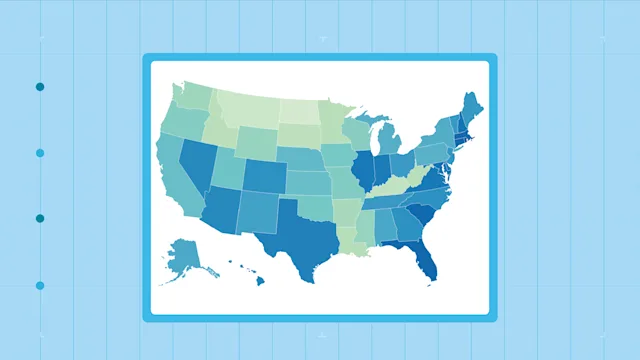
The map below shows where high-risk pregnancy specialists are located across the U.S. Some states, like Alaska, South Dakota, and Wyoming, have fewer than 10 high-risk pregnancy specialists in the entire state. Our data shows that there are no high-risk pregnancy specialists actively practicing in North Dakota, despite over 10,000 annual births there.
As the map shows, these healthcare professionals are much more likely to be located in more densely populated, urban areas. While mothers living in mostly urban areas live an average of 23 minutes away from the closest high-risk pregnancy specialist, mothers living in mostly rural areas need to travel an average of 62 minutes to reach the closest specialist.
Across the entire country, over 5.9 million women of child-bearing age live in a “high-risk pregnancy specialist desert.” In these areas, most of the population lives over an hour away from the closest professional. On average, people living in these counties have to drive roughly an hour and 45 minutes to reach the closest specialist.
For many mothers, this geographic barrier is enough to prevent them from seeing a high-risk pregnancy specialist entirely.
High-risk pregnancy specialists are less accessible to those with greater need
Digging deeper into the data reveals a concerning trend — high-risk pregnancy specialists are disproportionately located in areas with a relatively lower risk of pregnancy complications. This leaves many Black, AI/AN, and rural mothers at a distinct disadvantage.
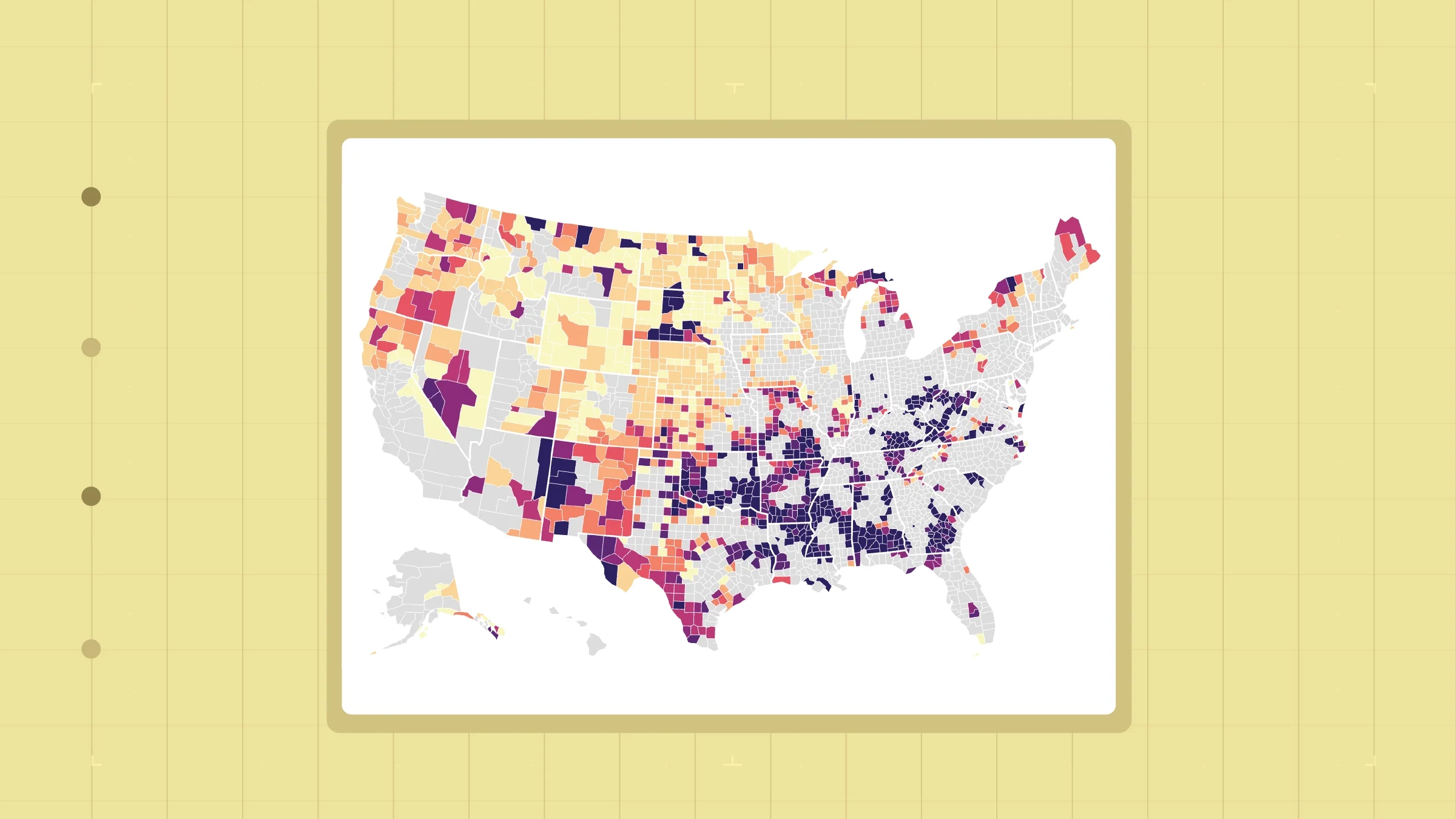
As the map below shows, high-risk pregnancy specialist deserts have higher rates of risk factors for pregnancy and labor complications:
Obesity: 37.6% in deserts vs. 33.1% in nondeserts
High blood pressure: 32.9% in deserts vs. 30.1% in nondeserts
Coronary heart disease: 6.0% in deserts vs. 5.2% in nondeserts
Diabetes: 10.8% in deserts vs. 10.1% in nondeserts
Chronic kidney disease: 3.0% in deserts vs. 2.8% in nondeserts
Asthma: 10.6% in deserts vs. 10.0% in nondeserts
Chronic obstructive pulmonary disease (COPD): 7.4% in deserts vs. 5.8% in nondeserts
Smoking: 19.3% in deserts vs. 14.8% in nondeserts
Still, in 2022 there were over 366,000 births in high-risk pregnancy specialist deserts. Many of these births took place in areas where there was a greater risk of pregnancy complications and a greater need for specialized care.
For example, in many Southern counties, pregnant people have to travel over an hour to reach the nearest high-risk pregnancy specialist. But they also face above average risk factors for pregnancy complications, including obesity, high blood pressure, diabetes, asthma, and smoking. These states also have the highest maternal mortality rates, with Arkansas, Mississippi, Tennessee, and Alabama all exceeding 40 deaths per 100,000 births.
As a result, many mothers go without specialized care, despite seeking it out. In our survey, almost 8% of people who did not see a high-risk pregnancy specialist reported wanting to see one. The share of mothers who reported this unmet need was highest for Black and AI/AN mothers (11%).
Availability, timing, convenience, and distance were the most commonly reported barriers to getting care from a high-risk pregnancy professional. They were cited by nearly 47% of mothers who were unable to see a specialist but wanted to see one.
Cost was a major barrier for 33% of mothers who reported wanting to see a high-risk pregnancy professional. This may be related to differences in insurance coverage. Mothers who were unable to see a specialist were also more likely to have individually purchased health insurance or no health insurance at all. In addition, Black and AI/AN mothers were more likely to report financial barriers to high-risk pregnancy care compared to white mothers.
Poor access to high-risk pregnancy specialists can harm maternal health and widen disparities
High-risk pregnancy professionals are specially trained to handle more complex maternal health conditions. Access to these specialists is critical for navigating complications during pregnancy and birth.
According to our survey, over 15% of mothers who recently gave birth reported an unexpected complication during labor. The rate of labor complications was roughly similar for mothers who saw a high-risk pregnancy specialist (15%) and women who did not want to see a specialist (14%). However, the rate of labor complications was over twice as high for women who were unable to see a high-risk pregnancy specialist but wanted to see one (36%).
Many mothers who had complications during labor also reported feeling dissatisfied with at least one area of their birthing care, including:
How their complication and treatment options were explained
The level of communication they received from their healthcare team
How the complication was addressed
Black and AI/AN mothers had the highest rate of labor complications (20%) as well as a higher rate of dissatisfaction (36%). White mothers reported a lower rate of labor complications (14%) and were also the least likely to report dissatisfaction with their care (25%).
Differences in the rate of labor complications and how they are handled can affect the mother’s health as well. Black and AI/AN mothers who experienced complications had twice the rate of longer postpartum hospital stays (of at least 4 days) compared to white mothers who experienced complications.
These disparities in birthing care — particularly for high-risk pregnancies — may be contributing to disparities in maternal mortality.
The bottom line
For those facing a high-risk pregnancy, access to a maternal-fetal medicine specialist is critical. However, nearly 6 million women face substantial physical barriers to seeing one of these specialists, let alone affording one. As a result, over 366,000 annual births take place in areas with inadequate access to high-risk pregnancy care.
In order to address disparities in maternal health outcomes, it is crucial to improve access and quality of pregnancy and birthing care for high-risk pregnancies.

Why trust our experts?




Methodology
Survey: Our survey was run through Qualtrics from October 26, 2023 to November 15, 2023. A total of 1,015 responses were collected and analyzed. The survey screened in people who gave birth up to 24 months prior to the date of the survey and were at least 18 years of age. We also required that they saw a healthcare professional for their pregnancy, labor and birth, and post-birth care. We oversampled specific race groups (American Indian, Alaskan Native, and Black Americans) to ensure that we captured sufficient responses by race.
To obtain nationally representative numbers, we created weights based on the race and ethnicity reported in the survey. Our weights were created using the race and ethnicity shares reported by the American Community Survey (ACS) 2022 5-year estimates (Table B03002: Hispanic or Latino Origin by Race). To evaluate the representativeness of our weights, we calculated the share of our weighted sample by region and by income groups in comparison to national shares using ACS 2022 5-year estimates (Tables B01003: Total Population and Table B19001 Household Income in the Past 12 Months (in 2022 Inflation-Adjusted Dollars). The comparisons can be found here.
Healthcare professional data: The dataset on healthcare professionals is licensed through HealthLink Dimensions. Based in Atlanta, HealthLink Dimensions is the authority in healthcare professional data, serving hospitals, life sciences, and health insurers with innovative managed data services and enterprise engagement solutions.
Professionals were included if they (1) had “maternal & fetal medicine” (MFM) or “perinatology” in their specialty description; (2) were located in one of the 50 U.S. states or the District of Columbia; (3) had an accurate location mapped to them (a professional may have more than one specialty and/or more than one active location); and (4) had a claim with an ICD-10 diagnosis code of O00-O9A (Pregnancy, Childbirth, And The Puerperium), Z32, Z34, Z36, and Z39 between September 2020 and September 2023. The claims source consists of both commercial and CMS claims data covering 350 million lives and over 5 billion claims per year. We added a claim requirement because we wanted to identify professionals who specifically treated people who were pregnant.
Many different types of professionals can be involved in maternal care. In this analysis, we included doctors, physician associates, and advanced practice nurses for the MFM specialty. The data set may undercount the number of professionals because the data is based on the NPPES NPI Registry.
We used the latitude and longitude to geolocate a professional’s address to a county using Census 2023 TIGER/Line ShapeFiles.
Census data: Data on total number of childbearing women (ages 15 to 44) by county was obtained from the American Community Survey (ACS) 2022 5-year estimates (Table B01001: Sex By Age).
Data on the total number of annual births was obtained from the US Census County Population Totals and Components of Change files. Specifically, our county of births uses the variable BIRTHS2022, which represents births in the period July 1, 2021 to June 30, 2022.
We linked a county to a core-based statistical area (also known as a geography type) using Census March 2020 Delineation files. The U.S. Office of Management and Budget defines areas as metropolitan (metro) if they have at least one urban cluster with a total population of 50,000 or more and as micropolitan (micro) if they have at least one urban cluster of between 10,000 and 50,000 people. Generally, metro counties are the most urban and nonmetro or micro counties are the most rural.
Analysis: All analyses reported above describing national representative numbers used the survey weights described above. All analyses comparing rates by race/ethnicity groups were unweighted.
For all data reported by race and ethnicity, we assigned a survey respondent to a group by first assigning anyone who self-reported as all or some part Black or AI/AN (American Indian and Alaskan Native) to the group “All or some part Black or AI/AN.” Then, anyone who self-reported as Asian, Native Hawaiian and Other Pacific Islander (NHPI), or Other was grouped as “All or some part Asian, NHPI, Other.” So if someone was to self-report as both Black and Asian, they would be assigned to the “All or some part Black or AI/AN” group.
Deserts: We defined driving distance and drive time for each census tract as driving distance and drive time between a tract’s Center of Population to the nearest maternal-fetal medicine professional. We determined tract population based on the U.S. Census Bureau 2020 Center of Population report. All location metrics (distance and drive times) were computed using the Google Distance Matrix API based on average traffic conditions. We define a majority desert county as a county with over 50% of its population living over a 1-hour drive from the nearest maternal fetal management specialist. Tracts with a population of 0 were excluded from the analysis. Tracts with no valid closest driving distance to a maternal fetal management specialist were also excluded (often due to geographical constraints).
Disease prevalences are shown based on data from the 2021 CDC PLACES report, which are model-based, county-level estimates for (1) age-adjusted prevalence of current asthma among adults aged >=18 years, 2019; (2) age-adjusted prevalence of chronic obstructive pulmonary disease among adults aged >=18 years, 2019; (3) age-adjusted prevalence of chronic kidney disease among adults aged >=18 years, 2019; (4) age-adjusted prevalence of diabetes among adults aged >=18 years, 2019; (5) age-adjusted prevalence of hypertension among adults aged >=18 years, 2019; (6) age-adjusted prevalence of obesity among adults aged >=18 years, 2019; (7) age-adjusted prevalence of smoking among adults aged >=18 years, 2019; and (8) age-adjusted prevalence of coronary heart disease among adults aged >=18 years, 2019.
References
American College of Obstetricians and Gynecologists. (2019). Levels of maternal care.
Carson, M., et al. (2017). Obstetric medical care in the United States of America. Obstetric Medicine.
Centers for Disease Control and Prevention. (2023). Maternal deaths and mortality rates: Each state, the District of Columbia, United States, 2018‐2021.
Centers for Disease Control and Prevention. (2023). PLACES: Local data for better health.
Centers for Medicare & Medicaid Services. (n.d.). NPPES NPI registry.
Fingar, K., et al. (2017). Delivery hospitalizations involving preeclampsia and eclampsia, 2005–2014. Healthcare Cost and Utilization Project Statistical Brief #222.
Fleszar, L., et al. (2023). Trends in state-level maternal mortality by racial and ethnic group in the United States. JAMA.
Ghidini, A., et al. (2022). Society for Maternal-Fetal Medicine Consult Series #60: Management of pregnancies resulting from in vitro fertilization. American Journal of Obstetrics and Gynecology.
Google Maps. (2024). Distance Matrix API overview.
Hoyert, D. (2024). Maternal mortality rates in the United States, 2022. National Center for Health Statistics.
Royal College of Obstetricians and Gynaecologists. (2019). Curriculum guide for maternal and fetal medicine (MFM) subspecialty training (SST).
Society for Maternal-Fetal Medicine. (2023). What makes a pregnancy high risk?
Society for Maternal-Fetal Medicine. (2024). Mission & vision.
Tu, L. (2023). Why maternal mortality rates are getting worse across the U.S. Scientific American.
U.S. Census Bureau. (n.d.). 1. Defining ’rural’ areas.
U.S. Census Bureau. (n.d.). Hispanic or Latino origin by race.
U.S. Census Bureau. (n.d.). Household income in the past 12 months (in 2022 inflation-adjusted dollars).
U.S. Census Bureau. (n.d.). Sex by age.
U.S. Census Bureau. (n.d.). Total population.
U.S. Census Bureau. (2021). Centers of population.
U.S. Census Bureau. (2023). Census 2023 TIGER U.S. County.
U.S. Census Bureau. (2023). County population totals and components of change: 2020-2022.
U.S. Department of Health and Human Services. (2020). Defining rural population.
U.S. Department of Health and Human Services Office of Minority Health. (2022). Heart disease and African Americans.