Key takeaways:
Artificial intelligence (AI) is currently used in healthcare to provide information about health conditions, help diagnose diseases, speed up paperwork, and create potential new treatments.
Using AI has several potential advantages, like easily accessing resources and speeding up diagnosis. But it also has disadvantages; using AI can cause harm, lead to the spread of incorrect information, or bias, and bring up issues of privacy.
One possible way to utilize AI to benefit your health is by using an app to create a list of questions for your provider ahead of your next appointment. You can also ask your provider about tips for using AI to support your well-being.
Artificial intelligence (AI) programs are all the rage these days. You’ve probably heard of apps like Chat GPT and Google’s Bard. And there’s lots of excitement (and fear) about how to make use of AI in healthcare.
“AI has already become and will continue to become an immensely powerful tool in all aspects of life,” Dan Inder Sraow, MD, told GoodRx Health. Sraow is a member of Physicians for Patient Protection, an organization that advocates for “physician-led care.”
How is AI being used in healthcare?
AI is being explored for many uses in healthcare. Below, we discuss nine of them.
1. Providing resources to manage health conditions
AI is being used to help people learn more about and better manage their health conditions — like, for example, cancer and diabetes.
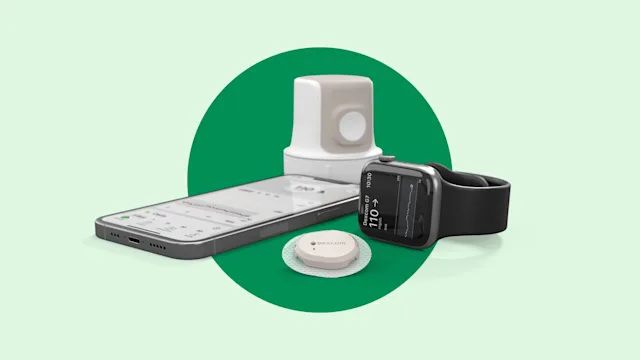
For example, one app uses AI to inform people with cancer what to expect during treatment. Other devices incorporate AI to help people with diabetes track their blood sugar.
2. Helping people navigate healthcare facilities
Boston Children’s Hospital is experimenting with ways that AI could be used to help give people directions around the hospital’s facilities.
3. Delivering treatment for mental health concerns
Though mental health professionals have concerns about the practical application, AI-based chatbots can provide mental health treatment. One small study suggests AI may help individuals get care who can’t otherwise access mental health treatment.
However, AI seems best suited for specific behavior-based therapies. And this type of treatment may not be appropriate for everyone.
4. Diagnosing health conditions
Many researchers are hopeful AI could help with early disease detection for a number of conditions.

Read more like this
Explore these related articles, suggested for readers like you.



For example, experts see promise in AI’s ability to detect lung cancer and breast cancer on scans. It’s also being explored as an aid in diagnosing Alzheimer’s disease and eye conditions involving the retina. And additional researchers are looking into using AI to diagnose rare diseases.
5. Predicting premature births
Researchers hope AI can help providers intervene earlier to prevent premature birth or otherwise support babies born early. Already, one study has shown the promise of using an AI model to predict when women might give birth early.
6. Interpreting health scans
Since 2013, providers have used automated computer programs (an early version of AI) to read health scans. One early example of these programs identifies referable diabetic retinopathy, a severe form of a diabetes-related eye disease that can cause blindness.
Now, there’s interest in expanding AI’s ability to help providers interpret health scans, such as chest X-rays.
7. Creating potential new medications
The first AI-designed medications started to become a reality in 2020. AI seems especially good at helping researchers determine where to start when coming up with new treatments.
For instance, AI programs can search through a huge database of medication ingredients to see which ones might work together to address a health issue. This gives researchers a head start in the medication development process.
8. Supporting people with disabilities
In one use case, an AI program captures the speech of people with amyotrophic lateral sclerosis (ALS) before they lose the ability to speak. This way, people can use the sound of their real voices to communicate later on, with the help of speech-to-text software.
9. Providing appointment summaries
Many providers see AI as an important tool to help document and share healthcare information. Providers at the University of Pittsburgh, for example, use an AI software to provide patients with a summary of their appointment.
This AI tool translates complex medical terms into plain language. And it uses color-coding to highlight the most important information, like medication instructions, discussed during appointments.
What ways can I use AI to help prepare for my next doctor’s visit?
If you’d like to use AI to help you get the most out of your next healthcare appointment, here are some strategies you can try.
Ask an AI program to prepare a list of questions
Certain AI programs can help you create a list of questions to bring to your appointment. You can ask one to provide general questions to ask at every appointment. Or you can use it to help you prepare with specific information about your symptoms or condition.
“Whether it is the patient putting in their symptoms and test results, or the doctor, these AI applications can come up with possible causes,” Sraow said as an example of how the programs can be used. “Going over these lists with the expert physician may allow them to see the case from a different perspective or some way they had not thought of before.”
To ask an AI program like Chat GPT to generate a list of questions, try the following prompts. You can also experiment with your own prompts or adjust these ones based on your needs:
“Generate a list of questions patients should ask at every primary care checkup.”
“What questions should I ask my doctor about [insert your symptoms, condition, or health concern]?”
“Write a list of possible reasons you may be experiencing [insert your symptoms].”
“What questions should you ask your doctor when you’re prescribed a new medication?”
“List some things I can ask my provider about how to save on my healthcare costs.”
Get help navigating the paperwork process
Many people are excited about AI’s potential to help with all the paperwork needed to navigate the healthcare system.
“AI applications would be helpful for patients needing financial assistance for medications or who are fighting insurance companies for certain necessary medications,” Sraow said.
If you’d like to try using an AI program for this purpose, ask your provider if they have any tips. Or ask if they’ve been using AI to help with paperwork and whether you could benefit from their system.
If you need to call your insurance company for information, you can ask an AI program to write a script you can follow. You could also ask the program to help you write an insurance appeal letter or grievance if you have claims that have been denied.
Brainstorm a list of lifestyle suggestions
Ahead of your appointment, ask an AI program to brainstorm a list of lifestyle changes that could help support your health or improve your symptoms. You can even ask it questions about vitamins or supplements.
“This might be helpful for tips on exercise, diet, taking medications as directed, [or] lifestyle changes,” says Sraow.
Bring the list with you to your appointment to review with your provider. They can highlight the best tips to try and recommend ideas AI might have missed.
Ask about using AI to improve your health
Talk to your provider about using AI as part of your healthcare journey. “Ask, ‘How should I use these tools to get more information about understanding my condition and how to better manage it as a patient?’” Sraow suggested.
Ask if and how your provider uses AI to support their practice or your treatment. Get their thoughts on any pitfalls to avoid. And ask if they have suggestions on how to make use of this technology to support your well-being.
What are the advantages of AI in healthcare?
Even though the technology is still new, experts see several potential advantages of using AI in healthcare. Some of these potential benefits are discussed below.
Can provide access to a wealth of healthcare information
AI programs can quickly gather up lots of information on any topic. As a result, they can help you and your providers quickly access a wealth of knowledge.
“I use [AI] when coming up [with a] possible diagnosis that may be rare or in cases that it is difficult to make sense of in the traditional way that we practice,” Sraow said.
Research also suggests AI is developing the ability to provide accurate information. One such study found that Chat GPT gave the correct answers when asked about cancer myths.
But keep in mind that AI does have limits when it comes to accuracy.
“It is similar to talking to someone who is incredibly book smart, has all the details memorized,” Sraow said. “However, [it] lacks some of the common sense to put all these details together to figure out how they fit the problem at hand.”
May improve providers’ bedside manner
Providers are starting to use AI as a tool to improve their communication with patients. Not only can AI programs provide a lot of information quickly, they can also communicate information in a way that feels approachable or nonjudgmental. One study found that AI programs can sometimes even provide more empathetic answers to patients than human providers.
Can help with paperwork
“Our modern healthcare system demands a huge amount of paperwork,” Sraow said. AI may be able to help you and your providers complete that paperwork with much less effort.
“Many physicians are using AI programs to help generate letters of medical necessity and prior authorization letters to send to insurance companies,” Sraow shared as examples.
Could help speed up diagnoses
Experts see diagnosing health conditions as another potential advantage of AI. The hope is that AI could help providers diagnose conditions faster so that health issues can be treated sooner.
In most cases, research on how well AI can actually identify a disease is still in the early phases. But researchers already see promise in AI’s ability to recognize signs of disease on scans for conditions like:
Certain types of cancer
Alzheimer's disease and, potentially, other conditions with a genetic link
Eye diseases that involve the retina
May help boost existing services
Some healthcare organizations are taking advantage of AI to improve their quality of care. One company uses AI to help organizations analyze mental health interactions to improve service quality. The company will help the 988 suicide prevention hotline evaluate whether counselors have adequate training to best support callers in crisis.
Could expand treatment options
Right now, AI plays a role in developing new medications. But it could lead to the development of other treatments down the road. Researchers are still in the process of understanding the possibilities AI has for expanding treatment options in the future.
What are the disadvantages of AI in healthcare?
There is certainly the prospect for AI in healthcare to have many advantages. But there are many potential disadvantages of using AI programs to be aware of, as well.
Can give harmful advice
One of the biggest concerns about AI in healthcare is the potential for harm. This seems especially true when AI programs replace humans in dealing with sensitive topics.
In one famous case, the National Eating Disorders Association (NEDA) replaced its hotline crisis counselors with an AI chatbot. The chatbot, named Tessa, quickly began offering diet and weight loss advice — recommendations that can be triggering or make symptoms worse for people with eating disorders.
In another case, a Belgium-based AI app gave some users who expressed suicidal thoughts instructions on how to die by suicide. One man who used the app died by suicide after receiving these instructions. The intended purpose of the AI app was to support users with mental health concerns.
Information is often wrong
Some research suggests that AI can provide accurate health information. But it’s not quite ready for prime time; AI has a history of completely making up information or leading to strange results.
“Additionally, these models can be manipulated to give the answer you are looking for,” says Sraow.
When he’s used it in his own work, Sraow has also found AI isn’t great at putting individual facts together accurately. And sometimes, it’s just plain wrong in its conclusions.
“AI is often wrong when I have used it to discuss cases. It also has a difficult time understanding it is wrong,” says Sraow. “Had I not had my own medical knowledge, I don’t think the correct conclusion would have been made.”
Not a replacement for human providers
Another disadvantage of AI in healthcare is that the programs can’t replace human providers. As Sraow points out, AI programs can pass the tests that providers take to get licensed. But this “should not be the standard for treating human lives,” he said.
“The practice of medicine has always been an apprentice model, where it is only after years of mentorship a physician moves into the role of healer,” Sraow added. “This experience … cannot be programmed into our existing AI models, at least for now.”
Some providers have also pointed out that the research showing AI can help treat mental health issues is limited. In most studies so far, the success of AI-based therapy was measured in comparison to people who got no treatment at all. This means AI therapy hasn’t been compared to mental health treatment given by humans. So we don’t really know how good AI really is at replacing traditional therapists.
May lead to or reinforce bias
AI applications need to be trained to do their jobs. To train an AI app, developers provide the programs with lots and lots of data to learn from. As a result, AI models are only as good as the data they learn from. And an AI program trained with data that’s biased is doomed to keep repeating that bias.
For example, researchers have raised concerns about using AI to detect skin cancer in people with darker skin tones. In one study, it was found that an AI model taught to identify cancer using lighter-skinned images wasn’t good at identifying skin cancer on darker skin.
In addition, AI seems to influence even experienced providers to override their expertise. One study had radiologists look at mammograms alongside an AI program that gave either correct or incorrect answers. Even when the AI model gave an incorrect answer, the radiologists were more likely to agree with it than disagree.
Raises potential privacy concerns
Another disadvantage of AI in healthcare revolves around the issue of privacy. It’s often unclear what sensitive healthcare data an AI model has access to and what it’s doing with it. This concern may grow as researchers train new AI programs to identify health conditions and interact with patient data.
Healthcare AI is not regulated
Along with privacy concerns, there are currently no regulations placed on AI in healthcare. And without regulation, it’s harder to protect privacy and patient rights. Not to mention, this means you potentially have few protections if things go wrong because of an AI program.
“If we are to more heavily rely on AI for clinical decision-making, I am not sure where the accountability would lie,” Sraow said. “It would not be possible to ‘blame’ a software model for mistakes and bad outcomes.”
Could have negative, unintended consequences
Since it’s so new, there’s still a lot we don’t understand about AI. It could be used to help people take control of their health and access better treatments. Or it could be used in unintended ways that negatively affect people’s health.
One student experiment showed that AI could be used by bad actors to write a genetic code to create a virus. Such a virus could then be engineered and lead to a pandemic. Keep in mind, this is a theory; there’s no evidence AI is being used in this manner. But it’s an example of something to consider as AI’s use in healthcare grows.
The bottom line
There is a lot of excitement about using artificial intelligence (AI) in healthcare. Researchers currently think it could be used to help make a diagnosis, gather information quickly, and even develop new treatments. But AI’s use in healthcare is still in the early stages.
Though it may have advantages — like its ability to find information or help with paperwork — there are disadvantages to AI in healthcare. For example, the models are not regulated, often provide inaccurate information, and can’t replace human providers.
If you want to try using AI as part of your own healthcare journey, explore using a program to prepare a list of questions for your next healthcare appointment.

Why trust our experts?



References
Aguilar, M. (2023). A 988 operator, faced with a flood of calls, turns to AI to boost counselor skills. STAT.
Arnold, C. (2023). Inside the nascent industry of AI-designed drugs. Nature Medicine.
Ayers, J. W., et al. (2023). Comparing physician and artificial intelligence chatbot responses to patient questions posted to a public social media forum. JAMA Internal Medicine.
Chun, M. (2023). How artificial intelligence is revolutionizing drug discovery. Bill of Health.
Dratsch, T., et al. (2023). Automation bias in mammography: The impact of artificial intelligence BI-RADS suggestions on reader performance. Radiology.
Hunter, B., et al. (2022). A radiomics-based decision support tool improves lung cancer diagnosis in combination with the Herder score in large lung nodules. The Lancet. Discovery Science.
Johnson, S. B., et al. (2023). Using ChatGPT to evaluate cancer myths and misconceptions: artificial intelligence and cancer information. JNCI Cancer Spectrum.
Keane, P. (2023). More people are going blind. AI can help fight it. Wired.
Kolata, G. (2023). When doctors use a chatbot to improve their bedside manner. The New York Times.
Krajcer, Z. (2022). Artificial intelligence in cardiovascular medicine: Historical overview, current status, and future directions. Texas Heart Institute Journal.
Kuhn, D., et al. (2023). AI in medical care: A map for clinical practice and patient protection. Medical Economics.
Kung, T. H., et al. (2022). Performance of ChatGPT on USMLE: Potential for AI-assisted medical education using large language models. MedRxiv.
Lohr, S. (2023). A.I. may someday work medical miracles. For now, it helps do paperwork. The New York Times.
Morris, A., et al. (2023). Patients were told their voices could disappear. They turned to AI to save them. The Washington Post.
Pearl, M. (2023). This children's hospital is integrating AI with healthcare. Mashable.
Psychiatrist.com. (2023). NEDA suspends AI chatbot for giving harmful eating disorder advice.
Rezk, E., et al. (2022). Improving skin color diversity in cancer detection: Deep learning approach. JMIR Dermatology.
Roose, K. (2023). A conversation with Bing's chatbot left me deeply unsettled. The New York Times.
Service, R. F. (2023). Could chatbots help devise the next pandemic virus? Science.
Singh, R., et al. (2023). Contrastive learning in protein language space predicts interactions between drugs and protein targets. Proceedings of the National Academy of Sciences.
Weise, K., et al. (2023). When A.I. chatbots hallucinate. The New York Times.
Xiang, C. (2023). 'He would still be here': Man dies by suicide after talking with AI chatbot, widow says. Vice.
Zhou, X., et al. (2023). Deep learning-based polygenic risk analysis for Alzheimer’s disease prediction. Communications Medicine.