Key takeaways:
Dyslexia is often thought of as a learning disability that makes reading hard but many adults with the condition say it has actually helped them be successful in life.
People with dyslexia often have good spatial awareness, increased problem solving skills, and an entrepreneurial spirit.
Tech tools and workplace accommodations can help people deal with the more challenging sides of dyslexia.
Many people think of dyslexia as a learning disability that makes it hard for kids to learn to read. But speak with adults who have lived with the condition for years, and you’ll hear a different story.
While the condition does come with its challenges, adults with dyslexia often see their differently wired brain as an advantage. Below, three people explain how dyslexia can make you more creative, entrepreneurial, and socially aware.
The theme park designer who has dyslexia on his resume
Taylor Baird, a theme park designer in Orlando, Florida, often has to create signs and other printed material for his job. His many spelling errors over the years have led him to joke that he must have dyslexia. But he never took the idea seriously until he was speaking to an online class one day and the teacher, a friend, asked him what it was like to live with a disability. He didn’t know what she meant. Then, he realized she was talking about his dyslexia jokes.
Search and compare options

“After that, I was like, ‘Hey, if I’m going to joke about this dyslexia stuff, I better know what it is at least.’ So I started doing research,” Taylor says.
One online resource on dyslexia offered a quiz. It said if you answered “yes” to 2 out of 10 questions, there’s a good chance you have the condition.
“I had seven of them,” Taylor says. “I’m like, ‘Oh, my gosh, I have dyslexia.’ This answers so many questions.”
Taylor didn’t go on to get a professional diagnosis. “You can get insurance coverage to get tested officially for dyslexia when you’re a child. But once you’re an adult, it’s not like you’re going to do extra classes to improve reading, so there’s no insurance coverage, and it’s thousands of dollars to get tested,” he explains.
Nonetheless, realizing he had dyslexia changed Taylor’s life. He learned coping strategies and started listening to more audiobooks. He now uses Grammarly and ChatGPT to help him catch errors and sound more professional in his writing. And he uses a tool that changes text in documents, bolding the first few letters of words, to help him read faster.
More than anything, Taylor says learning about dyslexia helped him accept and even feel proud of the way his brain works. People with the condition are often drawn to creative fields “because they naturally see things, see patterns, in their head,” he says. “It’s really been a huge benefit because, while I’m designing things, I essentially have a 3D model of it in my head that I analyze from all sorts of different points of views.”
He even put that he has dyslexia on his resume.
“If they came up with a pill that mitigated dyslexia, I wouldn’t want to take it because I would be afraid of it messing with my creative abilities,” he says.
The dad who advocates for kids with dyslexia
Stu Shader was many years into a successful career in technology sales when he discovered he had dyslexia. His daughter was struggling to learn Spanish, and a speech therapist at her school suggested she might have dyslexia.

Read more like this
Explore these related articles, suggested for readers like you.



At first, Stu resisted his daughter’s diagnosis. But as he read more about the condition, he understood not only did she have dyslexia, but so did he.
“There was a strong resemblance,” Stu says, explaining that he also had a difficult time at school, despite having above-average intelligence.

Learning more about the condition made him see how having dyslexia was linked to his academic troubles, but also his professional success. He read a book about the advantages of dyslexia that helped him see the positives — like better spatial awareness, a strong entrepreneurial spirit, and improved social intuition.
“Charles Schwab, Richard Branson, the guy that invented the CD [were all] dyslexic,” Stu says. “It’s this way to look at things or be part of life differently. It could be an advantage.”

Learning more about the condition also empowered Stu to ask for accommodations at work. Microsoft, where he worked at the time, allowed him to sit in the front row at big meetings. “That helps with paying attention and focus,” he says.
Stu encourages others with dyslexia to join their company’s employee resource group for people with disabilities or start their own. These groups help people speak more openly about their conditions and ask for the help they need.
“The better we are at being ourselves at work, probably the more productive and more enthusiastic and better worker we’re going to be,” he says.
While dyslexia can be useful in the workplace, Stu says, the condition can make school difficult for many kids who have it. That’s why he and his wife, who live in the San Francisco Bay Area, got involved in their local school for kids with dyslexia. Stu, who’s served on the board, mentors parents dealing with a child’s dyslexia diagnosis.
Stu’s main advice for worried parents? “There’s not one kind of tree. There’s not one kind of fish. There’s just not one kind of brain,” he says. “There’s a reason we’re wired in a certain way. School is brutal, but it’ll get better. Once they get to college, they find what they like. They figure it out.”
Quiz: Do I have dyslexia?
The executive with dyslexia who leans into his strengths
Chris Mills, the chief revenue officer of a Boston-based tech company, learned he had dyslexia back in elementary school.

“I love finding out how things are made, so concepts have always been good for me,” he says. “But, actually, school is terrible as it relates to conceptual understanding of things. It’s about memorization. It’s about learning how to spell things. I always struggled.”
After his diagnosis, Chris’ parents moved him to a school for kids with learning disabilities. But he hated it.
“I managed to convince my parents to put me back in the school I was at before,” he remembers. “That was a watershed [moment] for me. It taught me to work hard.”
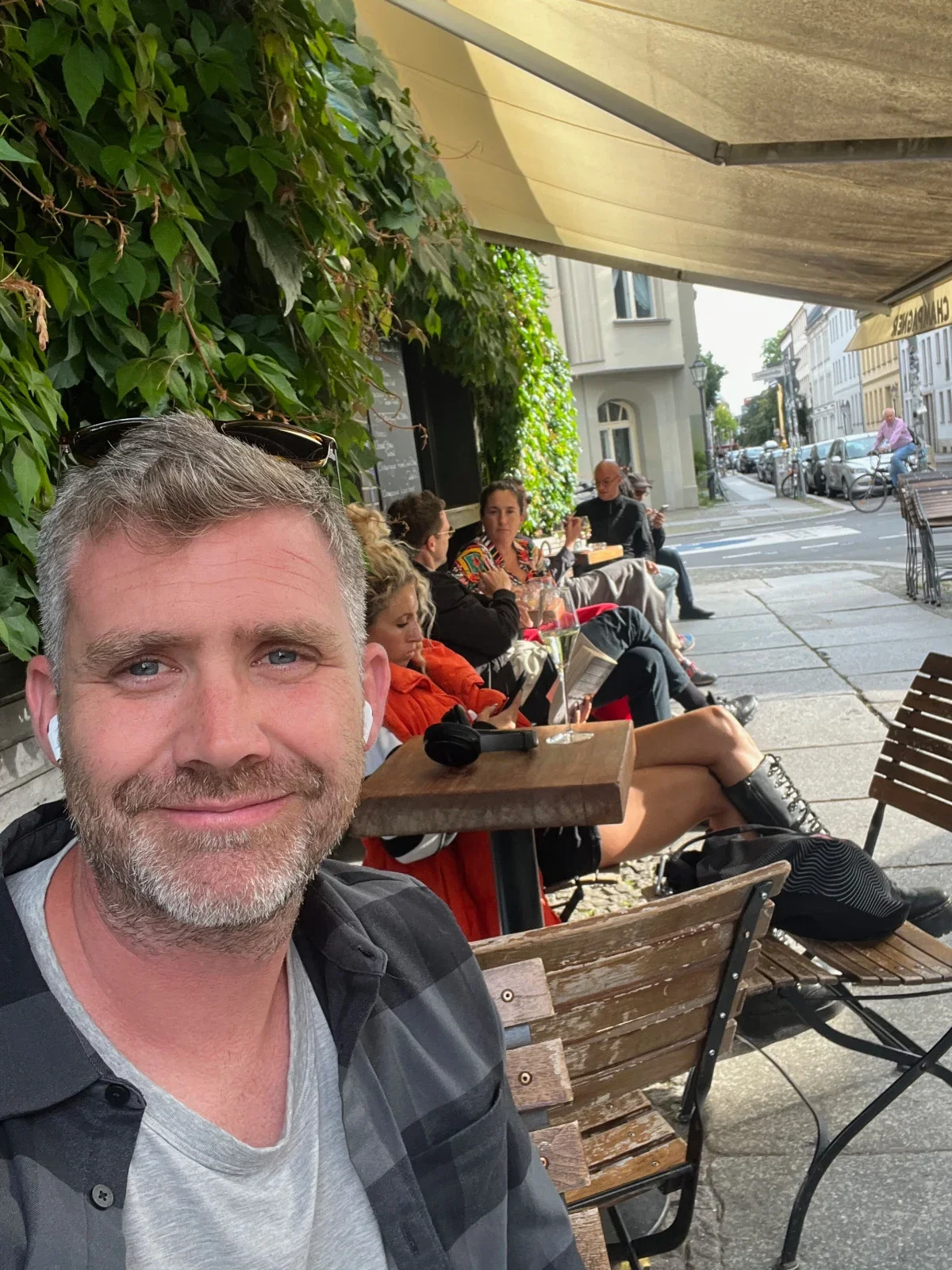
Chris’ work ethic, along with tech tools, has helped him thrive in his career. “Things like spell-check allow me to flourish,” he says, adding that he also believes in surrounding himself with people who are strong where he’s weak.
Because of his challenges with reading, Chris prefers audio communication. In addition to teaching him to be a good listener, speaking with people rather than writing to them has given him an edge professionally.
“I’m super old school; I just pick up my phone,” he says. “I get an email from someone who’s in an office down the hall from me, and I just walk over there and knock on the door. I actually find that sometimes putting down the devices, which are hard for folks with dyslexia, and just having human conversation and interaction helps in a big way.”
Chris’ biggest message for other people who have dyslexia is to lean into the positives.
“People can look at learning disabilities as an area where you’ve got a deficiency. But, in my mind, God made us all unique for a reason,” he says. “It has brought a lot of strengths for me. It’s forced me to be an effective problem solver and to be a lifetime learner and to be intellectually curious. And so, I just say, embrace it.”
What does the doctor say?

Patricia Pinto-Garcia, MD, MPH
Senior Medical Editor
People with dyslexia process language differently. This can lead to trouble reading, spelling, writing, and even saying certain words aloud. Dyslexia, like most medical conditions, exists on a spectrum. Not everyone with dyslexia processes language the same way. Some people may have more difficulty than others. And some people may be better able to compensate for any difficulties they encounter.
That’s why some people never get diagnosed as children. After all, when you’re learning to read and write, you have no frame of reference. Reading and writing is hard for everyone at first, and it’s impossible for a small child to know what’s “normal” and what’s not. So they depend on the adults in their lives to notice if something is wrong. Children who can compensate for weaknesses on their own may never get a diagnosis, or they might get a diagnosis when they’re older and can no longer keep up.
Adults who are able to compensate for issues with language all the way through school may be shocked to discover they have dyslexia. But the truth is that dyslexia can affect life outside of academics, as these stories show.
Having dyslexia can also be a strength. People with dyslexia spend their entire lives learning to compensate and adjust. While they may seem like natural problem solvers and outside-the-box thinkers, the truth is that they’ve mastered these skills by practicing them — knowingly or unknowingly — their entire lives.

Why trust our experts?