For most people who experience a concussion, symptoms are pretty mild and will improve with time without medical intervention — as long as the individual follow’s “doctor’s orders” at home.
But doctor’s orders for concussion recovery have changed over time. “When I first started doing this years and years ago, there was a feeling that rest was really important after concussion,” says Steven Flanagan, MD, chair of the Department of Rehabilitation Medicine at NYU Langone Health.
Rest is still an important component of recovery from a mild traumatic brain injury, but the recommendations are getting more nuanced. Previously, a doctor might have recommended absolute rest: staying in bed, not going to school, etc. It was all about avoiding or limiting cognitive and physical exertion.
Search and compare options
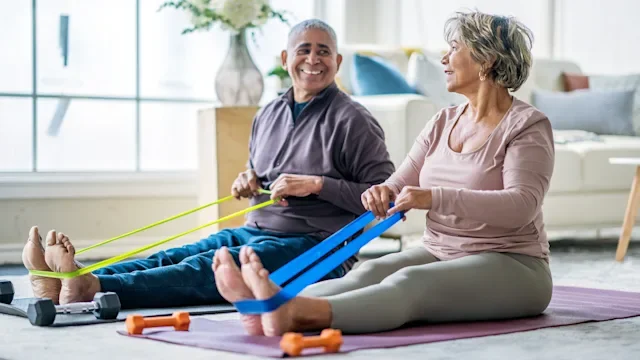
“We're getting away from that,” says Dr. Flanagan. “There's actually good evidence that shows that aerobic exercise that's kept below a threshold that would make your symptoms worse actually helps to speed up recovery from concussion.”
Basically, the recommendation is now more of a balance: You want to avoid excessive exertion, but you don’t want to completely avoid activity, and both extremes have been shown to slow down recovery time.
Dr. Flanagan recommends a “graded” return to exercise, school, and work. That is, to move in incremental stages until you’re back to your normal level of activity. The key is to keep activity below a threshold: If you start feeling adverse effects, such as a headache, then you may have gone too far. Return to sports may be time sensitive based on symptoms, and these guidelines may be altered depending on advanced age and a lower level of activity.
“If you do overdo the exercise a little bit, or if you do overdo the cognitive work a little bit, you haven't hurt your brain,” says Dr. Flanagan. “Just take it down a notch, and you can just go on then proceeding with your recovery.”
Dr. Flanagan is the chair of the Department of Rehabilitation Medicine at NYU Langone Health. He specializes in brain injury rehabilitation.
References
Rajajee, V. (2022). Management of acute moderate and severe traumatic brain injury. UpToDate.
Williamson, C., et al. (2023). Traumatic brain injury: epidemiology, classification, and pathophysiology. UpToDate.

Why trust our experts?