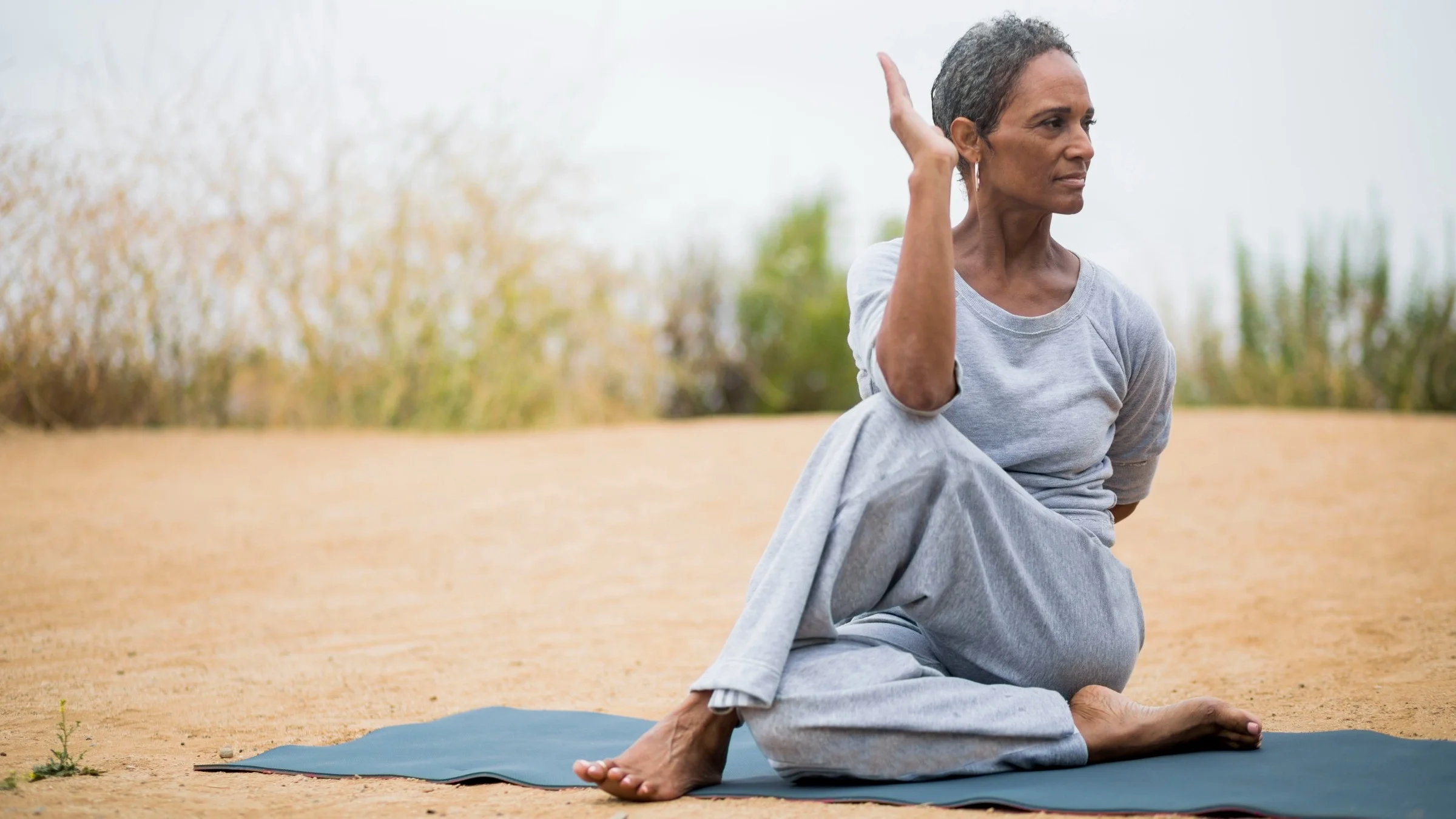
Key takeaways:
Mindfulness helps you increase awareness of your mind, body, and surroundings, which can have many benefits, like reducing stress.
You don’t have to do meditation to gain the benefits of mindfulness. Easy mindfulness exercises like mindful walking or eating can help clear your mind and increase your focus.
You can tailor mindfulness exercises to your needs, choosing only the activities you like best or making modifications to simplify others.
FeaturedImage
Mindfulness is when you deliberately pay attention to what’s happening right now. It can help you with two main goals:
Increasing awareness of your environment
Increasing awareness of your body sensations, emotions, and thoughts
There are many benefits to mindfulness, like lower stress and better focus. But is there a way to get these benefits without meditation? Yes! Read on.
Search and compare options
5 mindfulness exercises (no meditation involved)
There are many ways to practice mindfulness. And you don’t have to sit in one spot cross-legged if that’s not your thing. You can incorporate easy mindfulness activities into your regular schedule.
Give these five non-meditation mindfulness exercises a try:
1. Mindful breathing
Breathing deeply is important for getting oxygen to all parts of your body. It can also help you be more mentally engaged in the task at hand.
Follow this mindful breathing exercise to focus on your breath and breathe fully:
Sit in a comfortable position.
Take a breath, and notice how your chest and stomach expand. With a deep breath, your stomach should expand further than your chest.
Notice each step of inhaling: the air coming in through your nostrils, traveling down to your lungs, and then to your belly.
Notice each step of exhaling: the air leaving your belly, going through your lungs, and exiting through your nostrils.
2. Body scan
A body scan is a good way to be aware of what your body is experiencing. By noticing sensations, you can pick up on messages your body might be trying to send you. For instance, tight muscles might remind you to stretch.

Read more like this
Explore these related articles, suggested for readers like you.


You can take a few minutes between meetings or at the end of the day to do this exercise:
Sit comfortably, and rest your hands gently in your lap or at your side.
Take several slow, deep breaths.
Begin to shift your attention to your body.
Bring your attention to your feet, and observe the sensations in them. If you don’t feel anything, that’s fine.
Bring your attention to your legs, and observe any sensations there. Don’t judge any discomfort or pain — just notice it.
Move your attention to your lower back then slowly to your mid back and upper back. Notice any sensations without judgment.
Shift your attention to your stomach. Notice any sensations, even if it's simply the clothing against your skin.
Bring your attention to your chest, and notice anything you feel there.
Shift your focus to your arms, hands, and fingertips. Notice any feelings or sensations.
Pay attention to your head and neck. Notice any sensations there.
3. Mindful eating
You already eat several times a day, so why not turn it into a mindfulness practice? This mindful eating exercise can slow down your eating and allow you to savor your food:
First, observe how your food looks.
Then, as you pick up each item, feel its weight.
Next, examine its surface as though you are seeing it for the first time — its shape, the ridges, the parts that are shiny.
Pay attention to the smell of the food, and notice how you react.
Feel the food with your fingers, and notice its texture.
Take a bite of the food. Roll it around in your mouth, noticing the taste and texture.
Chew slowly, and notice how you feel. What does the food taste like now?
Chew each bite completely, much longer than usual, before you swallow.
After swallowing, notice the lingering taste in your mouth.
4. Mindful walking
If you walk regularly, you can turn that into a mindfulness practice too. You may also enjoy the walk even more.
Try this exercise the next time you go for a walk:
First, focus on your breathing as you walk. Take full, deep breaths.
Then, turn your attention to your posture. Look straight ahead, and stand tall with your shoulders back.
Next, pay attention to your feet. Notice and feel yourself first placing your heel on the ground. Then, notice the ball of your foot touching the ground before you lift it. Do the same with your other foot.
Now, pay attention to what you see. Notice what’s around you and their colors, such as the blue sky or red cardinals.
Now, pay attention to what you hear and smell — perhaps the chirping of birds or a car passing. Maybe you smell freshly cut grass or honeysuckle blossoms.
5. 5 senses exercise
Even a 10-second break from thinking to focus on your senses can be refreshing. Try this 5-4-3-2-1 technique at any point that you feel overwhelmed with stressful thoughts:
Stop what you are doing, and sit comfortably.
Close your eyes, and pay attention to your breath. Take deep, full breaths.
Open your eyes, name five items you see around you, and state their colors.
Next, identify four different sounds you hear.
Touch three different things, and notice how they feel.
Try to identify two different smells.
Notice and identify a taste in your mouth, like the lingering flavor of the last thing you ate or the mintiness of the gum you’re chewing.
How to get the most out of mindfulness
To get the most out of mindfulness, choose exercises that appeal to you. And you can be creative. Any time you deliberately pay close attention to the present moment, you’re being mindful.
You also don’t have to do the above exercises exactly as we wrote them. You can tailor them to your liking. For instance, if you find it challenging to do all of the mindful eating steps, focus on just the taste of your food.
While doing a mindfulness exercise, your mind will likely wander to other thoughts. That is OK. Just bring yourself back to the exercise, and continue.
Some people also find breathing or body-related mindfulness triggering. If that’s the case, try a different practice or modify the exercise. For example, if tuning into a particular sense feels overwhelming, skip that one.
Keep in mind that mindfulness is a practice. You probably won’t see significant benefits by just doing one exercise one time. If you can, set aside regular time every day for mindfulness. The more you do it, the easier you will find staying mentally present in the current moment.
The bottom line
You don’t need to meditate to practice mindfulness. There are easy mindfulness exercises that take little time and can be incorporated into your daily routine. Examples include mindful eating, mindful breathing, and the five senses exercise. You can tailor the exercises to your needs and liking.

Why trust our experts?




References
Bing-Canar, H., et al. (2016). Mindfulness-of-breathing exercise modulates EEG alpha activity during cognitive performance. Psychophysiology.
Davis, D.M., et al. (2012). What are the benefits of mindfulness. American Psychological Association.
Mirgain, S. (2016). A body scan script. Veterans Health Administration.
Mirgain, S. (2016). A mindful breathing script. Veterans Health Administration.
National Library of Medicine. (2017). Guide to good posture.
Nelson, J.B. (2017). Mindful eating: The art of presence while you eat. Diabetes Spectrum.
Schuldt, W. (2022). Grounding techniques. Therapist Aid.