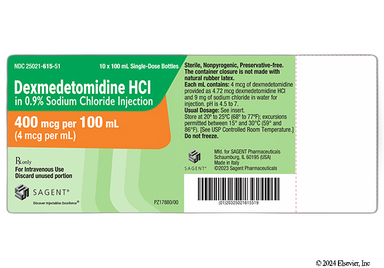
dexmedetomidine / sodium chloride
Dexmedetomidine (Precedex) is an injectable sedative given through the vein by a healthcare provider in a hospital setting. It's typically used before and during surgery and other procedures so you feel more relaxed and comfortable.


What is Dexmedetomidine (Precedex)?
Drug facts

Common questions about Dexmedetomidine (Precedex)
Dexmedetomidine (Precedex) is used in the hospital setting for sedation before and during surgery and other procedures. It can only be used for people who aren't intubated (when a tube is placed to keep airways open in people who have trouble breathing on their own).
Dexmedetomidine (Precedex) is an alpha~2~-adrenergic agonist that works as a sedative. It turns on proteins called alpha~2~ receptors in the brain to slow down nerve signaling, which helps make you feel calmer and more relaxed.
The dose of dexmedetomidine (Precedex) will depend on your body weight, individual condition, and response to the medication. The typical dose given in adults before a procedure is 0.5 mcg/kg to 1 mcg/kg of body weight given as an injection through your veins (intravenously or IV) over 10 minutes. During a procedure, a dose of 0.2 mcg/kg to 1 mcg/kg of body weight per hour is typically given. Your dose might differ if you're over 65 years of age or have liver problems.
Common side effects during dexmedetomidine (Precedex) treatment include low blood pressure, slowed breathing, slowed heart rate, and dry mouth. Your provider will monitor you while you receive dexmedetomidine (Precedex) and might give you medications to treat these side effects. If you've received dexmedetomidine (Precedex) for longer than 6 hours, you might experience nervousness, agitation, headaches, dizziness, weakness, or sweating for up to 2 days after the injection. Let your provider know if this happens to you.
For most people, dexmedetomidine (Precedex) starts to work in less than 5 minutes after it's injected into the vein.
There isn't enough information to know if dexmedetomidine (Precedex) is safe to use during pregnancy. In animals, dexmedetomidine (Precedex) caused harm to unborn babies, including lower weights and death. Make sure your provider knows if you're pregnant before receiving dexmedetomidine (Precedex) so you can discuss the risks and benefits for you and your unborn baby.

How to save using GoodRx