Key takeaways:
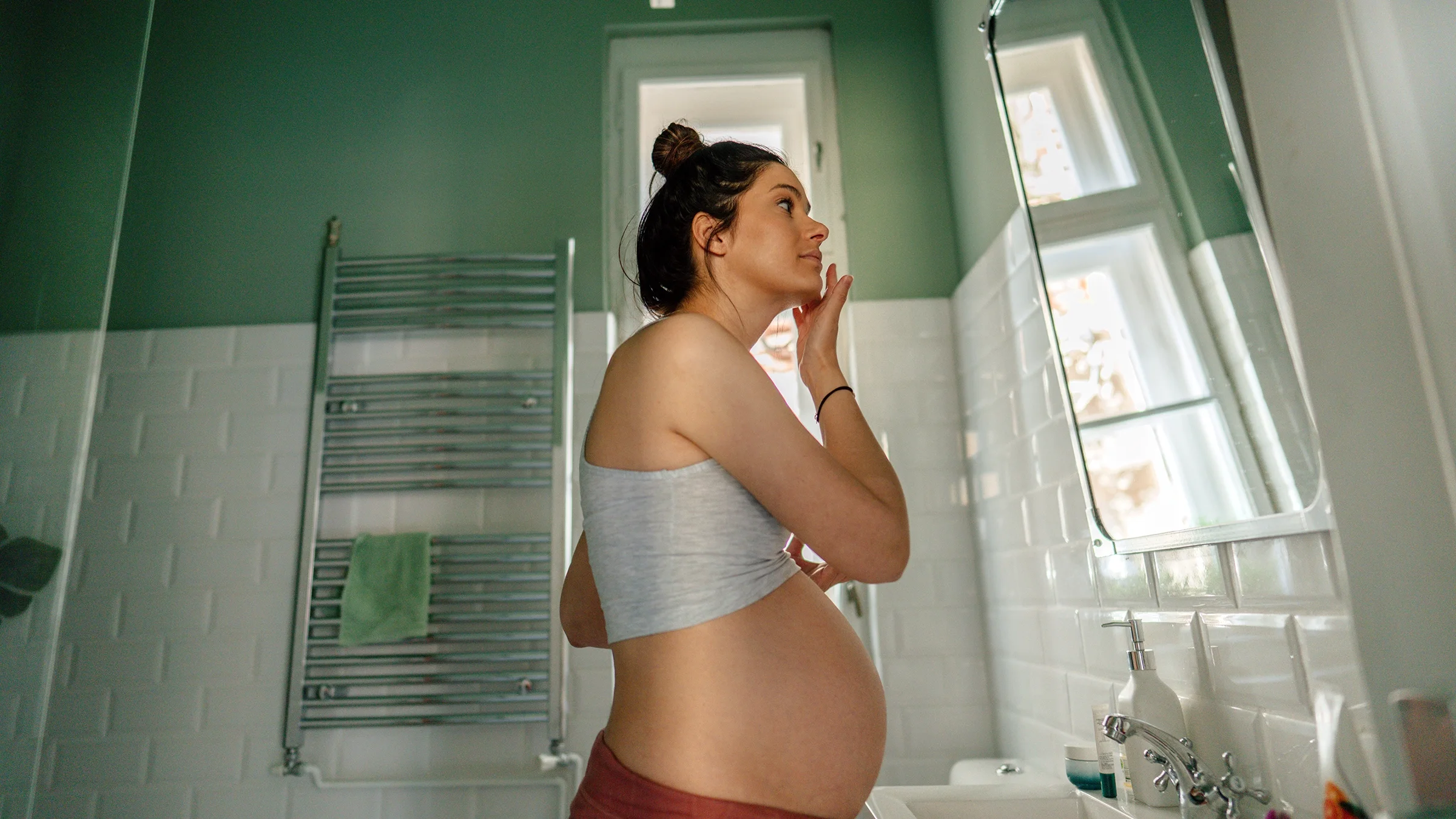
During pregnancy, you may have new skin care needs. Or, you may want to know if your current skin care products are safe to use.
Many common skin care ingredients like benzoyl peroxide, hyaluronic acid, and mineral sunscreen are considered safe to use during pregnancy.
It’s best to avoid certain ingredients, such as retinoids, phthalates, and parabens.
Pregnancy comes with a whole host of changes, and that includes your skin and skin care concerns. You may find that you have new skin care needs or, you may wonder if your current products are safe to use now that you’re expecting. It’s a common situation to find yourself balancing your own health needs with concern for your baby’s.
Your skin and skin care products don’t have to take a back seat during pregnancy. Most products that are good for your skin are also safe for your baby — with a few key exceptions.
Common skin issues during pregnancy
With pregnancy comes many changes in your body, and your skin is no exception. Most people are probably familiar with pregnancy-related stretch marks, but there other skin-related changes that are also common during pregnancy, such as:
Acne breakouts
Areas of skin darkening (including linea nigra, melasma, or on the nipples)
Spider veins and varicose veins
Thicker hair
Nail changes (feeling more brittle or increased white lines)
Search and compare options
What are pregnancy-safe skin care products?
Skin care products and most ingredients don’t need FDA approval before going to market, but their manufacturers are legally required to make sure they’re safe. The FDA is constantly monitoring product safety, including identifying whether products are safe during pregnancy. If there’s any concern, the FDA will take action and let the public know.
This means that most skin care products are probably safe during pregnancy. We say “probably” because there’s no guarantee that they were evaluated specifically for safety during pregnancy. It’s not ethical to perform studies on pregnant people to evaluate whether a medication is safe for them and their baby.
So even though most over-the-counter (OTC) products are considered safe, it’s not unreasonable to be concerned.
If you’re ever worried about starting a new skin care product, you can talk with your healthcare provider before you start using it. Here are some common skin care ingredients that are considered safe to use during pregnancy:
Azelaic acid
Glycolic acid / alpha hydroxy acids
Salicylic acid
Benzoyl peroxide
Niacinamide
Hyaluronic acid
Glycerin
Pregnancy-safe brands
Just because you’re pregnant, it doesn’t mean that you have to ditch all cosmetics and skin care products. Here are some examples of brands that have safe products to use when you’re expecting and nursing:
Sonage
Biossance
Earth Mama
BeautyCounter
Honest Beauty
True Botanicals
If you’re looking for a specific product or ingredient, Environmental Working Group’s Skin Deep is a searchable database that can give you their safety profile for thousands of products.
Can you use sunscreen during pregnancy?
Sunscreen is safe to use during pregnancy, but you should stick with the mineral blockers titanium oxide and zinc oxide. This is because these are the only two ingredients that the FDA has classified as Generally Recognized as Safe (GRAS).
Keep in mind that sunscreen isn’t the only way to protect your skin from the sun. Other strategies include wearing wide-brimmed hats and sun-protective clothing, and staying in the shade during peak midday hours.
What skin care ingredients to avoid while pregnant or nursing?
While most skin care products are safe to use during pregnancy, the following ingredients are best to avoid if possible.
Ingredient | What it’s used for/where it’s found | Safety concern |
Retinoids and retinol | Common acne and anti-aging treatment in creams and other formulations | Potential to cause birth defects |
Hydroquinone | Skin lightener in many creams and other formulations | Highly absorbed after application |
Phthalates | Chemical used in synthetic fragrances and nail polish | May affect hormone development (endocrine disruptor) |
Parabens | Chemicals used in many personal care products | May affect hormone development (endocrine disruptor) |
Triclosan | Antibacterial chemical in soaps and other personal care products | Can affect your liver and thyroid |
Oxybenzone | Chemical sunblock in sunscreens | More easily absorbed after application and may interfere with hormone system |
PTFE | Fluorinated chemical in cosmetics, shampoo, and sunscreen | Absorbed in the skin and may affect thyroid and reproductive systems |
The bottom line
Pregnancy brings many skin-related changes, from acne breakouts to dark skin patches. Most cosmetic products are considered safe to use during pregnancy, including common ingredients like benzoyl peroxide, niacinamide, and hyaluronic acid. But there are some ingredients to avoid, like retinoids and retinol, hydroquinone, and parabens.
Sun protection is still important during pregnancy, and it’s best to opt for mineral sunscreens like zinc oxide and titanium dioxide. And try to stay in the shade during peak sun hours, and wear wide-brimmed hats and sun-protective clothing.

Why trust our experts?



References
American College of Obstetricians and Gynecologists. (2022). Skin conditions during pregnancy: Frequently asked questions.
American College of Obstetricians and Gynecologists. (2022). Toxic chemicals: Steps to stay safer before and during pregnancy.
Beittel, C. (2023). What are parabens? Environmental Working Group.
Bozzo, P., et al. (2011). Safety of skin care products during pregnancy. Canadian Family Physician.
Environmental Working Group. (2008). Cheatsheet: Phthalates.
Environmental Working Group. (2008). Cheatsheet: Triclosan.
Faber, S., et al. (2022). Lacking safety data, the FDA should act to ban oxybenzone in sunscreens. Environmental Working Group.
MacKenzie, M. (2023). The 16 best pregnancy-safe skin care products. NBC Select.
Myers, I. (2020). 5 things to avoid in your personal care products if you’re pregnant or trying to get pregnant. Environmental Working Group.
Oakley, A., et al. (2021). Skin changes in pregnancy. DermNet.
Richard, E. G. (2019). Sun-protective clothing. Skin Cancer Foundation.
U.S. Food and Drug Administration. (2022). Cosmetics & pregnancy.
U.S. Food and Drug Administration. (2022). Questions and answers: FDA posts deemed final order and proposed order for over-the-counter sunscreen.
U.S. Food and Drug Administration. (2023). Generally recognized as safe (GRAS).