Key takeaways:
Telogen effluvium is a common type of reversible hair loss that happens about 3 months after physical or emotional stress.
Common causes include childbirth, serious illness, and medications (like beta blockers).
Hair loss from telogen effluvium is temporary, usually lasting under 6 months. Over time, hair regrows to its normal thickness.
It’s normal to lose about 50 to 100 hairs a day. But what if you notice clumps of hair in your brush or shower drain?
There’s a common type of temporary hair loss called telogen effluvium, or hair shedding. This hair thinning can affect anyone at any age, but it seems to be more common in women.
So, why does it happen and what can you do about it? Let’s dig in.
Search and compare options
What are symptoms of telogen effluvium?
Hair loss during telogen effluvium usually involves less than half of your scalp hair. But you can still lose anywhere from 300 to 500 hairs a day. And this can show up in a few different ways:
Clumps of hair on your pillow, in your hairbrush, or in your shower drain
Hair falling out easily when you run your hand through your hair
Less noticeable changes, like hair thinning gradually over time
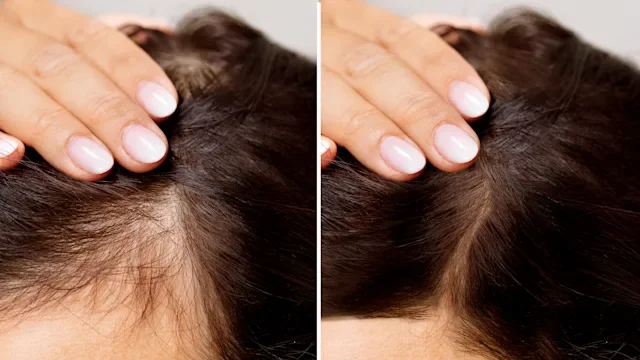
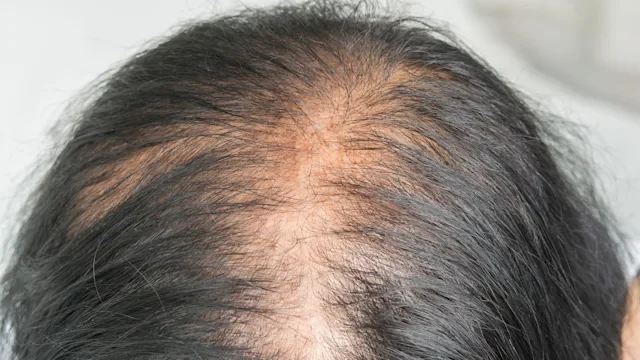
Hair shedding can be throughout the whole scalp, or focused in certain areas, like your temples. You can take pictures of your hair to get a better idea. Here are some images of what telogen effluvium can look like.


Telogen effluvium isn’t linked to other symptoms, like scalp flaking, itching, redness, or any type of rash. In fact, people with telogen effluvium typically have a healthy scalp.
Why does telogen effluvium happen?
Telogen effluvium usually happens about 3 months after some type of stress or change in the body.
To understand why telogen effluvium happens, it helps to know how the normal hair cycle works. In a healthy scalp, most hairs are in a growing phase (anagen), while about 15% are in a resting phase (telogen). After about 4 months in the resting phase, a new hair begins to grow underneath and pushes the resting hair out.
When the body experiences a serious stressor, many scalp hairs can suddenly switch from the growing phase to the resting phase. After 3 or 4 months, all the hairs in the resting phase fall out around the same time as new hair starts to grow in, leading to hair shedding. And when this happens, you may notice that your hair looks thinner.
The kinds of stressors that cause telogen effluvium can be physical and emotional. Some examples include:
Serious infection or illness, like COVID-19
Surgery
Emotional stress or trauma
Crash diets or starvation
Malnutrition or low protein intake
Hypothyroidism or hyperthyroidism
Low iron levels (iron deficiency)
Significant weight loss
Certain medications, like beta blockers, isotretinoin, and antidepressants
How do you diagnose telogen effluvium?
Your primary care provider or dermatologist can usually diagnose telogen effluvium just by asking you some questions about your recent health and examining your scalp.
They may also do a hair “pull test” in a few parts of your scalp. This involves gently tugging on a clump of about 50 hairs. If three or more telogen hairs come out with each pull, this could mean telogen effluvium.
You may also need bloodwork to rule out other causes. This can help make sure your hair shedding isn’t caused by an underlying condition, like hypothyroidism or iron deficiency.
In rare situations, you might need a scalp biopsy in the area of hair loss to confirm the diagnosis. This can help determine if your hair loss is happening for another reason (more on this below).
How do you treat telogen effluvium?
If hair shedding is caused by a specific underlying condition, then treating that cause will help hair volume return to normal. The good news is most cases of telogen effluvium improve on their own without any treatment. There’s no specific treatment for telogen effluvium other than being patient, which is obviously easier said than done.
But there are some steps you can take to prevent further hair loss, including:
Keep your scalp healthy by avoiding tight hair styles and chemicals.
Limit heat when styling.
Consider scalp massages to promote local blood flow.
Make sure you’re eating a balanced and nutritious diet.
Try simple stress management tips.
Quit smoking, or don’t start.
How is telogen effluvium different from alopecia and other types of hair loss?
There are many causes of hair loss beyond telogen effluvium. Getting the diagnosis right will help you know what to expect and get the best treatment.
Here are some other common causes of hair loss and how they compare to telogen effluvium.
Alopecia areata
Alopecia areata is an autoimmune condition that causes hair loss. Hair loss happens in coin-sized round patches.

Androgenic alopecia
Androgenic alopecia (female- or male-pattern hair loss) is the most common type of hair loss. It’s caused by a combination of age and genetics. In women, this hair thinning typically starts at the top of the scalp. In men, it typically starts at the front hairline.

Traction alopecia
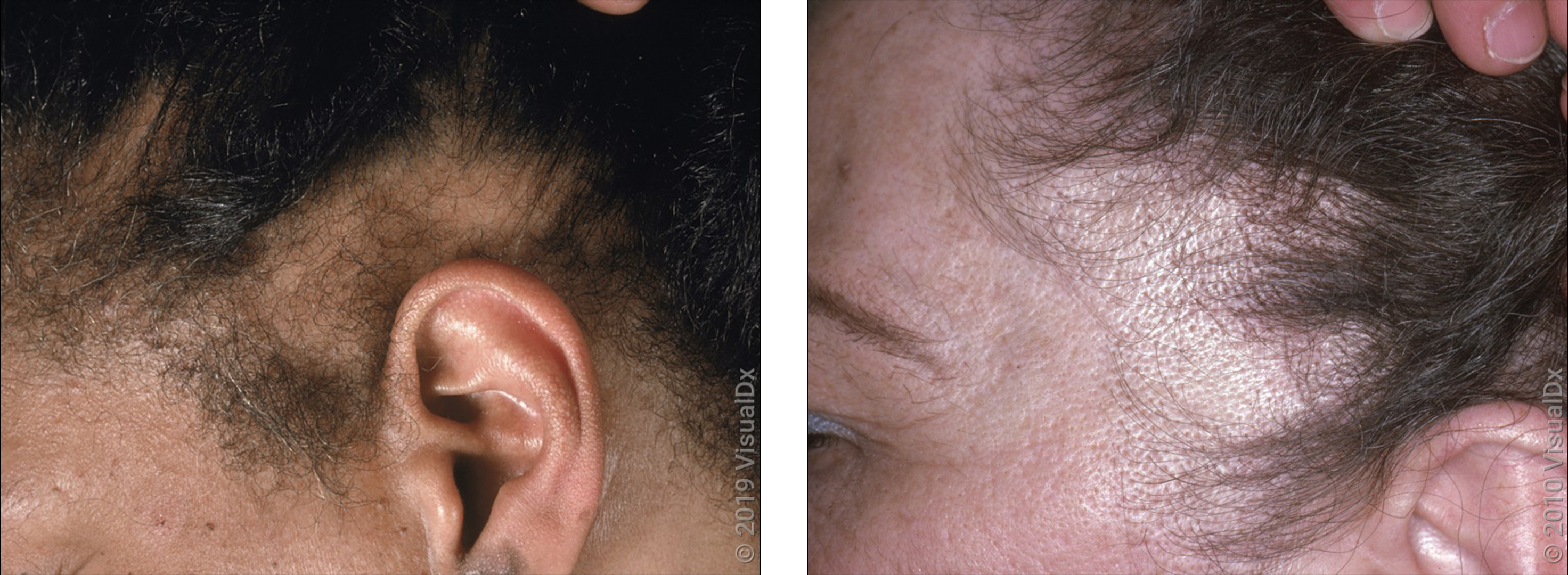
Traction alopecia is hair loss that happens as a result of pulling, like from tight hairstyles. Often you can see hair thinning around the hairline (near the edges of the scalp).
How long does hair loss from telogen effluvium last?
Hair loss from telogen effluvium can last anywhere from 3 to 6 months. Hair will start to grow back after this. But it may take several months more for your hair volume to feel normal again — especially if your hair is longer. Most people will regain all of their hair within 6 to 9 months.
Frequently asked questions
It’s unclear whether telogen effluvium can last for years. While many reports of chronic telogen effluvium exist, there remains some controversy. Some believe it could be that the original source of stress for telogen effluvium was never found, or that it wasn’t telogen effluvium to begin with. Research is ongoing.
Yes, in some cases minoxidil can help for telogen effluvium. Minoxidil is a medication that promotes hair growth, but it can take at least a couple of months for it to start working. Small studies suggest oral and topical minoxidil provides some improvement. This would be considered an “off-label” use, since minoxidil isn’t FDA-approved for telogen effluvium.
Despite claims you see online, “hair growth” shampoos don’t regrow hair. Experts don’t recommend any specific shampoo, unless you have other scalp issues (like dandruff). So, avoid harsh chemicals and be sure to condition after shampooing.
It’s unclear whether telogen effluvium can last for years. While many reports of chronic telogen effluvium exist, there remains some controversy. Some believe it could be that the original source of stress for telogen effluvium was never found, or that it wasn’t telogen effluvium to begin with. Research is ongoing.
Yes, in some cases minoxidil can help for telogen effluvium. Minoxidil is a medication that promotes hair growth, but it can take at least a couple of months for it to start working. Small studies suggest oral and topical minoxidil provides some improvement. This would be considered an “off-label” use, since minoxidil isn’t FDA-approved for telogen effluvium.
Despite claims you see online, “hair growth” shampoos don’t regrow hair. Experts don’t recommend any specific shampoo, unless you have other scalp issues (like dandruff). So, avoid harsh chemicals and be sure to condition after shampooing.
The bottom line
Telogen effluvium is new or sudden hair loss that happens about 3 months after a physical or emotional stressor. This can include things like childbirth, serious illness, or surgery. In some situations, telogen effluvium can also be caused by medications or an underlying medical condition.
Telogen effluvium is reversible. It usually lasts under 6 months, and most people experience complete hair regrowth without any treatment.

Why trust our experts?




Images used with permission from VisualDx (www.visualdx.com)
References
American Academy of Dermatology Association. (n.d.). Hair loss: Overview.
American Academy of Dermatology Association. (n.d.). Hair loss: Who gets and causes.
Asghar, F., et al. (2020). Telogen effluvium: A review of the literature. Cureus.
British Association of Dermatologists. (2025). Telogen effluvium.
Daunton, A., et al. (2023). Chronic telogen effluvium: Is it a distinct condition? A systematic review. American Journal of Clinical Dermatology.
Feaster, B., et al. (2022). Oral minoxidil use in androgenetic alopecia and telogen effluvium. Archives of Dermatological Research.
Hughes, E. C., et al. (2024). Telogen effluvium. StatPearls.
Malkud, S. (2015). Telogen effluvium: A review. Journal of Clinical and Diagnostic Research.
Mysore, V., et al. (2019). Expert consensus on the management of telogen effluvium in India. International Journal of Trichology.
NYU Langone Health. (n.d.). Types of hair loss.
Ohyama, M., et al. (2025). Use of 5% topical minoxidil application for telogen effluvium: An open-label single-arm clinical trial. The Journal of Dermatology.
Sperling, L. C. (2023). The role of the scalp biopsy in the evaluation of alopecia. Journal of the American Academy of Dermatology.