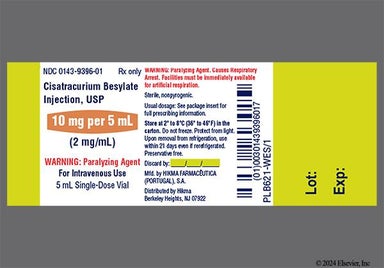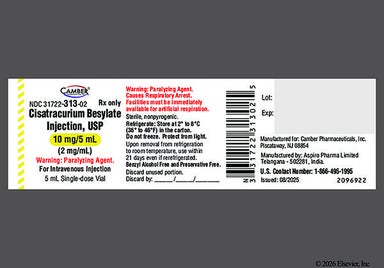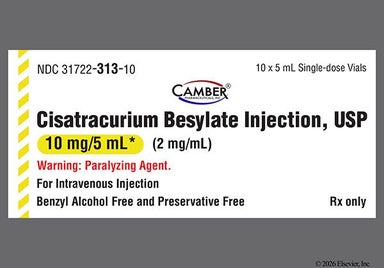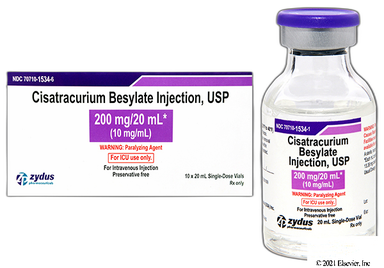
Cisatracurium (Nimbex) is an injectable medication typically given in the hospital. It's used to relax your muscles during surgery and certain procedures. You'll also receive other medications so that you fall asleep before the effects of cisatracurium (Nimbex) kick in.
Providers use cisatracurium (Nimbex) to relax your muscles so they can perform certain surgeries and procedures on you. One common procedure done in the intensive care unit (ICU) that requires cisatracurium (Nimbex) is the insertion of breathing tubes (for intubation or mechanical ventilation). Based on clinical evidence, some providers may also use cisatracurium (Nimbex) in other situations in the ICU that are considered off-label (not FDA approved), such as for certain breathing problems. This medication can be used in children, but it depends on their age and the procedure they're going to have. Before you receive cisatracurium (Nimbex), you'll be given a sedative so that you're completely asleep and you won't feel the paralytic effects of cisatracurium (Nimbex) as it starts to work.
Cisatracurium (Nimbex) is a neuromuscular blocker. It works by attaching to proteins in your nerves near your muscles. Here, the medication blocks the action of a chemical in your body that makes your muscles contract (tighten). Blocking this chemical causes you to be unable to move your muscles (paralysis).
Cisatracurium (Nimbex) is given by a trained healthcare provider as an injection through the veins (intravenously, IV) that runs continuously. You might receive an IV injection before your provider starts the continuous infusion. This helps raise the levels of cisatracurium (Nimbex) in your body so it can start working quicker.
The dose of cisatracurium (Nimbex) is different for everyone. It depends on why you need the medication, your age, and your weight. Your provider will change your dose based on a nerve stimulation test. It tests how deeply your muscles are relaxed (or paralyzed) by sending a small electric shock to your nerve to see if your muscle twitches. While there are a few types of nerve stimulation tests available, the most commonly used test is called train of four. During this test, your provider adjusts your dose until you have two muscle twitches out of four stimulation attempts.
Cisatracurium (Nimbex) is a typically well-tolerated medication and doesn't have many side effects. Possible side effects include low heart rate, low blood pressure, rash, and muscle pain.
You'll receive a sedative and pain medication before and during your cisatracurium (Nimbex) infusion. Additionally, since you can't move around when you're receiving paralytics like cisatracurium (Nimbex), your risk for blood clots might be higher. To prevent clots, you'll likely receive an anticoagulant (either heparin or enoxaparin (Lovenox)) as well. Finally, since you won't be able to blink, you'll also receive eye drops or eye lubricants to keep your eyes moist and protect them from cuts or damage.