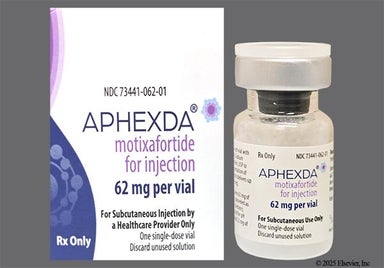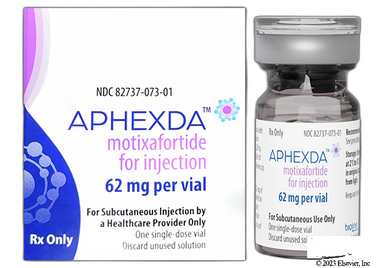
Aphexda (motixafortide) is a hematopoietic stem cell mobilizer. It's used to help move stem cells from the bone marrow to the blood to be collected and used for a stem cell transplant. This medication is specifically used for adults with multiple myeloma who will be getting a stem cell transplant. It's typically used together with filgrastim. Aphexda (motixafortide) is given as an injection under the skin by a healthcare professional before stem cells are collected. Side effects include injection site reactions, pain, flushing, and itching.
Aphexda (motixafortide) is a hematopoietic stem cell mobilizer. More specifically, it's known as a C-X-C motif chemokine receptor 4 (CXCR4) inhibitor.
This medication helps your stem cells move from your bone marrow and into your blood. When the stem cells are in your blood, your healthcare team can collect your stem cells more easily. Once collected, the stem cells will be used for your stem cell transplant.
Aphexda (motixafortide) is given as an injection under the skin (subcutaneously) in the stomach, thighs, or the back or side of the upper arms. It typically takes a few minutes to get the injection. A healthcare professional will administer Aphexda (motixafortide) while you're in the hospital.
Aphexda (motixafortide) is typically given 10 to 14 hours before the start of your first apheresis procedure, which is the process of collecting stem cells from the blood. If you need to have an apheresis procedure done for the third time, your healthcare team might decide to give you another injection of Aphexda (motixafortide) before the procedure.
You'll need once-daily injections of filgrastim for 4 days before you get your Aphexda (motixafortide) injection and on each day before your apheresis procedure. Filgrastim helps your body make white blood cells. About 30 to 60 minutes before your Aphexda (motixafortide) injection, your healthcare team will also give you an antihistamine, acetaminophen (Tylenol), famotidine, and a leukotriene antagonist like montelukast (Singulair). These medications are used to prevent allergic reactions and injection-site reactions from Aphexda (motixafortide).
You'll need to receive filgrastim before Aphexda (motixafortide) to help your bone marrow make specific types of white blood cells. Then when you receive Aphexda (motixafortide), those white blood cells get released from the bone marrow, go into your blood, and get collected so they can be given during your stem cell transplant. Multiple myeloma is a type of cancer that lowers your bone marrow's ability to make normal blood cells, such as white blood cells. When filgrastim and Aphexda (motixafortide) are used together to prepare for a stem cell transplant, your body gets replenished with your own white blood cells after the transplant.
The most common side effects of Aphexda (motixafortide) are reactions at the injection site, which can include pain, redness, itching, bruising, rash, swelling, and hives. You could also experience general pain, flushing, hives, and itching throughout your body too. To help lower your risk for these side effects, your oncology care team will probably give you medications, such as an antihistamine and acetaminophen (Tylenol), shortly before your Aphexda (motixafortide) dose. Let a member of your healthcare team know if you do get any of these reactions and if they become too bothersome. You might need more medical attention.
No. Based on how Aphexda (motixafortide) works in the body, the medication can potentially cause harm to unborn babies. If you're able to become pregnant, you should use contraception (birth control) for at least 8 days after your last dose of Aphexda (motixafortide). Let your oncologist know if you're pregnant before you get your Aphexda (motixafortide) injection.