


GoodRx Quarterly Report: Q1 2019
In an effort to continue to shed light on drug prices and increase transparency, we are excited to present the first ever GoodRx Quarterly Report—an
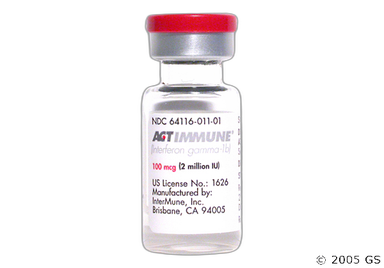
Actimmune is a medication used for genetic conditions called chronic granulomatous disease (CGD) and severe malignant osteopetrosis (SMO). It's given as an injection under the skin three times per week. Actimmune is only available by prescription and must be dispensed by a specialty pharmacy.

Actimmune is a biologic medication that contains a protein called interferon gamma.
In CGD, your immune system isn't working as well as it should. Actimmune acts on your immune system. It helps your white blood cells work better to fight off germs so you don't get sick as often or as severely.
In SMO, your body's ability to regulate bone growth and breakdown isn't balanced, which can cause many problems throughout the body. Actimmune helps your body break down bone and replace it with new, healthy bone better. This keeps your bones from getting too hard and the condition's complications around the body from getting worse.
| Common Brands | Actimmune |
|---|---|
| Drug Class | Biologic |
| Controlled Substance Classification | Not a controlled medication |
| Generic Status | No lower-cost generic available |
| Availability | Prescription only |

The following side effects may get better over time as your body gets used to the medication. Let your healthcare provider know immediately if you continue to experience these symptoms or if they worsen over time.
Contact your healthcare provider immediately if you experience any of the following.
Along with its needed effects, a medicine may cause some unwanted effects. Although not all of these side effects may occur, if they do occur they may need medical attention.
Check with your doctor or nurse immediately if any of the following side effects occur:
Less common
Black, tarry stools
bleeding gums
blood in the urine or stools
confusion
cough or hoarseness
loss of balance control
lower back or side pain
mask-like face
painful or difficult urination
pinpoint red spots on the skin
shuffling walk
stiffness of the arms or legs
trembling and shaking of the hands and fingers
trouble breathing
trouble speaking or swallowing
trouble thinking or concentrating
trouble walking
ulcers, sores, or white spots in the mouth
unusual bleeding or bruising
unusual tiredness or weakness
Incidence not known
Abdominal or stomach pain or tenderness
change in walking and balance
clay colored stools
clumsiness or unsteadiness
dark urine
decreased appetite
decreased frequency or amount of urine
general feeling of discomfort or illness
headache
increased thirst
itching or skin rash
joint or muscle pain
loss of appetite
lower back or side pain
muscle aches and pains
numbness or tingling of the face, hands, or feet
painful or difficult urination
pale skin
redness and soreness of the eyes
shivering skin
sweating
swelling of the face, fingers, or lower legs
trouble sleeping
yellow eyes or skin
Some side effects may occur that usually do not need medical attention. These side effects may go away during treatment as your body adjusts to the medicine. Also, your health care professional may be able to tell you about ways to prevent or reduce some of these side effects. Check with your health care professional if any of the following side effects continue or are bothersome or if you have any questions about them:
Other side effects not listed may also occur in some patients. If you notice any other effects, check with your healthcare professional.
Call your doctor for medical advice about side effects. You may report side effects to the FDA at 1-800-FDA-1088.



How to use Actimmune

Actimmune can cause some serious health issues. This risk may be even higher for certain groups. If this worries you, talk to your doctor or pharmacist about other options.
People with heart problems who took doses higher than 10-times the weekly recommended dose of Actimmune have experienced worsening of their heart condition. This worsening might be brought on by flu-like side effects of the medication, such as fever and chills.
Additionally, people who took such high doses of Actimmune have experienced confusion, disorientation, changes in their ability to think clearly, dizziness, and gait (walking) problems. Let your provider know if you have any of these symptoms. They typically go away within a few days after the Actimmune dose is lowered or the medication is stopped.
If you have a history of seizures, nervous system problems, or heart problems, let your provider know before Actimmune treatment. Your provider might want to follow up with you more closely. Ask your pharmacist or provider if you're not sure of your dose of Actimmune or how to give yourself the medication properly.
Actimmune can lead to low blood cell counts, which can raise your risk for serious infections and bleeding. You'll likely need to have lab tests done before and during treatment with Actimmune. Tracking your blood cell counts helps your provider make sure they're in the normal range. If your blood counts drop too low, you'll likely need to stop taking Actimmune. If you develop any signs of infection (e.g., fever, tiredness, chills, cough, trouble breathing) or signs of bleeding (e.g., pale skin, fast heart rate, lightheadedness, blood in your urine or stool), contact your provider right away.
Actimmune can cause liver problems, especially if you already have these problems before treatment. You might need to get regular blood tests done to make sure your liver is working properly. Seek medical attention immediately if you notice swelling of your stomach, yellowing of your skin or the whites of your eyes, stool changes (black, tarry, or bloody stools), coughing or vomiting up blood, or confusion. These liver problems typically go away once the Actimmune dose is lowered or the medication is stopped.
Severe allergic reactions to Actimmune are possible, including life-threatening reactions like facial swelling, shock, and anaphylaxis (closing of the throat). Make sure to tell your provider if you're allergic to latex because parts of the Actimmune vials are made with latex. If you notice dizziness, nausea, swelling around your eyes, swelling of the lips or tongue, a choking sensation, or difficulty breathing after using Actimmune, get medical help right away.

Actimmune is given as an injection under the skin three times per week. Your provider will calculate your dose based on your weight and height. The dose is the same for CGD and SMO.

Although certain medicines should not be used together at all, in other cases two different medicines may be used together even if an interaction might occur. In these cases, your doctor may want to change the dose, or other precautions may be necessary. Tell your healthcare professional if you are taking any other prescription or nonprescription (over-the-counter [OTC]) medicine.

Contraindications are specific health conditions or situations in which a person should not take a medication due to safety concerns. If you have any of the following conditions or if any of the following apply to you, let your healthcare provider know because Actimmune will not be safe for you to take.


Prescription savings
Stop paying too much for your prescriptions. Compare prices, get pharmacy coupons, and save up to 80%. Find expert answers to your health questions so you can make the best decisions for yourself and your family.
Health conditions
Medications & treatment
Access & affordability
 Our monthly healthcare membership can help you save thousands on your prescription costs.
Resources

You'll likely keep taking Actimmune as long as it's helping your condition and you're not having severe side effects. For CGD, this medication helps lower how often and how severely you get sick. For SMO, it helps slow the worsening of the condition. Actimmune only helps with CGD and SMO as long as you take it. Once you stop, the effects typically go away. Discuss with your provider about how long you should use Actimmune based on your symptoms and side effects.
In a study looking at how well the medication works, people with CGD taking Actimmune had a 67% lower risk of serious infections compared to those who didn't get treatment. Additionally, people taking the medication during the study had fewer days in the hospital than those without treatment.
A small study looking at how well Actimmune works for SMO showed that some people taking the medication with calcitriol (Rocaltrol) had more time before their symptoms worsened compared to people who only took calcitriol (Rocaltrol). After the study began, there were at least 165 days until SMO symptoms worsened for some people taking the combination therapy. But it took about 65 days for symptoms to worsen for those who only took calcitriol (Rocaltrol).
If you're thinking of becoming pregnant while taking Actimmune, talk to your provider about family planning and the risks and benefits of using the medication. It's not known how safe Actimmune is in pregnant females because it hasn't been studied. In animal studies, Actimmune didn't cause harm to babies when given at much higher doses than those typically used in humans. But to be safe, this medication should only be used during pregnancy if it's clearly needed.
Chronic granulomatous disease (CGD) is a rare, genetic problem that causes your white blood cells to not work as well. Your white blood cells are responsible for fighting off germs, like bacteria, fungi, and viruses, so you don't get sick. When your white blood cells aren't working well, your risk for severe and even life-threatening infections is higher. People with CGD typically need to take lifelong antibiotics and antifungals to help prevent infections. Actimmune helps your white blood cells work better at fighting off germs to prevent you from getting infections.
