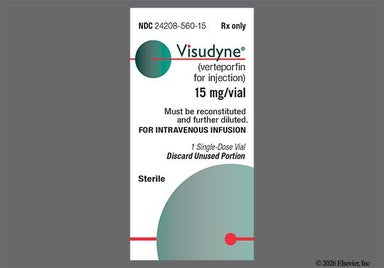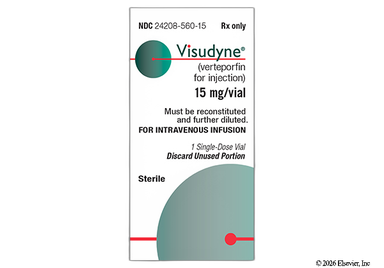
Visudyne (verteporfin) is an injectable medication used to help prevent certain eye conditions, such as age-related macular degeneration (AMD), from worsening. The medication must be administered through the vein by a healthcare provider. It's then activated (turned on) using laser light therapy directed at the treatment area.
Although certain medicines should not be used together at all, in other cases two different medicines may be used together even if an interaction might occur. In these cases, your doctor may want to change the dose, or other precautions may be necessary. Tell your healthcare professional if you are taking any other prescription or nonprescription (over-the-counter [OTC]) medicine.
Prescription savings
Stop paying too much for your prescriptions. Compare prices, get pharmacy coupons, and save up to 80%.Health conditions
Medications & treatment
Access & affordability
Resources
Visudyne is a medication that's given through the vein (intravenously or IV) to help prevent certain eye conditions like AMD from worsening. These eye conditions typically cause new blood vessels to form in the eyes that tend to leak fluid or blood into the eye, which can then cause vision loss. Visudyne works by slightly damaging the lining of these blood vessels, which causes them to clot and stop blood flow.
Your dose of Visudyne is based on your body size. It's given as an intravenous infusion over the course of 10 minutes. The laser light therapy is then started 15 minutes after the infusion begins. Your provider will focus the light directly on the treatment area. Exposure to light activates (turns on) the medication in this specific area, meaning it allows the medication to start working.
Your provider will recheck your eyes 3 months after a single Visudyne treatment. If your provider still detects leakage from the blood vessels in the eyes at this time, they might recommend to repeat treatment with this medication.
The most common side effects of Visudyne are injection site reactions, including pain, swelling, inflammation, rash, bleeding, and discoloration. This medication can also cause changes in vision, such as blurred vision, flashes of light, lower visual clarity, and blind spots. Be sure to avoid driving or operating heavy machinery until your vision returns to normal after treatment with Visudyne.
Yes. After you receive treatment with Visudyne, you should avoid exposing your skin or eyes to direct sunlight or bright indoor light for 5 days. This is because Visudyne can make your skin more sensitive to light. Examples of bright indoor lights to avoid include tanning beds, bright halogen lighting, and high-power lighting used during surgery or at dental offices. Wear dark sunglasses and protective clothing if you have to go outside during the day in the 5 days following your treatment. Sunscreen will not be enough to protect your skin from sun sensitivity. However, you don't have to spend the 5 days in complete darkness. Regular indoor light is safe and will help inactivate (turn off) the medication.
Visudyne can potentially cause significant vision loss within 1 week after treatment. If this occurs, you shouldn't be retreated until your vision returns to normal. Your provider can help you decide if the benefits of treatment are worth the risk of vision changes. In addition, if Visudyne accidentally leaks from the blood vessels onto the skin after it's injected, it can cause severe pain, swelling, and discoloration. You're more at risk for this reaction if the area where the medication has leaked onto is exposed to direct light. Exposing the skin to light where medication has spilled can also cause severe burns or damage to skin tissue. Cold compresses at the injection site and oral pain relievers can help with skin reactions to leaked medication. There have also been reports of severe allergic reactions following Visudyne treatment. These symptoms might include itching, hives, swelling of the face, lips, and throat, trouble breathing, and unresponsiveness. If this occurs, stop Visudyne treatment and let your provider know so they can treat your allergic reaction.