Sapropterin
Sapropterin (Kuvan) is used to lower blood phenylalanine (Phe) levels in adults and children one month of age and older with a certain type of phenylketonuria (PKU). It's taken by mouth once daily along with a Phe-restricted diet, which includes monitoring the amount of proteins and Phe levels in foods. Sapropterin (Kuvan) comes in both tablet and powder form, so it gives options to people who might have trouble shallowing. Some common side effects include headache, runny nose, and throat pain.


What is Sapropterin (Kuvan)?
What is Sapropterin (Kuvan) used for?
- Used with a Phe-restricted diet to treat high blood phenylalanine (Phe) levels in adults and children one month of age and older
How Sapropterin (Kuvan) works
Sapropterin (Kuvan) treats PKU by acting like tetrahydrobiopterin (BH4), a substance that's naturally found in your body. BH4 helps a protein in your body called phenylalanine hydroxylase (PAH) work better at breaking down certain nutrients from your food into basic building blocks that your body can use to do important things, such as repairing tissues.
In people with PKU, PAH doesn't work very well at breaking down a building block called Phe, into a simpler form. This means that Phe builds up in your body and can lead to problems such as anxiety, feeling irritated, and not being able to focus. Sapropterin (Kuvan) helps lower the Phe levels in your body by helping PAH work better.
Drug facts
| Common Brands | Kuvan, Javygtor |
|---|---|
| Drug Class | Phenylalanine hydroxylase activator |
| Controlled Substance Classification | Not a controlled medication |
| Generic Status | No lower-cost generic available |
| Availability | Prescription only |

Side effects of Sapropterin (Kuvan)
The following side effects may get better over time as your body gets used to the medication. Let your healthcare provider know immediately if you continue to experience these symptoms or if they worsen over time.
Common Side Effects
- Headache (15%)
- Runny nose (11%)
- Throat pain (10%)
- Diarrhea (8%)
- Vomiting (8%)
- Cough (7%)
- Stuffy nose (4%)
Less Common Side Effects
- Low blood Phe levels
- Rhinitis
- Stomach pain
Sapropterin (Kuvan) serious side effects
Contact your healthcare provider immediately if you experience any of the following.
- Severe allergic reaction: rash, trouble breathing, swelling of the lips, tongue, or throat
- Severe stomach problems: stomach pain, nausea, vomiting, blood in vomit or stool, black tarry stools, trouble swallowing, loss of appetite, throat pain
The following Sapropterin (Kuvan) side effects have also been reported
Along with its needed effects, a medicine may cause some unwanted effects. Although not all of these side effects may occur, if they do occur they may need medical attention.
Check with your doctor immediately if any of the following side effects occur:
More common
Incidence not known
Burning feeling in the chest or stomach
difficulty with swallowing
dizziness
fast heartbeat
fidgeting or moving around too much
indigestion
pain or burning in the throat
puffiness or swelling of the eyelids or around the eyes, face, lips, or tongue
sores, ulcers, or white spots on lips or tongue or inside the mouth
stomach upset
talking too much
tenderness in the stomach area
tightness in the chest
trouble swallowing
unusual tiredness or weakness
Some side effects may occur that usually do not need medical attention. These side effects may go away during treatment as your body adjusts to the medicine. Also, your health care professional may be able to tell you about ways to prevent or reduce some of these side effects. Check with your health care professional if any of the following side effects continue or are bothersome or if you have any questions about them:
Less common
Other side effects not listed may also occur in some patients. If you notice any other effects, check with your healthcare professional.
Call your doctor for medical advice about side effects. You may report side effects to the FDA at 1-800-FDA-1088.

Pros and cons of Sapropterin (Kuvan)
Pros
- Available as tablet and powder
- Dose can be adjusted based on your body weight and blood Phe levels
- Only needs to be taken once a day
- Available as a lower-cost generic
Cons
- Need to get frequent blood tests
- Might not work for everyone with PKU
- Can cause throat or stomach inflammation
- Need to take with food

Pharmacist tips for Sapropterin (Kuvan)

- Sapropterin (Kuvan) tablets can be dissolved in 120-240 mL of water or apple juice. You can stir or crush the tablet to make it dissolve faster. It's ok if the tablets don't dissolve completely. Make sure to drink the solution within 15 minutes. If you see leftover medication in your cup, add more water or apple juice and drink to make sure you take your full dose.
- Sapropterin (Kuvan) powder can be mixed with 120-240 mL of water or apple juice for children weighing more than 10 kg. If your child weighs less than 10 kg, ask your provider how much water or apple juice you should mix with the powder to get the correct dose. These amounts might change as your child grows. Make sure to give the solution within 30 minutes.
- Take sapropterin (Kuvan) by mouth with a meal at the same time each day. Taking it on an empty stomach will lower the amount of medication that gets into your body, so it won't work as well. If you miss a dose of sapropterin (Kuvan), take it as soon as possible, but never take two doses on the same day.
- Stop taking sapropterin (Kuvan) and get emergency medical help right away if you experience an allergic reaction, such as rash, wheezing, trouble breathing, nausea, or swelling of the face, lips, or throat. Let your provider know so they can decide the best treatment option going forward.
- Sapropterin (Kuvan) can cause stomach problems, which can be serious if left untreated. Let your provider know if you or your child experiences stomach problems, such as nausea, vomiting, trouble swallowing, indigestion, loss of appetite, throat pain, or stomach pain.
- It's important to follow up with the provider and go to all of the blood test appointments to properly monitor the blood Phe levels. Levels that are too low or too high can have serious effects on the body, so having an accurate measurement will allow the provider to make adjustments to the dose.
- If you or your child is sick, or have a fever, it might affect the blood Phe level, so let your provider know and they can adjust the dose.
- Let your provider know if you're pregnant, planning to become pregnant, or breastfeeding before starting sapropterin (Kuvan). It's not known if this medication can cause harm to your baby or pass into breast milk. If you become pregnant during your treatment with sapropterin (Kuvan), speak to your provider about enrolling into a special registry program for this medication or call 1-800-983-4587.

Risks and warnings for Sapropterin (Kuvan)
Sapropterin (Kuvan) can cause some serious health issues. This risk may be even higher for certain groups. If this worries you, talk to your doctor or pharmacist about other options.
Allergic reaction
Sapropterin (Kuvan) can cause allergic reactions, including some that are life-threatening like anaphylaxis (closing of the throat). Speak to your provider before taking sapropterin (Kuvan) if you or your child has experienced an allergic reaction to this medication in the past. Get emergency medical help if you experience any symptoms of an allergic reaction, including trouble breathing, rash, nausea, or swelling of your lips, tongue, or throat.
Stomach problems
Sapropterin (Kuvan) can cause irritation and inflammation (swelling) in the esophagus (the tube that connects your mouth with your stomach) and stomach. If not treated, this can lead to more serious problems, like narrowing of the esophagus, stomach ulcers, or stomach bleeding. Let your provider know if you experience symptoms of nausea, vomiting, trouble swallowing, indigestion, loss of appetite, or throat or stomach pain.
Frequent monitoring of blood Phe levels
While sapropterin (Kuvan) works well to lower blood Phe levels, it doesn't work for everyone. Sometimes, it might lower blood Phe levels too much. That's why during treatment with sapropterin (Kuvan), your provider will have you or your child get frequent blood tests to monitor the blood Phe levels. This can help the provider adjust the dose, as well as provide proper treatment if the levels are too high or too low.
Having high blood Phe levels for a long period of time can lead to serious problems, such as anxiety, feeling irritated, and not being able to focus. Having a very low level of blood Phe can lead to growth problems. The risk of low blood Phe levels is higher in children younger than 7 years old.
Make sure you keep track of the amount of Phe you get from food, and go to all of the blood test appointments to make sure your blood Phe levels are monitored properly. Sapropterin (Kuvan) might not work for everyone. If this medication doesn't lower the blood Phe levels after a month of taking the 20 mg/kg dose, your provider will discuss other treatment options with you.
Interaction with levodopa
- Risk factors: Taking together with levodopa
Sapropterin (Kuvan) might interact with levodopa (Inbrija), a medication commonly used for Parkinson's disease and found in combination with carbidopa (Lodosyn). Combination medications that contain levodopa include Sinemet and Rytary. Some people who took sapropterin (Kuvan) with levodopa at the same time experienced symptoms such as seizures, worsening of seizures, and irritability. Let your provider know before starting sapropterin (Kuvan) if you're taking levodopa so they can monitor you during treatment.
Hyperactivity
Sapropterin (Kuvan) might cause hyperactivity (too much or constant activity), restlessness, fidgeting, or excessive talking. Let your provider know if this is a problem for you or your child while taking sapropterin (Kuvan).

Sapropterin (Kuvan) dosage
Typical dosage for Sapropterin (Kuvan)
The dose of sapropterin (Kuvan) will be determined by your provider based on your body weight and response.
- Children 1 month to 6 years old: The typical starting dose is 10 mg/kg by mouth once daily.
- Adults and children 7 years and older: The typical starting dose is 10 mg/kg to 20 mg/kg by mouth once daily.

Interactions between Sapropterin (Kuvan) and other drugs
Although certain medicines should not be used together at all, in other cases two different medicines may be used together even if an interaction might occur. In these cases, your doctor may want to change the dose, or other precautions may be necessary. When you are taking this medicine, it is especially important that your healthcare professional know if you are taking any of the medicines listed below. The following interactions have been selected on the basis of their potential significance and are not necessarily all-inclusive.
Using this medicine with any of the following medicines is usually not recommended, but may be required in some cases. If both medicines are prescribed together, your doctor may change the dose or how often you use one or both of the medicines.
- Levodopa
- Methotrexate
- Pemetrexed
- Proguanil
- Pyrimethamine
- Trimethoprim

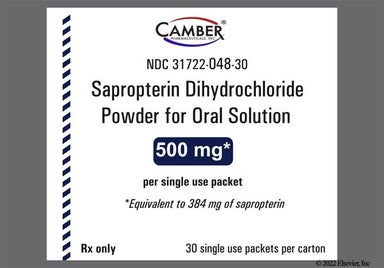
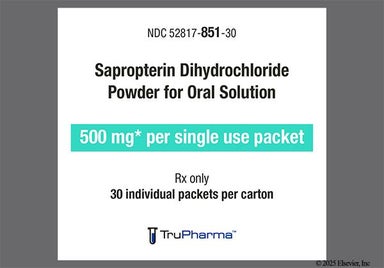
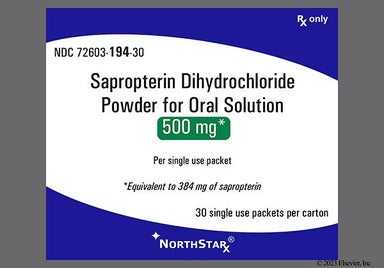
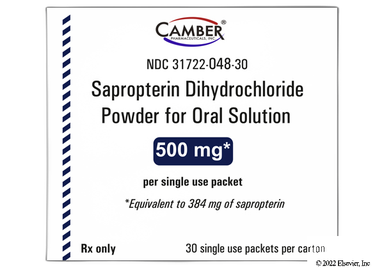
Sapropterin (Kuvan) images