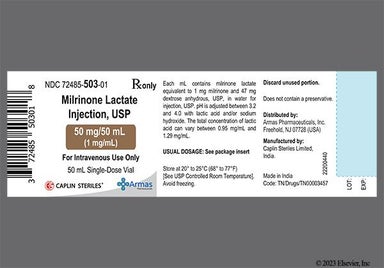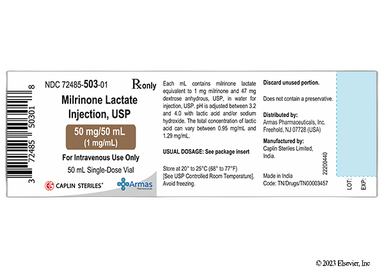
Milrinone is an injectable medication used short term in the hospital for people who have sudden, severe worsening of heart failure. It helps strengthen your heart's ability to pump blood throughout your body.
Milrinone is used in the hospital for people who have symptoms of sudden, severe worsening of heart failure. Heart failure happens when your heart isn't strong enough to keep pumping blood throughout your body. Over time, blood and fluid start to build up in your body, especially in the lungs and legs. This can cause shortness of breath, fluid overload, and swelling. The sudden, severe worsening of heart failure is a life-threatening situation that needs immediate medical care and typically hospitalization.
Milrinone stops an enzyme called phosphodiesterase III (PDE-3) from working. Stopping PDE-3 from working in the heart causes three things to happen. First, your heart's strength to pump blood to the rest of your body (its contractility) rises. Second, your heart rate increases. And third, blood can flow more easily through your blood vessels. These three things help improve blood flow to the rest of your body.
Milrinone is typically given in the hospital as an injection through the veins (intravenously or IV) that runs continuously.
The dose of milrinone varies from one person to another, because it's based on your body weight and response to the medication. Your provider will monitor you closely as you receive the medication and adjust the dose accordingly. Your dose might also differ if you have kidney problems.
Milrinone is typically a well-tolerated medication and doesn't have a lot of side effects. Some possible side effects include headache, irregular heart rhythms, low blood pressure, and chest pain.