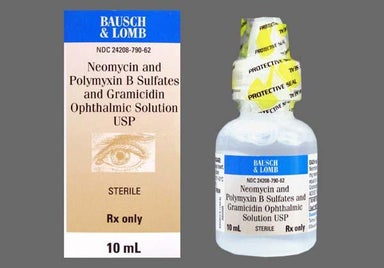
neomycin / polymyxin B / gramicidin
Neosporin ophthalmic solution is an eye drop that contains three different antibiotics: neomycin (an aminoglycoside antibiotic), polymyxin B sulfate (a polypeptide antibiotic), and gramicidin (a peptide antibiotic). This medication is used to treat bacterial eye and eyelid infections, such as pink eye, in adults. The eye drops are typically used every 4 hours for 7 to 10 days. The most common side effect is eye irritation like itching, swelling, and redness.


What is Neosporin ophthalmic solution?
What is Neosporin ophthalmic solution used for?
Bacterial eye and eyelid infections such as:
- Pink eye (conjunctivitis)
- Inflammation of the cornea (keratitis)
- Inflammation of the eyelids (blepharitis)
How Neosporin ophthalmic solution works
Neosporin ophthalmic solution is a combination of three different antibiotics that help treat bacterial eye infections.
- Neomycin is an aminoglycoside antibiotic that prevents bacteria from making proteins that they need to help them grow and survive.
- Polymyxin B is a polypeptide antibiotic and gramicidin is a peptide antibiotic. Both antibiotics kill bacteria by breaking the bacteria's outer protective covering.
Drug facts
| Common Brands | Neosporin ophthalmic solution |
|---|---|
| Drug Class | Antibiotic |
| Controlled Substance Classification | Not a controlled medication |
| Generic Status | Lower-cost generic available |
| Availability | Prescription only |

Side effects of Neosporin ophthalmic solution
The following side effects may get better over time as your body gets used to the medication. Let your healthcare provider know immediately if you continue to experience these symptoms or if they worsen over time.
Common Side Effects
- Eye irritation
- Eye redness
- Itching
- Swelling
Neosporin ophthalmic solution serious side effects
Contact your healthcare provider immediately if you experience any of the following.
- Allergic reaction: skin rash (hives), itching, eye redness, swelling of eyes, shortness of breath
The following Neosporin ophthalmic solution side effects have also been reported
Along with its needed effects, a medicine may cause some unwanted effects. Although not all of these side effects may occur, if they do occur they may need medical attention.
Check with your doctor immediately if any of the following side effects occur:
More common
Itching, rash, redness, swelling, or other sign of irritation in or around the eye not present before use of this medicine
Some side effects may occur that usually do not need medical attention. These side effects may go away during treatment as your body adjusts to the medicine. Also, your health care professional may be able to tell you about ways to prevent or reduce some of these side effects. Check with your health care professional if any of the following side effects continue or are bothersome or if you have any questions about them:
Less common
Burning or stinging sensation in the eye
Other side effects not listed may also occur in some patients. If you notice any other effects, check with your healthcare professional.
Call your doctor for medical advice about side effects. You may report side effects to the FDA at 1-800-FDA-1088.

Pros and cons of Neosporin ophthalmic solution
Pros
- Works well against a wide range of bacteria that can cause common eye infections, such as pink eye
- Works directly in your eye where the infection is (compared to taking a pill)
- Available as a lower-cost generic medication
Cons
- Must use multiple times per day
- Can cause unpleasant side effects, such as itchy eyes, swelling, and eye redness

Pharmacist tips for Neosporin ophthalmic solution

- Wash your hands before and after you use Neosporin ophthalmic solution. Make sure that you don't let the dropper tip touch anything, including your eye, eyelids, or ear. Also don't touch the tip with your hands. This helps prevent contaminating the medication with germs, which also helps prevent potentially new eye infections.
- Use Neosporin ophthalmic solution as an eye drop and use them for your eyes only. Don't use the medication in or on any other part of your body, such as your mouth or ears.
- How to use Neosporin ophthalmic solution: Tilt your head backward and look up. Then, gently pull your lower eyelid down to form a small pocket and squeeze one drop of medication into this pocket. Close your eyes and press a finger against the inside corner of your eye for about 1 minute to help keep the medication in your eye. Wait a few minutes between each drop if you need to use more than one drop.
- If you need to use other eye drop medications in addition to Neosporin ophthalmic solution, wait at least 5 minutes between each medication to give your eye(s) time to absorb each medication.
- Stop using Neosporin ophthalmic solution and call your primary care provider if you see discharge or pus coming out of your eye(s) or if you have a rash, swelling, or pain in your eyes. This can be a sign that the eye drops don't work well against the specific bacteria that's causing your eye infection. Your primary care provider can examine your infection and switch you to another eye drop medication, if needed.
- If you wear contact lenses, your primary care provider might recommend that you wear glasses while you're using Neosporin ophthalmic solution. Wearing contacts when your eye is infected might affect how quickly your eye recovers. The contacts could also get contaminated with bacteria that's infecting your eye. Throw away any contacts that you wore before you started using the eye drops.
- Don't share Neosporin ophthalmic solution with anyone. Sharing the eye drops might spread the infection to other people.
- Be sure to complete the full treatment course for the eye drops as prescribed. In general, don't change your dose or stop using Neosporin ophthalmic solution unless you speak to your primary care provider first, even if you notice your symptoms have improved. Stopping the antibiotic too early can cause your infection to come back and be harder to treat.
- Keep the Neosporin ophthalmic solution bottle capped and closed tightly when you're not using it. Keep it in its original container at room temperature in a secure place out of reach from children at all times.
- Discuss the risks and benefits of using Neosporin ophthalmic solution with your primary care provider if you're pregnant or breastfeeding.

Risks and warnings for Neosporin ophthalmic solution
Neosporin ophthalmic solution can cause some serious health issues. This risk may be even higher for certain groups. If this worries you, talk to your doctor or pharmacist about other options.
For use in the eye only
Use the eye drops on the surface of the eye only. Don't swallow or apply Neosporin ophthalmic solution to any other area on your body.
Severe allergic reaction
It's possible to have an allergic reaction to Neosporin ophthalmic solution. Avoid using Neosporin ophthalmic solution if you have an allergy to any of the antibiotics in the medication (neomycin, polymyxin b, or gramicidin).
Although it's not clear how often allergic reactions happen with these eye drops, it's important to be aware of this risk. Look out for signs of an allergic reaction, such as skin rash, itching, eye redness, or swelling. Also watch for any symptoms, particularly in the area around your eyes, if you need to use Neosporin ophthalmic solution over a long period of time. Let your primary care provider know right away if you develop an allergic reaction.
Risk of new infection with long-term use
- Risk factors: Using Neosporin ophthalmic solution for too long
It's possible to get a new infection from fungi or bacteria that are resistant to Neosporin ophthalmic solution if you use this medication for a while. Don't use these eye drops longer than prescribed. Let your primary care provider know if you notice symptoms of a new infection or if the original symptoms don't get better after you've used Neosporin ophthalmic solution for the prescribed amount of time.

Neosporin ophthalmic solution dosage
 Eye dropper
| Dosage | Quantity | Price as low as | Price per unit |
|---|---|---|---|
| 10ml | 1 eye dropper | $25.72 | $25.72 |

Interactions between Neosporin ophthalmic solution and other drugs
Although certain medicines should not be used together at all, in other cases two different medicines may be used together even if an interaction might occur. In these cases, your doctor may want to change the dose, or other precautions may be necessary. Tell your healthcare professional if you are taking any other prescription or nonprescription (over-the-counter [OTC]) medicine.

How much does Neosporin ophthalmic solution cost?
$25.72

Neosporin ophthalmic solution contraindications
Contraindications are specific health conditions or situations in which a person should not take a medication due to safety concerns. If you have any of the following conditions or if any of the following apply to you, let your healthcare provider know because Neosporin ophthalmic solution will not be safe for you to take.
- Severe allergy to neomycin (or another aminoglycoside antibiotic), polymyxin B, or gramicidin

What are alternatives to Neosporin ophthalmic solution?
Bacterial eye and eyelid infections such as:

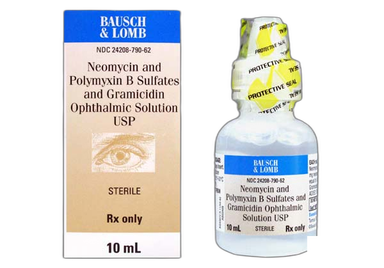
Neosporin ophthalmic solution images