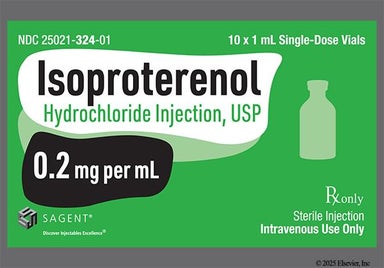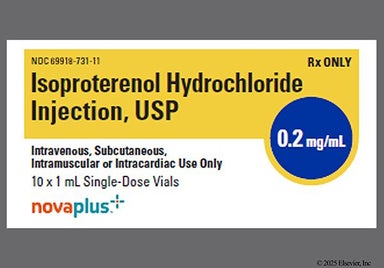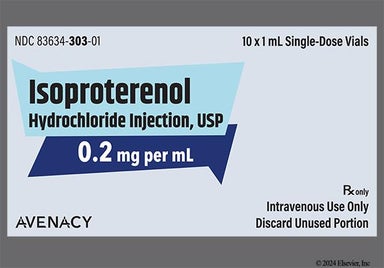
Isoproterenol (Isuprel) is an injectable medication used to raise your heart rate and blood pressure and treat several types of heart rhythm problems. It's also used to help keep the airways relaxed and open during anesthesia. This medication is typically given in the hospital by a trained healthcare provider.
Isoproterenol (Isuprel) is used to treat severe, irregular, heart rhythm problems (e.g., severely low heart rate, heart block). It's also used as part of cardiac arrest treatment. Additionally, this medication can be added onto fluid replacement therapy to help treat various conditions that result in severely low blood pressure (e.g., low blood volume, septic shock, heart failure). Lastly, isoproterenol (Isuprel) may be used if you have difficulty breathing while under general anesthesia during surgery or a procedure.
Isoproterenol (Isuprel) is a beta agonist. It works by binding (attaching) to beta-1 and beta-2 receptors in your body. This causes a rise in heart rate and contractility (the strength of the heart to pump blood to the rest of your body). It also relaxes and opens up the blood vessels in your body and the airways in your lungs.
Isoproterenol (Isuprel) is typically given to people in the hospital as an injection through the veins (intravenously or IV). It can also be given as an injection into the muscle, under the skin, or directly into the heart for certain types of irregular heart rhythms.
The dose of isoproterenol (Isuprel) varies from one person to another. This is because it's based on your medical condition and certain vital signs, like your heart rate and blood pressure. Your provider will make sure you get the correct dose of isoproterenol (Isuprel) at the right time.
Some possible side effects include nervousness, headache, dizziness, fast heart rate, change in blood pressure (high or low), shortness of breath, and flushing (reddening) of the skin.