Key takeaways:
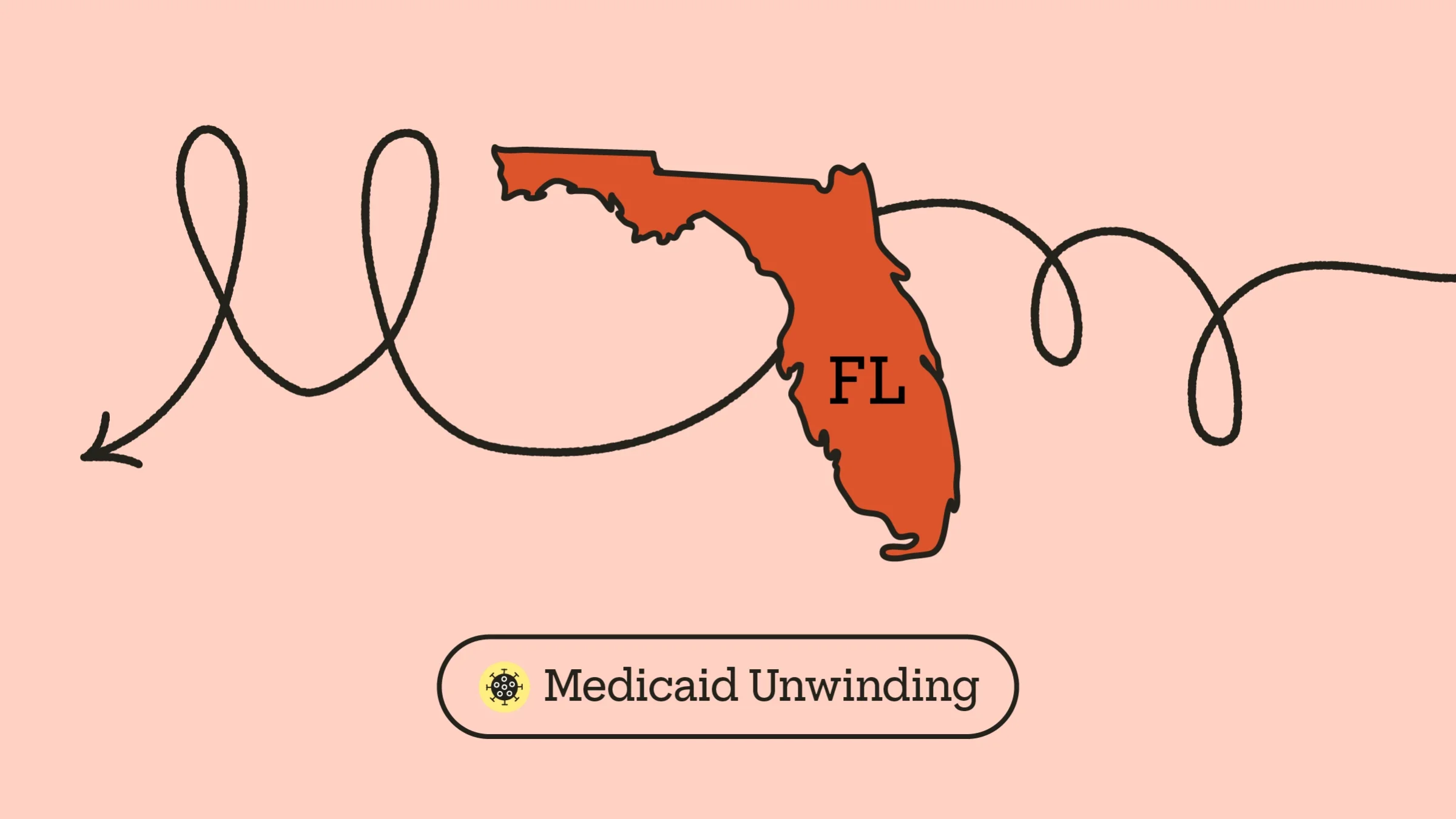
Medicaid in Florida is changing because of the end of the COVID-19 public health emergency (PHE) on May 11, 2023. During this time, some people will lose Medicaid coverage during a process called the unwinding.
During the PHE, Medicaid renewals were automatic and enrollees had continuous coverage. As part of the unwinding, automatic renewals for Medicaid and Children’s Medicaid (CHIP) will stop nationwide on March 31, 2023.
Florida has started to determine who is currently eligible for Medicaid. Make sure the Florida Department of Children and Families (DCF) has your current contact information. If you can’t be reached or no longer qualify for Medicaid, you could be dropped from coverage as early as May 1, 2023.
If you lose your Medicaid coverage, you’ll be notified of alternative low-cost insurance options for you and your children, including Florida KidCare.
The U.S. Department of Health and Human Services declared a public health emergency (PHE) for COVID-19 in January 2020. The declaration was renewed a dozen times through February 2023.
If you were enrolled in Medicaid at any point during the PHE, you kept your health insurance without eligibility reviews. That’s because states were required to provide continuous coverage during the pandemic.
The PHE will end on May 11, 2023, along with automatic renewals for Medicaid enrollees. At that point, more than 900,000 people in Florida may lose Medicaid or Children’s Medicaid (CHIP) coverage, according to a state estimate.
States, including Florida, are resuming reviews of Medicaid and CHIP enrollees to see who is eligible to continue enrollment. This process is called redetermination. If you or your family members no longer qualify for Medicaid or CHIP, you could lose coverage as early as May 1, 2023.
Here’s how to prepare for Medicaid changes in Florida and what to do if you lose your coverage.
Why is Medicaid changing nationwide?
After the PHE ends, COVID-19 will remain a public health priority — but not an emergency. As part of this process, Medicaid renewals will no longer be automatic. This is being referred to as the unwinding of Medicaid, and millions of people nationwide risk losing Medicaid coverage.
The unwinding will affect Medicaid in every state, the District of Columbia, and 5 U.S. territories.
What’s happening with Medicaid renewal in Florida?
The Florida Department of Children and Families (DCF) is the state agency responsible for overseeing Medicaid. Florida has a redetermination plan that can tell you more about how the state intends to handle the Medicaid unwinding.
The state continued to ask about enrollees’ eligibility during the continuous coverage period. As a result, DCF predicts that more than 900,000 people in Florida could lose Medicaid or Children’s Medicaid (CHIP) coverage due to the unwinding.

Read more like this
Explore these related articles, suggested for readers like you.
The first individuals to be dropped have been determined ineligible and have not used Medicaid benefits in the last 12 months. The second group will be those simply determined ineligible. DCF reports that many individuals and families ineligible for Medicaid now have higher household incomes and access to job-based health insurance.
The state will contact Medicaid enrollees about their Medicaid status from April 2023 until April 2024. Every person in your household currently receiving Medicaid will be notified about their eligibility. Make sure DCF has your current contact information.
You will receive a text message asking you to look out for a redetermination notice in the mail. It will be an envelope with a yellow stripe. Mailings will start in April 2023, but you may not get your envelope right away.
You will receive email notices about your eligibility if you’ve signed up for them and DCF has your current email address.
Many people still eligible for Medicaid will get a letter saying their coverage was automatically renewed. If the Florida DCF can’t automatically renew your coverage because they need more information, they’ll let you know 45 days before your renewal date. This notice will have instructions on how to provide the information the department needs.
If you need to reach the Florida Medicaid agency by phone, call 850-300-4323.
What should I do if I lose my Medicaid coverage in Florida?
Through April 2024, the Florida Department of Children and Families will review eligibility for everyone receiving Medicaid. You can receive Medicaid in Florida if you meet all of the following criteria:
You are a Florida resident.
You are a U.S. citizen, permanent resident, or legal resident.
You need healthcare or insurance assistance.
Your annual household income before taxes meets the limits for your household size.
And you are one of the following:
Pregnant
In charge of caring for a child 18 years old or younger
Blind
65 years old or older (under certain conditions)
Person with a disability, or have a family member in your household who has a disability
If you no longer meet the eligibility guidelines, your Medicaid in Florida won’t be renewed. This means you will no longer have Medicaid coverage. However, your application will automatically be transferred for consideration by another government healthcare program, such as Florida KidCare. You can also check your ACCESS Florida account to see if you are being considered for another health insurance plan.
If you lose coverage but believe you still qualify, you should reapply for Medicaid in Florida. You may be uninsured for a while if you reapply for Medicaid and wait to be approved again. In that case, you can consider free and low-cost healthcare options. You can also use GoodRx to save on your prescription medications.
You should see if you qualify for coverage elsewhere if you don’t plan to reapply for Medicaid and aren’t eligible for another government healthcare program. Depending on your circumstances, you may be able to find health insurance with one of these options:
Affordable Care Act marketplace: Through the Affordable Care Act (ACA) exchange, you may be able to find coverage for $10 or less per month if you qualify for a premium subsidy. Losing your Medicaid coverage will trigger an unwinding special enrollment period that will last from March 31, 2023 to July 31, 2024. During this time, you can purchase an insurance plan on the ACA marketplace.
Employer plan: You may now have a job that offers employer-sponsored insurance.
Medicare: If you have a qualifying disability or condition — such as end-stage renal disease or ALS (amyotrophic lateral sclerosis, or Lou Gehrig’s disease) — you can enroll in Medicare at any age.
Partner’s plan: If your spouse or domestic partner has insurance, you may be able to join their plan during an open enrollment or special enrollment period.
Special plans: Short-term insurance can be a great choice if you anticipate a better option, like job-based health insurance, to be available soon. You may also consider alternative and limited-benefit plans, such as fixed indemnity, accident, cost-sharing, and catastrophic insurance plans.
Student health plan: If you’re enrolled in a college or university, you may be eligible for a campus health plan.
Veterans Affairs: If you are an active-duty service member or a veteran, you may qualify for TRICARE coverage or Veterans Affairs benefits and services.
Special outreach programs in Florida
The Florida Department of Children and Families has programs that can provide access to healthcare services for people who are homeless or refugees.
Homeless services: Local Continuum of Care offices throughout the state help people experiencing homelessness find resources in their areas.
Refugee services: Florida has the largest refugee services program in the nation. Newly arrived refugees qualify for health screenings and vaccinations.
Florida Medicaid resources
Here are some sites where you can learn more about Medicaid in Florida and upcoming changes related to the end of the public health emergency:
Florida Medicaid agency: The Florida Department of Children and Families oversees Medicaid in the state.
Florida Medicaid managed care: Most people in Florida with Medicaid receive services through Statewide Medicaid Managed Care programs.
Florida Medicaid self-service portal: You can log in to your Medicaid account 24/7 through ACCESS Florida to learn more about Medicaid and CHIP renewal.
Updating your contact information: Visit the ACCESS Florida portal to make sure your mailing address, email, and other contact information is correct.
Florida Medicaid redetermination: This site provides information about the state Medicaid redetermination plan, including the timeline of changes.
Email notifications: Learn how to receive your Florida Medicaid notifications via email or view notices online.
The bottom line
Automatic Medicaid renewals will stop on March 31, 2023 because COVID-19 won’t be considered a public health emergency anymore.
Florida will spend a year reviewing Medicaid eligibility for enrollees starting in April 2023. During that time, you’ll be contacted either by text messages, mail, or email about your eligibility and possible renewal. It’s important to update your information in your ACCESS Florida account to receive your notifications.
If you lose your Medicaid coverage, you may still qualify for health insurance elsewhere. Your options may include ACA marketplace plans, Medicare, or job-based insurance.

Why trust our experts?

References
Administration for Strategic Response and Preparedness. (2020). Determination that a public health emergency exists.
Administration for Strategic Response and Preparedness. (2023). Renewal of determination that a public health emergency exists.
Benefits.gov. (n.d.). Florida Medicaid.
Centers for Medicare & Medicaid Services. (n.d.). Renew your Medicaid or CHIP coverage.
Centers for Medicare & Medicaid Services. (2023). Temporary special enrollment period (SEP) for consumers losing Medicaid or the Children’s Health Insurance Program (CHIP) coverage due to unwinding of the Medicaid continuous enrollment condition- frequently asked questions (FAQ).
Centers for Medicare & Medicaid Services. (2023). Unwinding and returning to regular operations after COVID-19.
Disability Rights Florida. (2023). Florida Medicaid unwinding information 2023.
Florida Department of Children and Families. (n.d.). Description of services.
Florida Department of Children and Families. (2023). Florida’s Medicaid redetermination plan.
Florida Department of Children and Families. (2023). Medicaid redetermination.
Florida Department of Children and Families. (2023). Medicaid redetermination plan.