glycopyrrolate
Glycopyrrolate (Robinul) is used with other medications to treat stomach ulcers. It's not as commonly used anymore due to newer available treatments and many unpleasant side effects. Glycopyrrolate is also available as Dartisla ODT, a tablet that dissolves when you put it on top of your tongue.


What is Glycopyrrolate (Robinul)?
What is Glycopyrrolate (Robinul) used for?
- Add-on treatment for stomach ulcers
How Glycopyrrolate (Robinul) works
Glycopyrrolate (Robinul) belongs to a group of medications known as anticholinergics, which block a chemical in our body called acetylcholine. By blocking acetylcholine, glycopyrrolate (Robinul) lowers the amount of acid in your stomach and helps to relieve symptoms of stomach ulcers.
Drug facts
| Common Brands | Robinul, Robinul Forte, Glycate |
|---|---|
| Drug Class | Anticholinergic |
| Controlled Substance Classification | Not a controlled medication |
| Generic Status | Lower-cost generic available |
| Availability | Prescription only |

Side effects of Glycopyrrolate (Robinul)
The following side effects may get better over time as your body gets used to the medication. Let your healthcare provider know immediately if you continue to experience these symptoms or if they worsen over time.
Common Side Effects
- Dry mouth
- Less sweating
- Difficulty urinating
- Constipation
- Nausea
- Vomiting
- Feeling bloated
Less Common Side Effects
- Vision changes or blurred vision
- Higher heart rate
- Loss of taste
- Headache
- Dizziness
- Confusion
- Nervousness
- Sleepiness
- Problems sleeping (insomnia)
- Unable to get an erection (impotence)
- Less breast milk production
Glycopyrrolate (Robinul) serious side effects
Contact your healthcare provider immediately if you experience any of the following.
- Worsening glaucoma: dilated pupils with eye pain or redness
- Toxic megacolon: stomach pain, stomach swelling or bloating, fever, bloody diarrhea, fast heartbeat, confusion
The following Glycopyrrolate (Robinul) side effects have also been reported
Along with its needed effects, a medicine may cause some unwanted effects. Although not all of these side effects may occur, if they do occur they may need medical attention.
Check with your doctor immediately if any of the following side effects occur:
More common
Body aches or pain
chills
decrease in the frequency of urination
decrease in urine volume
difficulty in passing urine (dribbling)
difficulty with breathing
ear congestion
feeling of warmth
headache
loss of voice
redness of the face, neck, arms, and occasionally, upper chest
unusual tiredness or weakness
Less common
Abdominal or stomach discomfort or pain
abdominal or stomach distension
confusion
convulsions
dizziness
dry heaves
fainting
increase in heart rate
lightheadedness
pain or tenderness around the eyes and cheekbones
rapid breathing
shortness of breath or troubled breathing
sunken eyes
thirst
tightness in the chest
vomiting
wrinkled skin
Get emergency help immediately if any of the following symptoms of overdose occur:
Some side effects may occur that usually do not need medical attention. These side effects may go away during treatment as your body adjusts to the medicine. Also, your health care professional may be able to tell you about ways to prevent or reduce some of these side effects. Check with your health care professional if any of the following side effects continue or are bothersome or if you have any questions about them:
Less common
Altered mood
attack, assault, or force
bloated
change in taste
chapped lips
crying
dry tongue
excess air or gas in the stomach or intestines
full feeling
hyperventilation
irregular heartbeats
irritability
loss of taste
moaning
nervousness
paleness of the skin
passing gas
rash
restlessness
shaking
trouble with sleeping
uncontrolled eye movements
Other side effects not listed may also occur in some patients. If you notice any other effects, check with your healthcare professional.
Call your doctor for medical advice about side effects. You may report side effects to the FDA at 1-800-FDA-1088.

Pros and cons of Glycopyrrolate (Robinul)
Pros
- Oral tablet is available in generic form
- Oral tablet comes in different strengths
- Also available as an orally disintegrating tablet (Dartisla ODT) for people who have trouble swallowing pills
Cons
- Works only as an add-on treatment, so you have to take other medications with it
- Has many undesirable side effects such as dry mouth, difficulty urinating, and sleepiness
- Not recommended for older adults since it can raise the risk of side effects

Pharmacist tips for Glycopyrrolate (Robinul)

- If you're taking glycopyrrolate (Robinul) tablets, you can take them with or without food. But if you're taking Dartisla ODT, make sure you take it on an empty stomach. This means at least 1 hour before or 2 hours after food.
- When taking Dartisla ODT, place the tablet on top of your tongue and let it dissolve on its own. Once it's dissolved, swallow without drinking any water.
- Glycopyrrolate (Robinul) can lower your body's ability to sweat, which is what your body does when it gets too hot. Be careful when you're exercising or in hot weather while taking this medication. This can raise your risk of having a fever and heat stroke.
- Don't drive or do anything that requires you to be alert while taking glycopyrrolate (Robinul) before knowing how the medication affects you as it can cause sleepiness and blurry vision.
- Glycopyrrolate (Robinul) can cause dry mouth. Sipping water, chewing gum, sucking on hard candies or ice cubes, or using over-the-counter (OTC) saliva sprays or rinses can help with dry mouth.
- Glycopyrrolate (Robinul) can cause constipation. To help with constipation, drink plenty of water and eat more foods high in fiber, such as fruits and vegetables. Regular exercise can also relieve constipation. Let your provider know if your constipation becomes bothersome, as you might need to use certain OTC medications.
- If you have diarrhea that doesn't go away while taking glycopyrrolate (Robinul), let your healthcare provider know. This could be a sign of a more serious problem, such as stomach blockage.

Risks and warnings for Glycopyrrolate (Robinul)
Glycopyrrolate (Robinul) can cause some serious health issues. This risk may be even higher for certain groups. If this worries you, talk to your doctor or pharmacist about other options.
Worsening glaucoma
- Risk factors: Glaucoma
Glycopyrrolate (Robinul) can cause higher pressure in the eye, especially for people who already have glaucoma, a common eye condition. If you have dilated pupils with eye redness or pain, stop taking the medication and let your healthcare provider know right away.
Heat stroke or fever
- Risk factors: Hot weather | Strenuous exercise | Taking other anticholinergic medications | Older adults
Glycopyrrolate (Robinul) causes you to sweat less, which can lead to fever or heat strokes in hot weather. Be careful taking glycopyrrolate (Robinul) when it's hot outside. To help with this, make sure you cool yourself down by resting in the shade, drinking cold water, and taking breaks while exercising.
Stomach blockage
- Risk factors: History of surgical procedures of the intestines, such as ileostomy or colostomy | Older adults
Glycopyrrolate (Robinul) can cause stomach blockage. If you have diarrhea after taking glycopyrrolate (Robinul), it could be an early sign of a stomach blockage, especially in people who have had surgical procedures in the intestine. Let your healthcare provider know if you have diarrhea that doesn’t go away because you might need to take a different medication.
Drowsiness and blurred vision
- Risk factors: Taking other medications that make you sleepy or cause blurred vision
Glycopyrrolate (Robinul) can cause drowsiness or blurred vision. Don't drive or do any activities that require concentration until you know how glycopyrrolate (Robinul) affects you.
Worsening of other health conditions
Some conditions can worsen if you take glycopyrrolate (Robinul). For example, if you have heart problems, such as congestive heart failure or high blood pressure, you need to be careful when taking the medication because it can further raise your blood pressure and heart rate.
If you have an inflamed colon (ulcerative colitis), higher doses of glycopyrrolate (Robinul) can slow your stomach and intestinal muscles, which can lead to life-threatening conditions of the intestine. Talk to your healthcare provider if you’re concerned about certain worsening conditions.

Glycopyrrolate (Robinul) dosage


Interactions between Glycopyrrolate (Robinul) and other drugs
Although certain medicines should not be used together at all, in other cases two different medicines may be used together even if an interaction might occur. In these cases, your doctor may want to change the dose, or other precautions may be necessary. When you are taking this medicine, it is especially important that your healthcare professional know if you are taking any of the medicines listed below. The following interactions have been selected on the basis of their potential significance and are not necessarily all-inclusive.
Using this medicine with any of the following medicines is not recommended. Your doctor may decide not to treat you with this medication or change some of the other medicines you take.
- Potassium
Using this medicine with any of the following medicines is usually not recommended, but may be required in some cases. If both medicines are prescribed together, your doctor may change the dose or how often you use one or both of the medicines.
- Aclidinium
- Amifampridine
- Amitriptyline
- Amoxapine
- Atropine
- Belladonna
- Benztropine
- Biperiden
- Brompheniramine
- Bupropion
- Carbinoxamine
- Carisoprodol
- Chlorpheniramine
- Chlorpromazine
- Clemastine
- Clidinium
- Clomipramine
- Clozapine
- Cyclobenzaprine
- Cyclopentolate
- Cyproheptadine
- Darifenacin
- Desipramine
- Dicyclomine
- Dimenhydrinate
- Diphenhydramine
- Donepezil
- Doxepin
- Fesoterodine
- Flavoxate
- Fluphenazine
- Glucagon
- Glycopyrronium Tosylate
- Homatropine
- Hydroxyzine
- Hyoscyamine
- Imipramine
- Ipratropium
- Loxapine
- Meclizine
- Mepenzolate
- Methacholine
- Nortriptyline
- Olanzapine
- Orphenadrine
- Oxitropium Bromide
- Oxybutynin
- Paroxetine
- Perphenazine
- Pimozide
- Pipenzolate Bromide
- Pirenzepine
- Prochlorperazine
- Procyclidine
- Promethazine
- Propantheline
- Propiverine
- Protriptyline
- Quetiapine
- Revefenacin
- Scopolamine
- Secretin Human
- Solifenacin
- Stramonium
- Terodiline
- Thioridazine
- Thiothixene
- Tiotropium
- Tizanidine
- Tolterodine
- Trifluoperazine
- Trihexyphenidyl
- Trimipramine
- Tropicamide
- Trospium
- Umeclidinium

How much does Glycopyrrolate (Robinul) cost?

Glycopyrrolate (Robinul) contraindications
Contraindications are specific health conditions or situations in which a person should not take a medication due to safety concerns. If you have any of the following conditions or if any of the following apply to you, let your healthcare provider know because Glycopyrrolate (Robinul) will not be safe for you to take.
- Glaucoma
- Blocked urine flow
- Stomach blockage
- Loss of movement in the intestine muscles of older people
- Inflammation of the intestines (ulcerative colitis)
- Unstable heart during serious blood loss
- Abnormal muscle weakness (myasthenia gravis)

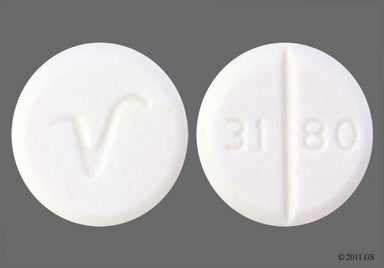
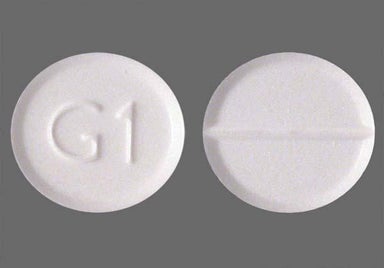
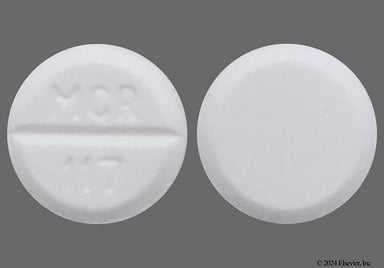
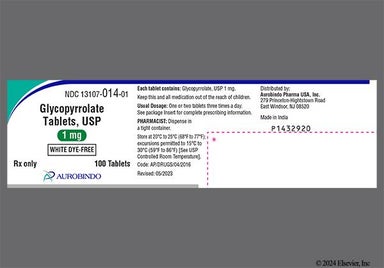
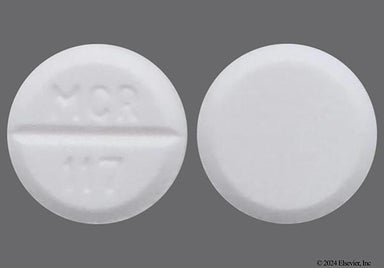
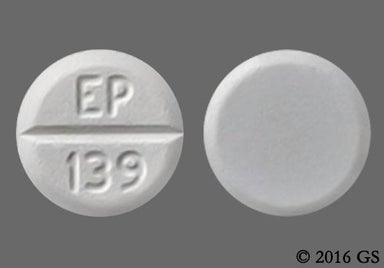
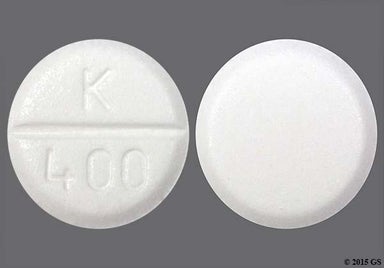
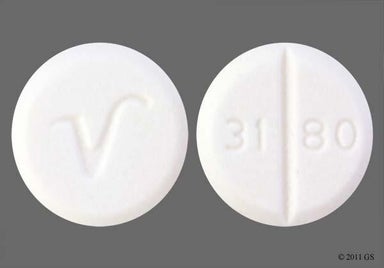
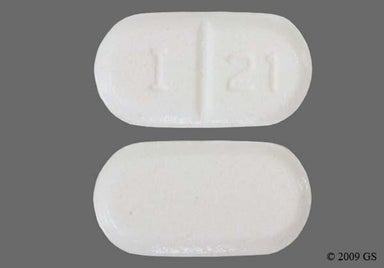
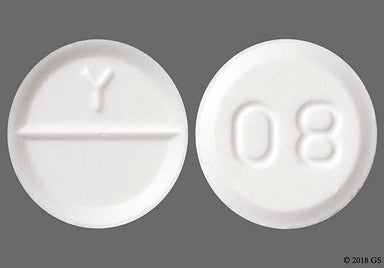
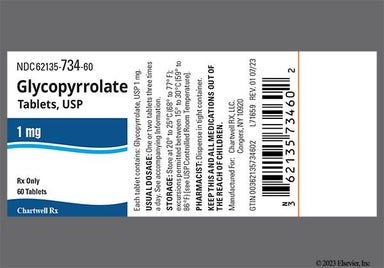
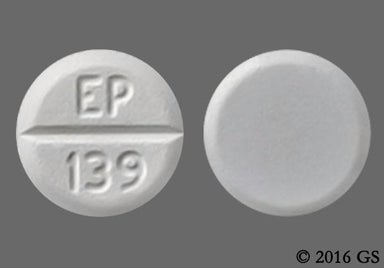
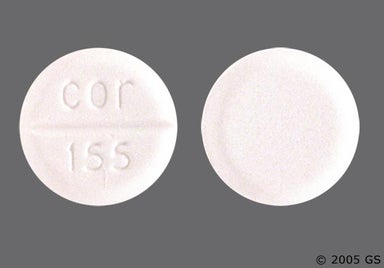
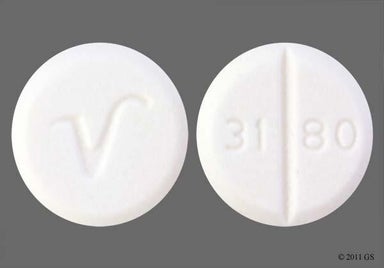
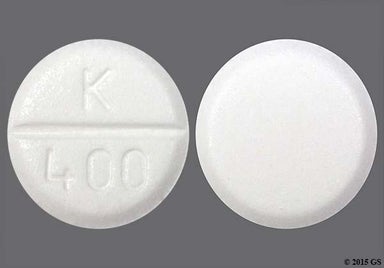
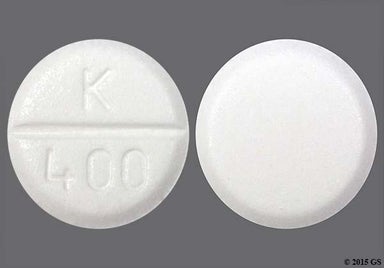
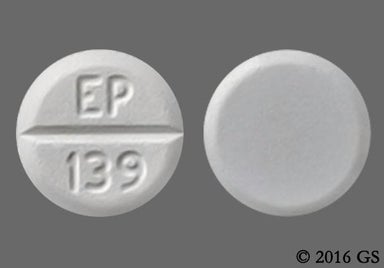
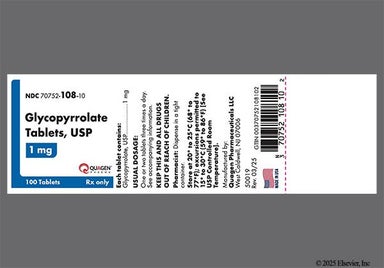
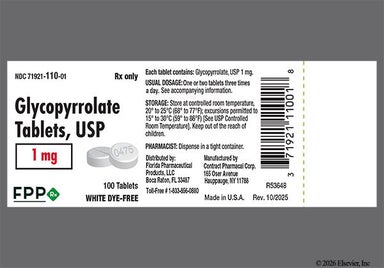
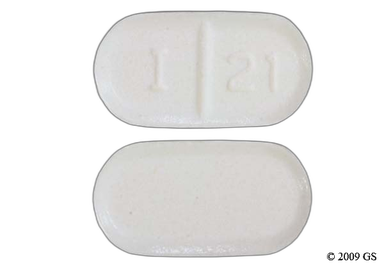
Glycopyrrolate (Robinul) images