Key takeaways:
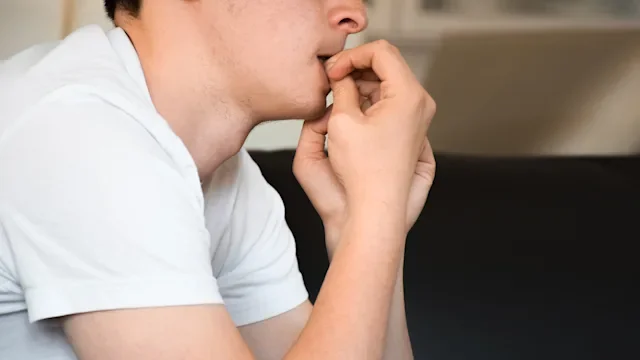
Nail biting is common, but when it becomes chronic and difficult to stop, it can cause health complications.
Sometimes chronic nail biting may be associated with other conditions such as obsessive-compulsive disorder (OCD).
Stopping a nail biting habit may be challenging, but there are some methods that can help you stop nail biting for good.
Nails play an important role in your body. They give strength to your fingertips so you can grip and pick things up, and they also help with important actions like scratching. Fingernails can also provide clues to your underlying health — they can signal certain nutritional deficiencies, lung problems, or even autoimmune conditions. That’s why biting your nails can have bigger consequences than you might think.
Chronic nail biting, clinically known as onychophagia, is often a fleeting childhood behavior. But in some people, nail biting may become a chronic, uncontrollable habit — and sometimes even an obsessive-compulsive behavior.
In this article, we’ll explore why you might bite your nails, what you can do to stop, and when it may be time to talk with a healthcare provider.
Why do I bite my nails?
The exact cause of nail biting is unknown, but it has been associated with boredom, frustration, and reducing stress or anxiety. An estimated 20 to 30% of people bite their nails. It’s especially common in children, occurring in up to 33% of 7- to 10-year-olds and up to 45% of adolescents.
In some cases, nail biting can be caused by an underlying mental health condition. For example, chronic nail biting may be a sign of obsessive-compulsive disorder (OCD). OCD causes you to use repetitive, compulsive behaviors to ease the anxiety caused by obsessive, intrusive thoughts.
There’s not a lot of research in adults, but there does seem to be a connection between other mental health conditions and nail biting in children. Kids who struggle with chronic nail biting may have OCD or the following conditions:
Attention deficit-hyperactivity disorder (ADHD)
Oppositional defiant disorder
Separation anxiety disorder
Tourette syndrome
Some studies also compare chronic nail biting to self-harm. Self-harm is typically used as a way to manage intense emotions, which can include reducing stress and anxiety.
What qualifies as ‘chronic’ nail biting?
Nail biting becomes chronic when it is done repetitively and is hard to control or stop. In some adults, nail biting becomes a chronic habit that can be severe enough to cause health complications.
When done obsessively to the point it causes physical harm, chronic nail biting may be categorized as a “grooming disorder.” You may also hear chronic nail biting referred to as a body-focused repetitive behavior.
Why is nail biting bad?
Nail biting can damage your nails and lead to bigger complications such as:
Cosmetic problems, like a short nail bed or torn and bleeding cuticles
Fingernail fold infections (paronychia)
Infections in the skin surrounding your fingernails
Pain in the jaw (temporomandibular dysfunction)
Tooth fractures, gum infections (gingivitis), or other dental problems
Permanent damage to the nail bed and long-term nail deformity
Uncontrolled nail biting can also cause psychological distress such as decreased self-esteem or increased anxiety if you’re unable to stop the habit.
How do I stop biting my nails?
There are several steps you can take right at home to stop biting your nails. You may want to consider the following:
Nail grooming: It may help to keep your nails trimmed and free of hangnails to resist biting them.
Bitter nail polish: Consider applying a bitter polish to your nails to deter you from biting them.
Alternative habits: Try replacing the urge to bite your nails with a healthier alternative, like playing with a fidget toy or squeezing a stress ball.
You may also need additional support from a healthcare professional to stop biting your nails. Some of the options you may want to explore include:
Dental device: Consider talking with your dentist about a dental oral appliance to stop you from biting your nails.
Psychotherapy: This may include habit reversal therapy or cognitive behavioral therapy (CBT) as well as treatment for anxiety or stress.
Medication: In some cases, treatment may include medication for any underlying mental health conditions such as OCD.
When should I talk to my doctor about my nail biting?
Your nail biting may have moved into the chronic or extreme category when it starts to cause physical or mental health problems that impact your life. So it’s never too early to talk with your healthcare provider about nail biting.
If you have any of the following complications, it’s a good idea to make an appointment now to come up with a plan:
Nail infections
Swelling or bleeding around the nails
You’ve tried to stop your nail biting and cannot
You have anxiety, stress, or other concerns that may be worsening your nail biting
The bottom line
Nail biting can turn into more than just a bad habit. It can cause nail, skin, or dental problems and even mental health distress. Treating chronic nail biting is possible, and it may be helpful to start by having a conversation with your healthcare provider. Multiple treatment approaches may be needed, which could include at-home remedies, psychotherapy, or medication if you have an underlying mental health condition.

Why trust our experts?




References
American Osteopathic College of Dermatology. (n.d.). Paranychia nail infection.
Baghchechi, M., et al. (2021). Art of prevention: The importance of tackling the nail biting habit. International Journal of Women’s Dermatology.
Bate, K. S., et al. (2011). The efficacy of habit reversal therapy for tics, habit disorders, and stuttering: A meta-analytic review. Clinical Psychology Review.
Ghanizadeh, A. (2011). Nail biting; etiology, consequences and management. Iranian Journal of Medical Sciences.
Golomb, R., et al. (2016). Expert consensus treatment guidelines: Body-focused repetitive behaviors - hair pulling, skin picking, and related disorders. The TLC Foundation for Body-Focused Repetitive Behaviors.
Iorizzo, M., et al. (2007). Nail cosmetics in nail disorders. Journal of Cosmetic Dermatology.
Joubert, C. E. (1993). Relationship of self-esteem, manifest anxiety, and obsessive-compulsiveness to personal habits. Psychological Reports.
Leung, A. K., et al. (1990). Nailbiting. Clinical Pediatrics.
Maraz, A., et al. (2017). Pathological grooming: Evidence for a single factor behind trichotillomania, skin picking and nail biting. PLoS One.
Marouane, O., et al. (2016). New approach to managing onychophagia. Case Reports in Dentistry.
Silber, K. P., et al. (1992). Treating nailbiting: A comparative analysis of mild aversion and competing response therapies. Behaviour Research and Therapy.
The TLC Foundation for Body-Focused Repetitive Behaviors. (n.d.). Nail biting (onychophagia).
Wells, J. H., et al. (1999). The self-mutilative nature of severe onychophagia: A comparison with self-cutting. Canadian Journal of Psychiatry.
Westerberg, D. P., et al. (2013). Onychomycosis: Current trends in diagnosis and treatment. American Family Physician.
Whitlock, J. (2010). What is self-injury? Cornell Research Program on Self-Injury and Recovery.
Williams, T. I., et al. (2007). What is the function of nail biting: An analog assessment study. Behaviour Research and Therapy.