Obsessive-Compulsive Disorder (OCD): Your GoodRx Guide
Comprehensive information for you or a loved one — including treatment options and discounts on popular medications.

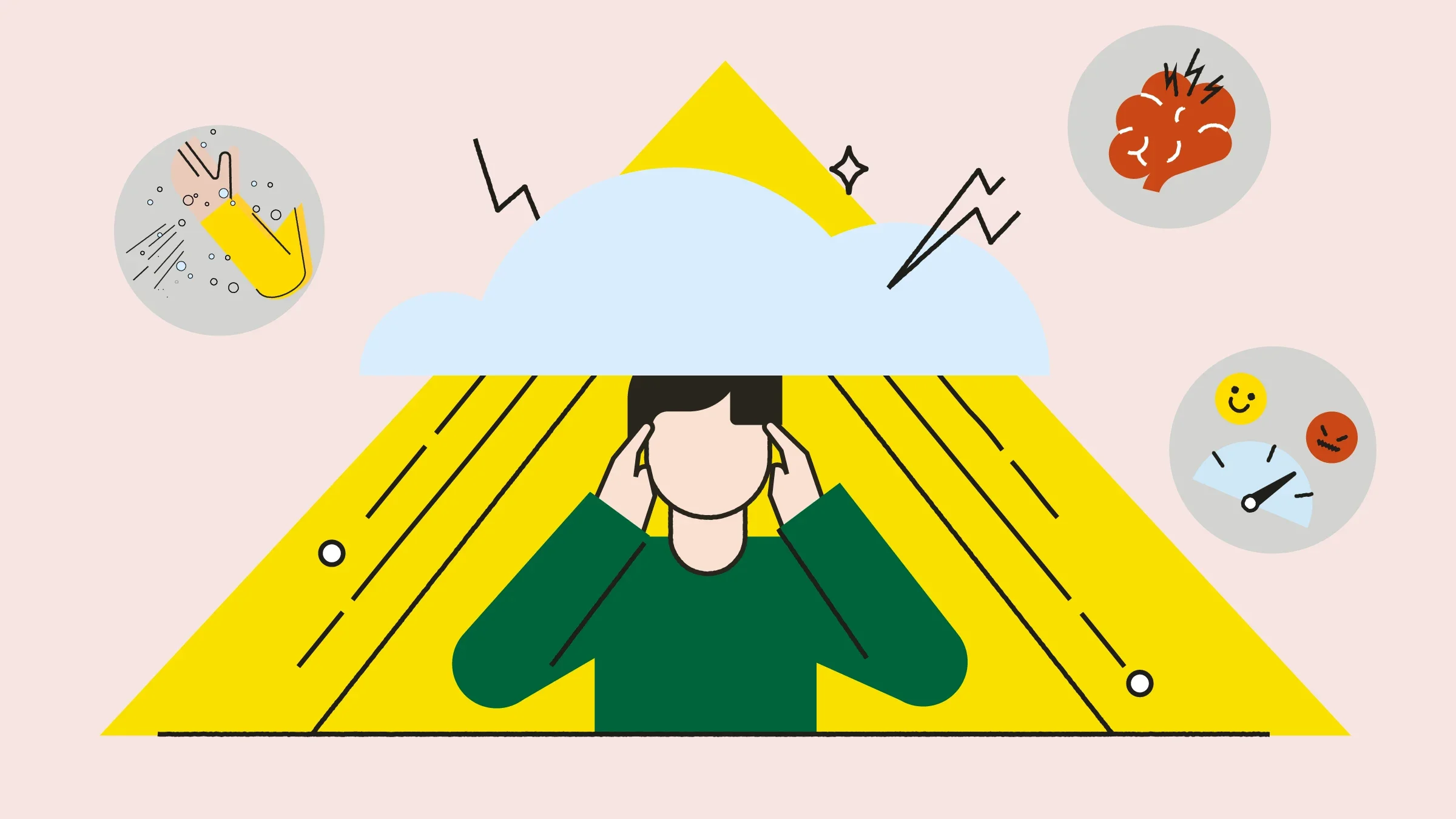
Obsessive-compulsive disorder (OCD) is a mental illness that causes you to experience unwanted, intrusive thoughts called obsessions. As a result, you engage in compulsions — behaviors or rituals to counteract the distress caused by your obsessive thoughts.
Together, these symptoms — obsessions and compulsions — make up obsessive-compulsive disorder. OCD affects around 2.3% of adults in the United States. It usually begins between ages 8 and 12 or in teenagers and young adults.
OCD symptoms can make you feel like you’ve lost control of your thoughts and actions. It can also get in the way of your professional and personal lives. The good news is that treatments are available to help you regain control of your mental health and overall well-being.


Researchers haven’t identified an exact cause of OCD. However, certain biological and environmental factors may increase your risk for developing OCD. These may include:
Genetics: If a first-degree relative, such as a parent or sibling, has OCD, you may be at higher risk for developing the condition.
Brain structure: Research suggests differences in various brain regions among people with OCD. In particular, excess activity in the brain’s frontal region could play a role in OCD development.
Serotonin: Changes in brain structure may cause the brain not to respond normally to serotonin — an important chemical for brain cell communication. This abnormal response may contribute to OCD.
Stress doesn’t cause OCD, but it may trigger symptoms if you’re genetically at risk for the condition. This means stressful or traumatic situations, such as abuse or the death of a loved one, may affect your likelihood of developing OCD.
The hallmark symptoms of OCD are obsessive thoughts and compulsive actions in response.
Obsessions are unwanted, intrusive thoughts or urges that may take different forms. Examples of obsessions can include the following:
Fear that you or someone else will get hurt
Fear of germs or illness
Fear that you didn’t do something right
Fear you may have hurt someone
Upsetting sexual thoughts or images
Compulsions are acts you perform in response to the distress caused by an obsession. Sometimes, compulsions are called rituals since they may be performed over and over again as temporary stress relief.
Compulsions can be overt or observable behaviors like:
Washing your hands
Organizing items so they’re “just so”
Checking multiple times that doors are locked
Avoiding cracks in the sidewalk while walking
Compulsions can also be mental, such as counting or praying in your head. Looking for reassurance, like asking others about a concern related to your obsessive thoughts, can also be a compulsion.
Compare prices and information on the most popular Obsessive-Compulsive Disorder medications.
Because we all have unwanted thoughts and urges from time to time, it can be difficult to know if you have OCD. In general, you may have OCD if:
You cannot control your thoughts and behaviors, even when you know they’re illogical
You deal with the obsessions and compulsions for a significant amount of time every day
The obsessions and compulsions interfere with work, sleep, social life, and other facets of daily living
Your symptoms aren’t due to another medical or mental health condition
If you’re concerned that you may have OCD, speak with your healthcare provider. You can let them know the nature of your thoughts and behaviors, how they make you feel, and how they disrupt your daily activities. This will help your provider make a potential OCD diagnosis.
OCD symptoms can be mistaken for other mental health disorders. For this reason, your provider may refer you to a mental health specialist to make sure you get the most accurate diagnosis.
Typically, OCD is treated with medications, psychotherapy, or both. Here we’ll discuss your therapy options.
The most effective therapy for OCD treatment is a type of cognitive behavioral therapy (CBT) called exposure and response prevention (ERP).
With ERP, a therapist gradually guides you to face your obsessive thoughts without doing a compulsion in response. While this may feel uncomfortable at first, the goal is to learn that you can usually ignore intrusive thoughts. Over time, your obsessions, compulsions, and distress decrease in intensity and become much more manageable.
If you’re ready to try ERP, it’s recommended you go to a therapist well trained in ERP — one who’s willing to work at a pace you’re comfortable with. You can start your search for therapists experienced at treating OCD through websites such as:
Along with therapy, OCD is often treated with selective serotonin reuptake inhibitors (SSRIs), which are a class of antidepressant medication. These medications can increase the level of serotonin in the brain to help improve brain cell communication.
Antidepressants approved by the FDA to treat OCD include:
Sertraline (Zoloft)
Fluoxetine (Prozac)
Fluvoxamine (Luvox)
Paroxetine (Paxil)
Studies show that SSRIs may help people with OCD decrease their symptoms by up to 60%. However, antidepressants can take around 8 to 12 weeks to start working. They may also have undesirable side effects, such as sleeping problems and weight changes.
It’s important to talk with your healthcare provider about your risks and benefits about using medications to treat OCD. Some side effects go away after a couple weeks. Your provider will likely recommend a combination of medication and therapy.
People with OCD may also have another mental health disorder, such as depression, eating disorders, or phobias. An estimated 25% of those with OCD also struggle with substance use disorder. Experts think this may be because both conditions involve similar parts of the brain.
In addition, some people diagnosed with OCD have a tic disorder such as Tourette syndrome. There also seems to be an overlap between autism and OCD.
People with OCD may also have another mental health disorder, such as depression, eating disorders, or phobias. An estimated 25% of those with OCD also struggle with substance use disorder. Experts think this may be because both conditions involve similar parts of the brain.
In addition, some people diagnosed with OCD have a tic disorder such as Tourette syndrome. There also seems to be an overlap between autism and OCD.
Let your provider know if you’re considering supplements. Certain nutritional and herbal supplements may be helpful for OCD symptoms. These supplements may include:
Vitamin B12
Milk thistle
St. John’s wort
Zinc
However, there isn’t enough research to know if any supplements are really effective for OCD. And some natural remedies, like St. John's wort, should not be taken with OCD medications like antidepressants. Taking it can cause serious interactions such as serotonin syndrome.
With the right treatment, your outlook with OCD is generally good. Research suggests that anywhere from 32% to 70% of people go into OCD “remission,” meaning you don’t have any symptoms at all.
In general, several factors can impact your prognosis. These include the severity of your symptoms, how early you get help, and whether or not you complete a full course of OCD treatment. Even if your OCD doesn’t completely go away, treatment can still help reduce your symptoms.
OCD symptoms may come and go, but they can worsen over time if left untreated. OCD may get in the way of work, family, and other important parts of your life. This can cause frustration, stress, and even depression. Left untreated, OCD may also lead to unhealthy coping strategies, such as substance misuse.
Consider speaking with a healthcare provider if you think you might have OCD. Treatment, such as therapy, medications, or both, can help you manage your symptoms.
On rare occasions, children may develop OCD symptoms after a streptococcal infection like strep throat. This type of OCD is known as pediatric autoimmune neuropsychiatric disorder associated with streptococcus (PANDAS). Why does PANDAS occur?
Research suggests that the bacteria produced by strep infections trigger immune system antibodies to attack the basal ganglia in the brain. This part of the brain is responsible for movement and behavior. As a result, symptoms associated with OCD can occur.
Abramowitz, J. (2010). OCD and depression. International OCD Foundation.
American Academy of Child and Adolescent Psychiatry. (2018). Obsessive-compulsive disorder in children and adolescents. Facts for Families.

Prescription savings
Stop paying too much for your prescriptions. Compare prices, get pharmacy coupons, and save up to 80%. Find expert answers to your health questions so you can make the best decisions for yourself and your family.
Health conditions
Medications & treatment
Access & affordability
 Our monthly healthcare membership can help you save thousands on your prescription costs.
Resources