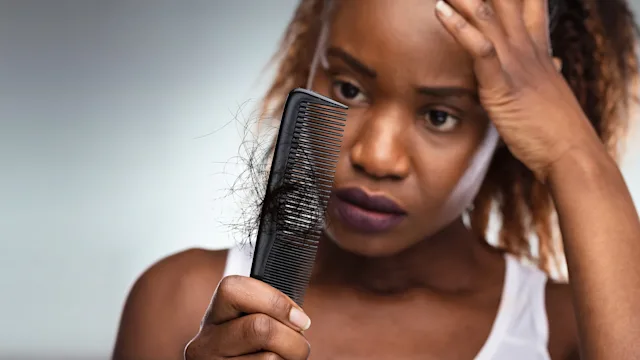
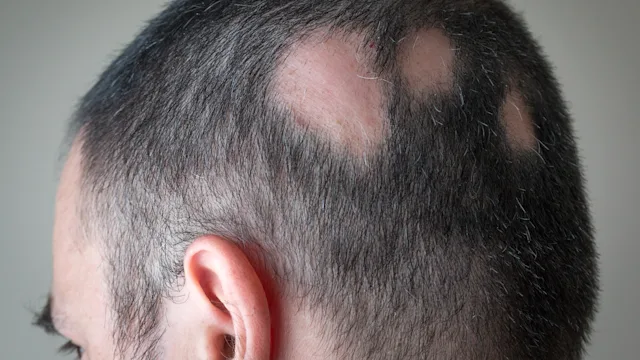
Because alopecia areata is so visible, other people may see it and make assumptions. This has led to many myths about the condition, according to Lindsey Bordone, MD, Dermatologist with Columbia University Irving Medical Center.
Lindsey Bordone, MD, is a board-certified dermatologist at Columbia University Irving Medical Center.
References
American Academy of Dermatology Association. (N.D.). Hair loss types: Alopecia areata diagnosis and treatment.
American Academy of Dermatology Association. (N.D.). Hair loss: Who gets and causes.
American Cancer Society. (2020). Chemotherapy side effects.
National Institute of Arthritis and Musculoskeletal and Skin Diseases. (2021). Alopecia areata.

Why trust our experts?

Written by:
Marisa Taylor KarasMarisa Taylor Karas is a freelance journalist based in Brooklyn who has covered health, gender, and technology for 15 years. She previously worked at The Wall Street Journal, The Guardian, and Al Jazeera America, among other publications, and also served as managing editor of the Mellon Foundation in New York City.
Reviewed by:
Maria Robinson, MD, MBAMaria Robinson, MD, MBA, is a board-certified dermatologist and dermatopathologist who has practiced dermatology and dermatopathology for over 10 years across private practice, academic, and telehealth settings. She is a fellow of the American Academy of Dermatology and the American Society of Dermatopathology.

Search and compare options