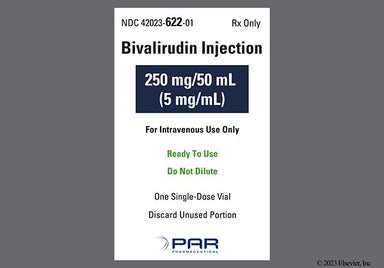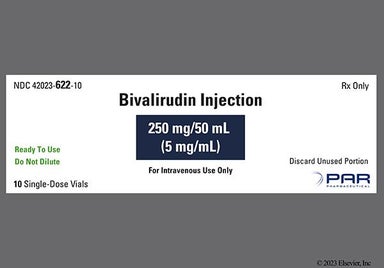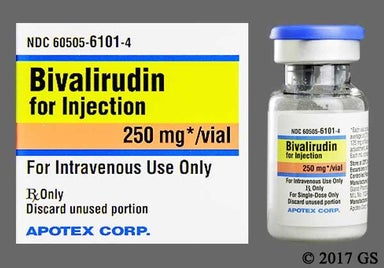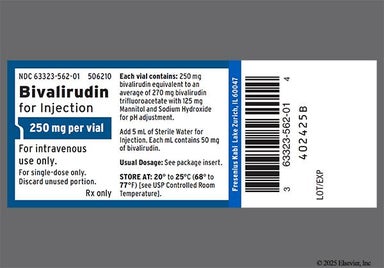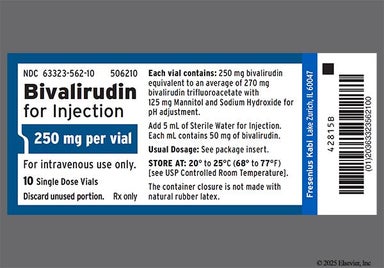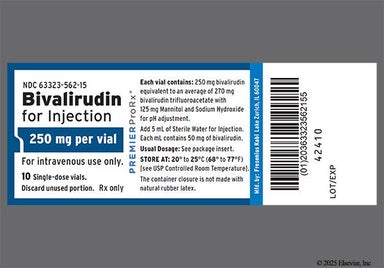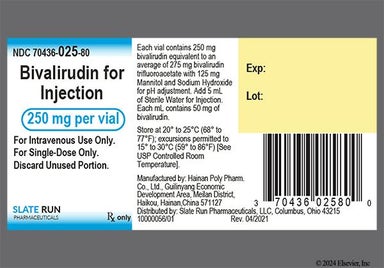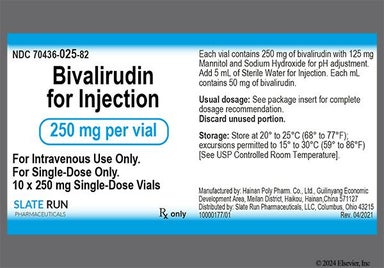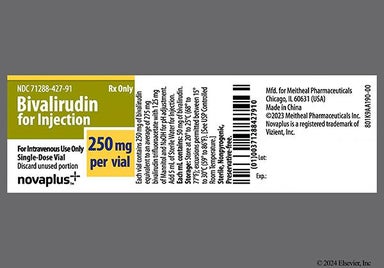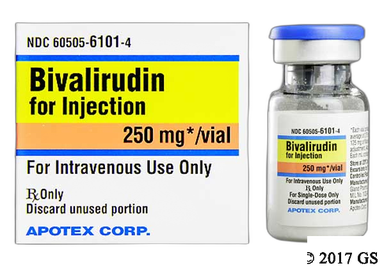
Bivalirudin (Angiomax) is an anticoagulant (blood thinning) medication that's given as a continuous infusion through the veins. It's typically only used in the hospital for adults who are getting percutaneous coronary intervention (a procedure to open clogged blood vessels) and who can't receive heparin.
Bivalirudin (Angiomax) is used to stop blood clots from forming. It's typically used in the hospital for adults undergoing percutaneous coronary intervention (PCI), a procedure that opens up clogged blood vessels in the heart, and can't receive heparin because they have a problem called heparin-induced thrombocytopenia (HIT).
Bivalirudin (Angiomax) is a direct thrombin inhibitor (DTI), which is a type of anticoagulant. Thrombin is a protein that helps your blood to clot. By blocking this protein, bivalirudin (Angiomax) helps stop blood clots from forming in your body. This allows blood to flow more easily through your arteries and veins.
Bivalirudin (Angiomax) is given as an injection through the veins (IV) that runs continuously. This is done by a trained healthcare provider.
The dose of bivalirudin (Angiomax) varies from one person to another. This is because the dose is based on your weight, whether you have kidney problems, and certain lab values, like activated partial thromboplastin time (aPTT) or activated clotting time (ACT). aPTT and ACT are blood tests that measure how long it takes your blood to clot. Hospitals typically have a specific bivalirudin (Angiomax) protocol or program in place that outlines how to monitor and change the dose of the medication based on your aPTT or ACT level so it works well and is as safe for you as possible.
Since bivalirudin (Angiomax) is a blood thinner, the most common side effect is bleeding. While you're in the hospital, your provider will monitor you closely for signs of bleeding while you're receiving bivalirudin (Angiomax). Other side effects include nausea, vomiting, changes in blood pressure, slow heart rate, and pain at the injection site.