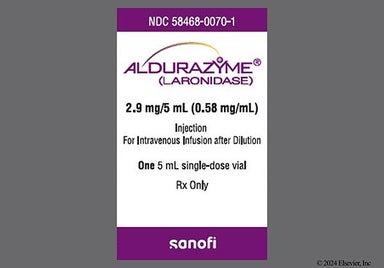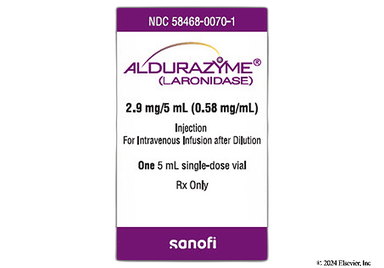
Aldurazyme
Aldurazyme (laronidase) is a medication used to treat symptoms of certain forms of a rare, genetic disease called mucopolysaccharidosis type I (MPS I). It's given by intravenous infusion (through the vein) once a week by a healthcare provider.


What is Aldurazyme (laronidase)?
What is Aldurazyme (laronidase) used for?
Certain forms of mucopolysaccharidosis type I (MPS I):
- Hurler and Hurler-Scheie forms
- Scheie form with moderate-to-severe symptoms
How Aldurazyme (laronidase) works
Aldurazyme (laronidase) works by replacing an enzyme that's missing in some forms of mucopolysaccharidosis type I (MPS I). People with MPS I don't have enough of or are missing an enzyme that's needed to break down long chains of sugar molecules, which can lead to cell, tissue, or organ damage.
Drug facts
| Common Brands | Aldurazyme |
|---|---|
| Drug Class | Enzyme replacement therapy |
| Controlled Substance Classification | Not a controlled medication |
| Generic Status | No lower-cost generic available |
| Availability | Prescription only |

Side effects of Aldurazyme (laronidase)
The following side effects may get better over time as your body gets used to the medication. Let your healthcare provider know immediately if you continue to experience these symptoms or if they worsen over time.
Common Side Effects
Adults and children 6 years or older:
- Rash (36%)
- Infusion reaction (32%)
- Upper respiratory tract infection (e.g., common cold; 32%)
- Flushing (23%)
- Injection site reaction (18%)
- Overactive reflexes (14%)
- "Pins and needles" feeling (14%)
Children 6 months to 5 years old:
- Infusion reaction (35%)
- Ear infection (20%)
Less Common Side Effects
- Injection site pain
- Chest pain
- Face swelling
- Swelling in lower part of the body
- Abscess (collection of pus)
- Scarring or clouding of the eye
- Low blood pressure
- Low platelet count
- High bilirubin levels
Aldurazyme (laronidase) serious side effects
Contact your healthcare provider immediately if you experience any of the following.
- Severe allergic reaction: slow heart rate, hives, breathing problems, swelling of the mouth or throat
- Sudden heart and lung problems: fast breathing, trouble breathing, swelling, change in heart rate, chest tightness or pain, blue skin color
The following Aldurazyme (laronidase) side effects have also been reported
Along with its needed effects, a medicine may cause some unwanted effects. Although not all of these side effects may occur, if they do occur they may need medical attention.
Check with your doctor or nurse immediately if any of the following side effects occur:
More common
Abdominal or stomach pain
accumulation of pus
back pain
black, tarry stools
bleeding gums
blood in urine or stools
blurred vision
chest tightness
chills
clay-colored stools
confusion
dark urine
dizziness
drowsiness
facial swelling
faintness
fast, pounding, or irregular heartbeat or pulse
flushing
headache
hives, infection, inflammation, itching, lumps, numbness, pain, rash, redness, scarring, soreness, stinging, swelling, tenderness, tingling, ulceration, or warmth at injection site
lightheadedness when getting up from a lying or sitting position suddenly
loss of appetite
nausea or vomiting
pale skin
pinpoint red spots on skin
shortness of breath
skin rash
sweating
swollen, red, or tender area of infection
trouble breathing
unpleasant breath odor
unusual bleeding or bruising
unusual tiredness or weakness
vomiting of blood
yellow eyes or skin
Some side effects may occur that usually do not need medical attention. These side effects may go away during treatment as your body adjusts to the medicine. Also, your health care professional may be able to tell you about ways to prevent or reduce some of these side effects. Check with your health care professional if any of the following side effects continue or are bothersome or if you have any questions about them:
More common
Bleeding, blistering, burning, coldness, or discoloration of skin
blindness
body aches or pain
burning, crawling, itching, numbness, prickling, "pins and needles", or tingling feelings
decreased vision
difficulty in moving
ear congestion
feeling of pressure
loss of voice
muscle pain or stiffness
overactive reflexes
pain in joints
swelling of legs and feet
swelling or puffiness of face
varicose or spider veins
Other side effects not listed may also occur in some patients. If you notice any other effects, check with your healthcare professional.
Call your doctor for medical advice about side effects. You may report side effects to the FDA at 1-800-FDA-1088.

Pros and cons of Aldurazyme (laronidase)
Pros
- Only needs to be given once a week
- Given and monitored by a healthcare provider
- Can be given to both children and adults
- Dose can be adjusted based on body weight
Cons
- Must be given by IV infusion (through the vein)
- Commonly causes infusion reactions
- Can worsen lung and heart problems
- Unknown if it works or is safe for people with mild symptoms of the Scheie form of MPS I

Pharmacist tips for Aldurazyme (laronidase)

- Mark your appointments to get your Aldurazyme (laronidase) infusions on your calendar so you don't miss any doses.
- Make sure there's someone who can drive you to and from your infusion appointments. Your provider might give you medications before or after your infusion that can make you sleepy to help manage certain reactions you might experience from the infusion.
- You might experience an allergic reaction during or after your Aldurazyme (laronidase) infusion. If you have any signs or symptoms of an allergic reaction, including trouble breathing or rash, get medical help right away so you can be treated as soon as possible. Tell your provider about any reactions you have to Aldurazyme (laronidase).

Risks and warnings for Aldurazyme (laronidase)
Aldurazyme (laronidase) can cause some serious health issues. This risk may be even higher for certain groups. If this worries you, talk to your doctor or pharmacist about other options.
Severe allergic reactions
 Some people have experienced severe or life-threatening allergic reactions (e.g., anaphylaxis) during or up to 3 hours after Aldurazyme (laronidase) infusions. These reactions can include low blood pressure; slowed heart rate; hives; trouble breathing; high-pitched, wheeze-like sound when breathing; fast breathing; or tightening of the airways. People with breathing or lung problems can have a higher risk of worsened breathing issues while getting Aldurazyme (laronidase).
 Your provider will monitor you during your infusion in case a severe reaction occurs. Let your provider know if you experience any signs of an allergic reaction so they can give you the appropriate treatment right away. If you have lung problems or have had reactions in the past, your provider might monitor you for a longer period of time.
Worsening of breathing problems in certain people
- Risk factors: Sudden fever | Breathing or lung problems
People who currently have a fever that occurred suddenly without cause or people with breathing or lung problems (e.g., respiratory illness) might have a higher risk of getting an infusion reaction, especially breathing problems, from Aldurazyme (laronidase). Let your provider know if you have sleep apnea or if you use oxygen or continuous positive airway pressure (CPAP) during sleep so they can make it available for you to use if you need it during or after your treatment. Let your provider know your full medical history before starting treatment with Aldurazyme (laronidase), since you might need to be monitored more carefully.
Worsening of lung or heart problems in certain people
- Risk factors: Fluid overload | Lung or heart problems
People who build up fluid easily (or have lung or heart problems and need to limit their fluids) might experience sudden worsening of their condition during Aldurazyme (laronidase) infusions. Let your provider know your full medical history before starting treatment with Aldurazyme (laronidase), since you might need to be monitored for a longer period of time.
Infusion reactions
Aldurazyme (laronidase) can cause reactions during the infusion. These reactions include flushing (feeling warm all of a sudden), fever, chills, headache, and rash. Because of this, your provider might give you medications to lower your risk of getting a fever or other reaction before your infusion. Let your provider know right away if you experience any reactions during treatment, and they can slow down how fast you get Aldurazyme (laronidase) through your vein (the infusion rate), stop your infusion temporarily, or give you medications to relieve your symptoms.

Aldurazyme (laronidase) dosage
Typical dosage for Aldurazyme (laronidase)
Aldurazyme (laronidase) is only available as an intravenous (IV) infusion that's administered by a healthcare provider. The recommended dose is 0.58 mg/kg of body weight, given as an infusion into the vein once a week. Your provider will determine the appropriate dose based on your body weight and health conditions.

Interactions between Aldurazyme (laronidase) and other drugs
Although certain medicines should not be used together at all, in other cases two different medicines may be used together even if an interaction might occur. In these cases, your doctor may want to change the dose, or other precautions may be necessary. Tell your healthcare professional if you are taking any other prescription or nonprescription (over-the-counter [OTC]) medicine.

Aldurazyme (laronidase) images