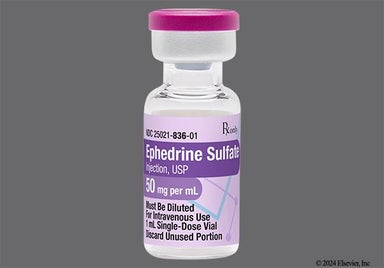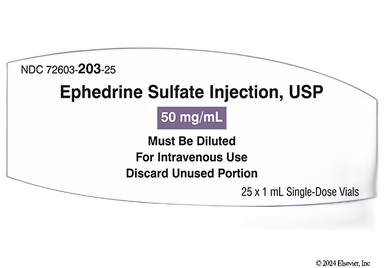
Ephedrine (Akovaz) is a medication used to treat low blood pressure from anesthesia. It's given as an injection by a provider in a healthcare setting.
Ephedrine (Akovaz) is used to treat low blood pressure that's caused by anesthesia. It's typically only given to people in the hospital who are in the middle of receiving a procedure or surgery.
Ephedrine (Akovaz) is an adrenergic agonist. It acts directly on both alpha and beta-adrenergic receptors (proteins involved in signaling) in your blood vessels. Additionally, it helps raise levels of a chemical called norepinephrine in your body. Norepinephrine acts on the same alpha and beta-adrenergic receptors as ephedrine (Akovaz). When these receptors are activated, your blood vessels tighten. This keeps your blood pressure from dropping too low.
Ephedrine (Akovaz) is given as a quick injection into the veins (intravenously, IV) by a healthcare provider. Your provider might give you additional doses of the medication as needed to keep your blood pressure steady.
Some possible side effects include nausea, vomiting, dizziness, and restlessness. Additionally, because ephedrine (Akovaz) works on the receptors in your blood vessels and heart, it can raise your blood pressure and cause changes in your heart rate as well.