


What’s the Best Osteoporosis Medication?
Learn about the various osteoporosis medications and side effects, plus how to choose the best osteoporosis medication for you.
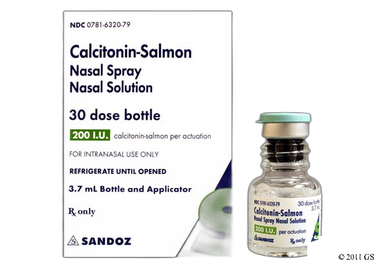
Calcitonin salmon (Miacalcin) is an injectable medication used to treat osteoporosis in women who have already undergone menopause (postmenopause), Paget's disease of bone, and high calcium levels in the blood (hypercalcemia). The usual dosage is one injection given into the muscle or under the skin 1 to 4 times a day, depending on the reason you're using it. Nausea and injection site reactions are the most common side effects. You can find the injection in both brand-name and generic forms.

Calcitonin salmon (Miacalcin) is a calcitonin receptor agonist. Since it acts like a natural hormone in your body called calcitonin, it works mainly on the bone to prevent bone breakdown. It also lowers calcium levels by helping you get rid of it in your urine.
| Common Brands | Miacalcin |
|---|---|
| Drug Class | Calcitonin receptor agonist |
| Controlled Substance Classification | Not a controlled medication |
| Generic Status | Lower-cost generic available |
| Availability | Prescription only |

The following side effects may get better over time as your body gets used to the medication. Let your healthcare provider know immediately if you continue to experience these symptoms or if they worsen over time.
Contact your healthcare provider immediately if you experience any of the following.
Along with its needed effects, a medicine may cause some unwanted effects. Although not all of these side effects may occur, if they do occur they may need medical attention.
Check with your doctor immediately if any of the following side effects occur:
More common
Crusting, patches, or sores inside the nose
dryness, itching, redness, swelling, tenderness, or other signs of nasal irritation not present before use of this medicine
headaches (severe or continuing)
nosebleeds
Less common
Bloody or cloudy urine
chills
difficult, burning, or painful urination
difficulty with breathing or wheezing (severe)
dizziness
frequent urge to urinate
head congestion
loss of sense of smell
swollen glands
Rare
increased thirst
shakiness in the legs, arms, hands, or feet
taste disturbances
trembling or shaking of the hands or feet
Incidence not known
Abdominal or stomach cramps
bloating or swelling of the face, arms, hands, lower legs, or feet
blurred vision
confusion
difficulty with swallowing
fainting
increased sweating
irregular heartbeats
muscle cramps in the hands, arms, feet, legs, or face
numbness and tingling around the mouth, fingertips, or feet
pain or tightness in the chest
puffiness or swelling of the eyelids or around the eyes, face, lips, or tongue
rapid weight gain
seizures
unusual tiredness or weakness
unusual weight gain or loss
Some side effects may occur that usually do not need medical attention. These side effects may go away during treatment as your body adjusts to the medicine. Also, your health care professional may be able to tell you about ways to prevent or reduce some of these side effects. Check with your health care professional if any of the following side effects continue or are bothersome or if you have any questions about them:
Less common or rare
Abdominal or stomach pain
body aches
burning, dry, or itching eyes
flushing
mental depression
unusual tearing of the eyes
Incidence not known
Continuing ringing or buzzing or other unexplained noise in the ears
hearing loss
trouble hearing
trouble seeing
Other side effects not listed may also occur in some patients. If you notice any other effects, check with your healthcare professional.
Call your doctor for medical advice about side effects. You may report side effects to the FDA at 1-800-FDA-1088.




Calcitonin salmon (Miacalcin) can cause some serious health issues. This risk may be even higher for certain groups. If this worries you, talk to your doctor or pharmacist about other options.
Rarely, calcitonin salmon (Miacalcin) can cause an allergic reaction. Some reactions can be serious and require medical treatment. Let your provider know if you've had a history of allergic reactions. If you experience trouble breathing, hives, or swelling in your throat, lips, tongue, or face, get medical help right away.
Calcitonin salmon (Miacalcin) can cause your calcium levels to get too low. Low calcium can lead to muscle cramps, twitching, and seizures. Talk to your provider about using calcium and vitamin D supplements to avoid low calcium levels, especially if you're using calcitonin salmon (Miacalcin) for postmenopausal osteoporosis or Paget's disease of bone.
In clinical studies, more people using calcitonin salmon (Miacalcin) developed cancer than those who used a placebo medication. Talk to your provider if you have questions about this potential side effect. They can discuss the benefits and risks of this medication for you.

 Vial
Vial| Dosage | Quantity | Price as low as | Price per unit |
|---|---|---|---|
| 2ml of 200iu/ml | 1 vial | $186.25 | $186.25 |

Although certain medicines should not be used together at all, in other cases two different medicines may be used together even if an interaction might occur. In these cases, your doctor may want to change the dose, or other precautions may be necessary. When you are taking this medicine, it is especially important that your healthcare professional know if you are taking any of the medicines listed below. The following interactions have been selected on the basis of their potential significance and are not necessarily all-inclusive.
Using this medicine with any of the following medicines may cause an increased risk of certain side effects, but using both drugs may be the best treatment for you. If both medicines are prescribed together, your doctor may change the dose or how often you use one or both of the medicines.


Prescription savings
Stop paying too much for your prescriptions. Compare prices, get pharmacy coupons, and save up to 80%.Resources
About GoodRx
 Find expert answers to your health questions so you can make the best decisions for yourself and your family.
Health conditions
Medications & treatment
Access & affordability
Well-being
Medication discounts

Normally, your body removes old bone and replaces it with new bone material in a balanced manner. Paget's disease of bone and menopause are two conditions that can disrupt the balance between removing old bone and building new bone. In both conditions, bones are being broken down faster than your body can build new bone. During menopause, a drop in estrogen levels is thought to slow down new bone formation. And in Paget's, the cells responsible for breaking down bone are more active. Miacalcin helps prevent bone loss by slowing these cells down, so less bone is broken down.
No, Miacalcin sounds a lot like calcium, but it doesn't actually raise calcium levels in the blood. In fact, it works to lower calcium levels. Miacalcin works by stopping calcium from being absorbed back into your body through the kidneys. And it helps to get rid of the calcium through the urine. So it's FDA approved to treat people with hypercalcemia (high calcium levels).
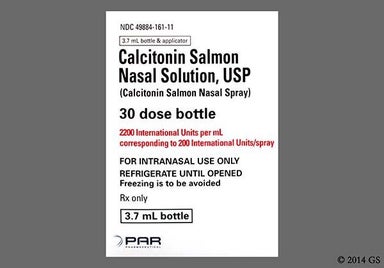
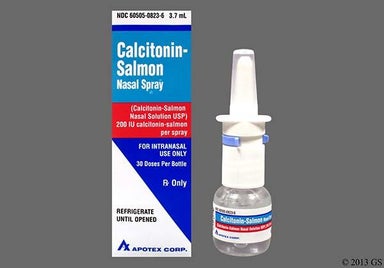
The Miacalcin nasal spray and injection both contain the same medication, but they're used for different conditions. The nasal spray is FDA approved specifically for treating postmenopausal osteoporosis. On the other hand, the injection form of the medication is approved for treating not only postmenopausal osteoporosis, but also Paget's disease of bone and high levels of calcium in the blood. The nasal spray is only available as a generic version, but the injection form is available as both a brand name and generic.
Miacalcin typically starts to work within 30 minutes of taking a dose. Keep in mind that it might take longer to see the full effects of this medication.
Miacalcin isn't FDA-approved to treat bone pain alone. But, about 66% of people with Paget's disease of bone taking Miacalcin in clinical studies noticed an improvement in bone pain. If you're experiencing bone pain, talk to your provider about treatment options that can help.
