


How to Save on Psoriasis Medications: From Topicals to Biologics
With or without insurance, there are many ways to save on psoriasis treatments. Learn more with this cost guide for medication and biologic injections for psoriasis.
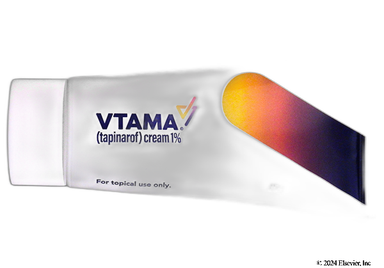
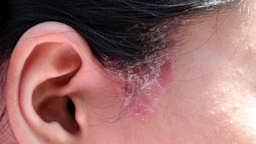
Vtama (tapinarof) is a topical cream that's used to treat plaque psoriasis in adults. It can also treat eczema (atopic dermatitis) in people 2 years of age and older. Unlike other topical treatments for skin conditions, Vtama (tapinarof) isn't a steroid. Instead, it's an aryl hydrocarbon receptor (AhR) agonist. It's thought to boost the activity of AhR, leading to less inflammation in the skin cells and healthier skin. Vtama (tapinarof) is applied to the affected areas once daily. But it can cause side effects on the skin like irritated hair follicles or a rash.

Vtama (tapinarof) is an aryl hydrocarbon receptor (AhR) agonist. The exact way that the medication treats plaque psoriasis and eczema isn't known. But it's thought to boost the activity of AhR. AhR is an important protein that keeps your skin healthy and protects you from harmful substances in the environment. This could help lessen skin inflammation and improve skin health.
| Common Brands | Vtama |
|---|---|
| Drug Class | Aryl hydrocarbon receptor agonist |
| Controlled Substance Classification | Not a controlled medication |
| Generic Status | No lower-cost generic available |
| Availability | Prescription only |

The following side effects may get better over time as your body gets used to the medication. Let your healthcare provider know immediately if you continue to experience these symptoms or if they worsen over time.
Plaque psoriasis:
Eczema:
Plaque psoriasis:
Eczema:
Side effects that you should report to your care team as soon as possible:
Side effects that usually do not require medical attention (report these to your care team if they continue or are bothersome):




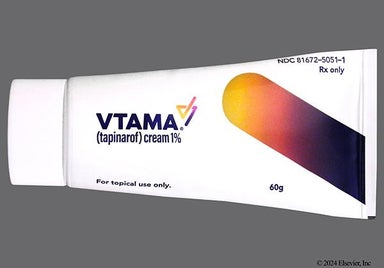
 Tube of cream
| Dosage | Quantity | Price as low as | Price per unit |
|---|---|---|---|
| 60g of 1% | 1 tube | $1,527.67 | $1,527.67 |






Prescription savings
Stop paying too much for your prescriptions. Compare prices, get pharmacy coupons, and save up to 80%. Find expert answers to your health questions so you can make the best decisions for yourself and your family.
Health conditions
Medications & treatment
Access & affordability
Medication discounts

No, Vtama isn't a steroid. Vtama is a steroid-free option for people with inflammatory skin conditions who want to avoid using topical steroids. Ask your prescriber if Vtama is a good choice for you.
No, Vtama isn't a biologic. Biologics are medications that come from living sources and are typically given as injections. Vtama is a chemical-based cream.
If your plaque psoriasis or eczema affects your face, you can use Vtama on your face. Make sure to apply the cream as a thin layer only to the areas of the face that are affected by the skin condition though. Wash your hands after you apply Vtama so that the medication doesn't accidentally get onto other places.
Apply Vtama as a thin layer onto the skin that's affected by plaque psoriasis or eczema. If affected, this can include the face or other sensitive areas like skin folds, the neck, and underarms. But avoid getting the medication into your eyes, mouth, or vagina because it can cause irritation. Wash your hands after applying Vtama (unless you're treating the skin condition on your hands) so that you don't accidentally get the medication onto other places.
Apply Vtama onto the affected areas of skin just once daily. Using the cream more than once daily can lead to skin irritation or other harmful effects.
In clinical studies for plaque psoriasis, some people saw that their skin cleared up either completely or almost completely within a few weeks of using Vtama. But it could take a few months for the medication to work fully for others. And in clinical studies for eczema, some people noted improvement in their symptoms after 8 weeks of using Vtama. If you aren't seeing a difference in your skin after using Vtama as directed, speak with your dermatologist or prescriber.
Vtama and Zoryve (roflumilast) are both steroid-free creams that you use once a day for treating eczema and plaque psoriasis. But there are some key differences. Zoryve can treat both conditions in people 6 years and older. But Vtama is approved to treat plaque psoriasis in adults only and eczema in people 2 years and older. These medications also work in different ways to lessen skin inflammation. Talk to your prescriber or dermatologist to learn more about the differences and see which one is right for you.
